
What is the Phillips curve?
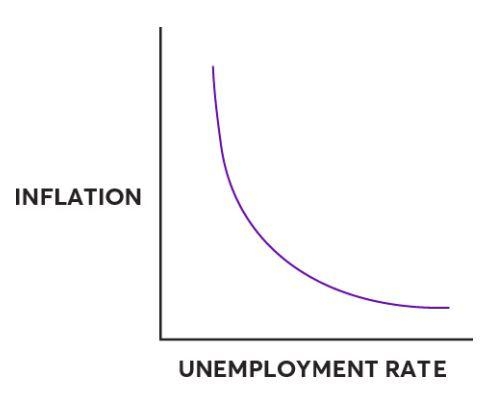
What Is the Phillips Curve?
The Phillips curve is an economic theory that describes the relationship between unemployment and inflation. It suggests that when unemployment is low, inflation tends to rise, and when unemployment is high, inflation tends to fall. For decades, this concept has been one of the most influential ideas in macroeconomics, shaping how governments and central banks think about economic policy.
Although the Phillips curve has helped economists understand important economic trends, its relationship is not always consistent. Over time, changes in global markets, worker expectations, and monetary policy have made the relationship between unemployment and inflation more complex.
The Origin of the Phillips Curve
The Phillips curve is named after New Zealand economist A.W. Phillips, who published a study in 1958. He analyzed nearly a century of data from the United Kingdom and found that wages tended to rise faster when unemployment was low. Conversely, when unemployment was high, wage growth slowed or even declined.
Economists later extended this idea to inflation because wages are a major cost for businesses. As wages increase, companies often raise prices to maintain profits, contributing to higher inflation.
This observation became known as the Phillips curve.
How the Phillips Curve Works
The basic idea is that unemployment and inflation have an inverse relationship.
-
Low unemployment: Businesses compete for a limited number of workers. They offer higher wages to attract employees. Higher labor costs often lead to higher prices, increasing inflation.
-
High unemployment: Many workers are available for fewer jobs. Wage growth slows because employers face less competition for labor. Lower wage pressures help keep inflation under control.
This trade-off suggests that reducing unemployment may come at the cost of higher inflation, while reducing inflation may require accepting higher unemployment.
A Simple Example
Imagine an economy experiencing strong growth.
Businesses receive more customer orders and need additional workers. Since unemployment is already low, employers struggle to hire qualified employees. To attract workers, they increase salaries and offer better benefits.
Higher wages raise production costs. Businesses pass some of these costs on to consumers through higher prices. As a result, inflation rises.
Now consider the opposite situation.
During an economic slowdown, businesses reduce hiring or lay off workers. With more people seeking jobs, wage growth weakens. Consumers spend less, reducing demand for goods and services. Inflation usually slows as businesses have less ability to increase prices.
The Shape of the Phillips Curve
The traditional Phillips curve is downward sloping.
-
High unemployment corresponds with low inflation.
-
Low unemployment corresponds with high inflation.
The curve illustrates a trade-off rather than a fixed rule. Policymakers often use it to understand the potential consequences of economic decisions.
Why Does the Relationship Exist?
Several economic forces help explain the Phillips curve.
Labor Market Competition
When workers are scarce, employers compete by raising wages. Rising wages increase household income, encouraging greater spending. Stronger consumer demand can push prices higher.
Consumer Demand
Low unemployment usually means more people have jobs and steady incomes. Higher income increases spending on goods and services. If demand grows faster than supply, businesses often respond by increasing prices.
Business Costs
Labor is one of the largest expenses for many companies. Rising wages increase production costs, which may be passed on to consumers through higher prices.
Together, these factors help explain why periods of low unemployment often coincide with rising inflation.
The Short-Run Phillips Curve
Most economists today believe the Phillips curve works better in the short run than in the long run.
In the short run:
-
Changes in demand can affect employment.
-
Businesses may temporarily hire more workers.
-
Inflation and unemployment may move in opposite directions.
Governments sometimes use fiscal policy or central banks adjust interest rates to influence economic activity based on this short-term relationship.
The Long-Run Phillips Curve
Economist Milton Friedman and others argued that the trade-off does not last forever.
Workers and businesses eventually adjust their expectations about inflation. If everyone expects prices to continue rising, employees demand higher wages while firms continue raising prices.
Eventually, unemployment returns to its natural level, but inflation remains higher.
This idea led economists to conclude that there is no permanent trade-off between inflation and unemployment.
The Natural Rate of Unemployment
The natural rate of unemployment refers to the level of unemployment that exists even in a healthy economy.
It includes:
-
Workers changing jobs
-
Recent graduates entering the workforce
-
People gaining new skills
-
Temporary mismatches between workers and employers
Trying to push unemployment permanently below this natural rate may only create accelerating inflation rather than lasting employment gains.
When the Phillips Curve Breaks Down
While the Phillips curve has often described economic conditions, there have been periods when it failed to predict events accurately.
Stagflation
One of the biggest challenges came during the 1970s.
Many countries experienced:
-
High inflation
-
High unemployment
-
Slow economic growth
According to the traditional Phillips curve, high unemployment should have reduced inflation. Instead, inflation remained high because oil price shocks and supply disruptions increased production costs.
This period became known as stagflation and forced economists to rethink the theory.
Modern Economies
In recent decades, many countries have experienced low unemployment without large increases in inflation.
Several factors may explain this:
-
Global competition keeps prices lower.
-
Technological improvements reduce production costs.
-
Better inflation management by central banks.
-
Stable inflation expectations among consumers and businesses.
As a result, the Phillips curve appears flatter than it once was, meaning unemployment changes have a smaller effect on inflation.
How Central Banks Use the Phillips Curve
Central banks, such as the Federal Reserve and other monetary authorities, monitor both inflation and unemployment when setting interest rates.
If inflation rises too quickly, a central bank may:
-
Raise interest rates.
-
Reduce borrowing and spending.
-
Slow economic growth.
-
Ease inflation pressures.
If unemployment becomes too high, it may:
-
Lower interest rates.
-
Encourage borrowing and investment.
-
Stimulate hiring.
-
Support economic growth.
Although policymakers no longer rely solely on the Phillips curve, it remains one of many tools used to evaluate economic conditions.
Criticisms of the Phillips Curve
The Phillips curve has several important limitations.
Expectations Matter
People adjust their behavior based on expected inflation. If workers anticipate rising prices, they seek higher wages before inflation actually occurs, changing the relationship.
Supply Shocks
Unexpected increases in energy prices, natural disasters, or global supply chain disruptions can cause inflation without reducing unemployment.
Globalization
Businesses increasingly compete with firms around the world. International competition limits the ability of companies to raise prices even when domestic labor markets are tight.
Technological Change
Automation and productivity improvements reduce production costs, weakening inflation pressures despite low unemployment.
Why the Phillips Curve Still Matters
Despite its limitations, the Phillips curve remains valuable because it highlights the interaction between labor markets and inflation.
It encourages policymakers to consider questions such as:
-
Is unemployment becoming too low?
-
Are wage increases creating inflationary pressure?
-
Is inflation driven by demand or supply factors?
-
Should monetary policy become tighter or more supportive?
Rather than offering exact predictions, the Phillips curve provides a framework for understanding economic trade-offs.
Conclusion
The Phillips curve explains the traditional inverse relationship between unemployment and inflation. When unemployment falls, wages and prices often rise; when unemployment increases, inflation tends to slow. While this relationship held reasonably well in many historical periods, later events—particularly stagflation and the effects of globalization—revealed that the connection is more complex than originally believed.
Today, economists generally view the Phillips curve as a short-run tendency rather than a fixed economic law. Inflation expectations, supply shocks, productivity, and global competition all influence how inflation and unemployment interact. Even so, the Phillips curve remains a cornerstone of macroeconomic theory and continues to help governments and central banks evaluate economic conditions and balance the goals of stable prices and strong employment.
- Arts
- Business
- Computers
- Games
- Health
- Home
- Kids and Teens
- Money
- News
- Personal Development
- Recreation
- Regional
- Reference
- Science
- Shopping
- Society
- Sports
- Бизнес
- Деньги
- Дом
- Досуг
- Здоровье
- Игры
- Искусство
- Источники информации
- Компьютеры
- Личное развитие
- Наука
- Новости и СМИ
- Общество
- Покупки
- Спорт
- Страны и регионы
- World

 Russian
 French
 Spanish
 Portuguese
 Deutsch
 Turkish
 Dutch
Dutch
 Italiano
 Arabic
 Romaian
 Portuguese (Brazil)
 Greek
Greek