
How Do I Implement SaaS Software?
A surprising number of software failures begin with optimism.
Not technical failure. Not security failure. Not even budget failure.
Expectation failure.
A leadership team approves a new SaaS platform. The vendor demonstration is polished. The roadmap looks convincing. The implementation timeline appears manageable. Six months later, employees are working around the system, adoption rates are disappointing, and executives are wondering why the promised efficiencies never materialized.
The irony is hard to miss. Organizations often spend extraordinary effort selecting software and remarkably little effort implementing it.
That imbalance matters.
Because SaaS implementation is not fundamentally a technology project. It is a behavioral project disguised as a technology project.
The software rarely fails on its own. People fail to integrate it into workflows, fail to align it with business objectives, or fail to prepare the organization for change.
I learned this lesson while helping oversee the rollout of a customer relationship management platform several years ago. The vendor had a strong reputation. The functionality was impressive. The executive sponsorship was enthusiastic.
Everything looked right.
Yet within weeks, employees were creating spreadsheets to avoid using the new system.
The problem wasn't the software.
The problem was that we had implemented a platform before we had implemented a reason to use it.
That distinction may sound subtle. It isn't.
Organizations that understand it tend to succeed. Those that don't often discover that software adoption and software deployment are two entirely different achievements.
What Does SaaS Implementation Actually Mean?
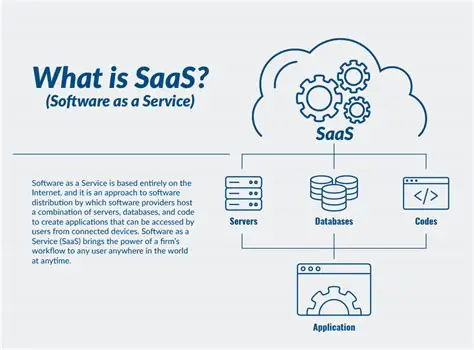
SaaS (Software as a Service) implementation is the process of planning, configuring, integrating, testing, deploying, and driving adoption of cloud-based software within an organization.
The word implementation often creates the wrong impression.
It suggests installation.
Most SaaS products require little or no traditional installation. The software already exists. The infrastructure already exists. Updates are handled by the provider.
Implementation is therefore less about technology deployment and more about organizational integration.
You're not installing software.
You're redesigning behavior around software.
That difference changes everything.
Why SaaS Implementations Succeed—or Fail
Organizations frequently assume implementation success depends primarily on technical expertise.
Technical expertise matters.
Alignment matters more.
The strongest implementations connect three elements:
- Business objectives
- User needs
- Platform capabilities
Miss any one of those, and friction emerges.
Imagine purchasing a sophisticated marketing automation platform designed for enterprise personalization while your marketing team lacks clean customer data.
The software may be exceptional.
The implementation may still disappoint.
Technology cannot compensate indefinitely for organizational misalignment.
Step 1: Define the Business Problem Before Selecting Solutions
This sounds obvious.
It rarely happens as thoroughly as it should.
Many organizations begin with software features.
The better approach begins with business outcomes.
Ask:
What specific problem are we solving?
Examples might include:
- Reducing customer support response times
- Improving sales pipeline visibility
- Streamlining financial reporting
- Automating employee onboarding
Specificity matters.
"Improve productivity" is not a business objective.
It is a wish.
Objectives become useful only when they can be measured.
Establish Success Metrics Early
Before implementation begins, determine how success will be evaluated.
Examples include:
| Objective | Metric | Current State | Target State |
|---|---|---|---|
| Improve customer support | First response time | 18 hours | 4 hours |
| Increase sales visibility | Forecast accuracy | 62% | 85% |
| Reduce manual reporting | Weekly reporting hours | 25 hours | 5 hours |
| Improve onboarding | Time-to-productivity | 60 days | 30 days |
| Increase adoption | Active user rate | 0% | 90% |
Organizations that define metrics early create accountability. Organizations that don't often debate success long after deployment.
Step 2: Build an Implementation Team
One of the most persistent myths surrounding SaaS projects is that IT should own everything.
They shouldn't.
Successful implementations are cross-functional.
Technology decisions affect people across departments.
A strong implementation team typically includes:
Executive Sponsor
The executive sponsor provides visibility, removes obstacles, and communicates strategic importance.
Without executive support, implementations often lose momentum during difficult phases.
Project Manager
Someone must coordinate timelines, stakeholders, risks, and deliverables.
This role becomes increasingly important as implementation complexity grows.
Department Leaders
Business leaders understand operational realities that technical teams may overlook.
Their input helps ensure workflows align with actual needs.
Power Users
These individuals become internal champions.
Employees often trust peers more than official communications.
That dynamic can dramatically influence adoption.
Step 3: Map Existing Processes
Organizations frequently attempt to configure software immediately.
That impulse is understandable.
It is also risky.
Before configuring anything, document existing workflows.
Identify Current-State Processes
Ask questions such as:
- How does work happen today?
- Where are bottlenecks occurring?
- Which tasks are manual?
- What data is being collected?
- Who owns each step?
The goal isn't merely documentation.
The goal is understanding.
Many organizations discover inefficiencies they never recognized because employees had normalized them over time.
Design Future-State Processes
Once current workflows are mapped, determine how the SaaS platform should improve them.
This is where implementation shifts from replication to transformation.
Not every existing process deserves preservation.
Some deserve retirement.
Step 4: Configure the Platform Thoughtfully
One temptation appears in almost every SaaS project.
Customization.
The platform offers dozens of settings, hundreds of options, and seemingly endless flexibility.
Organizations begin customizing.
Then they continue customizing.
Then they create complexity rivaling the system they hoped to simplify.
This pattern is remarkably common.
Prioritize Simplicity
Whenever possible:
- Use standard workflows
- Minimize custom fields
- Limit unnecessary automation
- Avoid excessive customization
Simplicity scales more effectively than complexity.
Moreover, future software updates tend to integrate more smoothly with standardized configurations.
Focus on User Experience
Employees rarely evaluate software based on technical architecture.
They evaluate it based on convenience.
If workflows become cumbersome, adoption suffers.
The most elegant configuration is often the one users barely notice.
Step 5: Prepare and Clean Your Data
Data migration is one of the least glamorous implementation activities.
It is also one of the most important.
Poor data quality can undermine even the strongest software deployment.
Common Data Problems
Organizations frequently encounter:
- Duplicate records
- Missing information
- Inconsistent formats
- Outdated contacts
- Inaccurate historical data
Migrating flawed data simply transfers problems into a new environment.
Clean Before Migration
This requires discipline.
Remove duplicates.
Standardize naming conventions.
Validate critical records.
Archive unnecessary information.
A clean dataset improves both user trust and system performance.
Step 6: Integrate Existing Systems
Very few SaaS platforms operate in isolation.
Most connect with other business applications.
Examples include:
- CRM systems
- ERP platforms
- Marketing automation tools
- HR software
- Customer support systems
- Financial platforms
The objective is not merely connectivity.
The objective is continuity.
Employees should experience a coherent ecosystem rather than disconnected tools.
Evaluate Integration Priorities
Not every integration needs immediate deployment.
Prioritize based on business impact.
Questions to consider include:
- Which integrations reduce manual work?
- Which improve data accuracy?
- Which support strategic goals?
The answers often reveal a clear implementation sequence.
Step 7: Test Before Launch
Organizations sometimes view testing as a final checkpoint.
It is better understood as a learning opportunity.
Testing reveals assumptions.
And assumptions are often where implementation risk resides.
Types of Testing
Functional Testing
Verify features work as expected.
User Acceptance Testing (UAT)
Allow actual users to validate workflows.
This step is particularly valuable because users often uncover practical issues that technical teams overlook.
Security Testing
Confirm access permissions, authentication controls, and compliance requirements function appropriately.
Integration Testing
Validate data movement between connected systems.
Testing should be rigorous enough to inspire confidence but practical enough to maintain momentum.
Perfection is not the objective.
Preparedness is.
Step 8: Train Employees for Adoption
Many SaaS implementations concentrate heavily on technical readiness.
Yet user readiness often determines actual outcomes.
People resist change for understandable reasons.
New systems create uncertainty.
Established habits feel comfortable.
Learning requires effort.
Ignoring these realities rarely produces adoption.
Effective Training Approaches
Successful organizations typically combine:
- Live workshops
- Video tutorials
- Documentation
- Peer coaching
- Office hours for questions
Different employees learn differently.
Training should reflect that reality.
Explain the "Why"
One lesson repeatedly emerges across implementation projects.
Employees care less about software features than leaders expect.
They care more about how changes affect their daily work.
Communicate:
- Why the software was selected
- What problems it solves
- How workflows will improve
- What support is available
Context often reduces resistance more effectively than instruction.
Step 9: Launch in Phases When Possible
The dramatic "big bang" deployment has undeniable appeal.
Everything changes at once.
The organization moves forward together.
Reality is usually messier.
Phased rollouts often reduce risk.
Benefits of Phased Deployment
Organizations gain opportunities to:
- Identify issues early
- Gather feedback
- Improve training
- Refine configurations
- Build confidence
Momentum becomes cumulative rather than fragile.
Each successful phase strengthens the next.
Common Rollout Strategies
Organizations may launch by:
- Department
- Region
- Business unit
- Functionality
- User group
The appropriate strategy depends on operational complexity.
Step 10: Measure, Optimize, and Evolve
Many organizations mistakenly view deployment as the finish line.
It isn't.
Deployment is the beginning of operational reality.
Monitor Key Performance Indicators
Review:
- User adoption rates
- Login frequency
- Process efficiency improvements
- Support ticket volume
- Customer outcomes
- Revenue impact
Metrics provide evidence.
Evidence supports better decisions.
Gather Feedback Continuously
Employees often identify improvement opportunities before leadership notices them.
Create channels for:
- User suggestions
- Enhancement requests
- Workflow feedback
- Issue reporting
Listening becomes a competitive advantage.
The Hidden Variable: Change Management
Technology receives most of the attention during SaaS implementation.
Change management deserves at least as much.
Organizations frequently underestimate the emotional dimension of change.
People don't simply adopt systems.
They adapt identities, routines, and expectations.
That process takes time.
Communication becomes essential.
Transparency becomes essential.
Patience becomes essential.
The strongest implementations acknowledge human behavior instead of assuming compliance.
A Lesson Learned About Adoption
Years ago, after one particularly challenging SaaS deployment, I reviewed user engagement metrics expecting to find technical issues.
Instead, I found something more interesting.
The employees with the highest adoption rates weren't necessarily the most technically skilled.
They were the employees who clearly understood how the platform improved their work.
That observation reshaped how I think about implementation.
Organizations often spend months explaining features.
They spend far less time explaining value.
Yet value is what drives behavior.
People embrace tools when they perceive meaningful benefits.
Not before.
Conclusion: SaaS Implementation Is Really an Exercise in Alignment
The question "How do I implement SaaS software?" appears technological on the surface.
The deeper answer is organizational.
Successful SaaS implementation requires alignment among strategy, processes, people, and technology. Remove any one of those elements and the initiative becomes vulnerable.
The software itself is rarely the hardest part.
Defining objectives is harder.
Managing change is harder.
Building adoption is harder.
Creating accountability is harder.
Yet those challenges also create opportunity.
Because organizations that approach SaaS implementation thoughtfully don't simply deploy a platform. They redesign how work happens. They improve visibility. They strengthen decision-making. They create systems that support growth rather than constrain it.
And perhaps that's the most important insight of all.
Software doesn't transform organizations.
Organizations transform themselves—and software merely reveals how prepared they were to do so.
- Arts
- Business
- Computers
- Jeux
- Health
- Domicile
- Kids and Teens
- Argent
- News
- Personal Development
- Recreation
- Regional
- Reference
- Science
- Shopping
- Society
- Sports
- Бизнес
- Деньги
- Дом
- Досуг
- Здоровье
- Игры
- Искусство
- Источники информации
- Компьютеры
- Личное развитие
- Наука
- Новости и СМИ
- Общество
- Покупки
- Спорт
- Страны и регионы
- World

 English
 Russian
 Spanish
 Portuguese
 Deutsch
 Turkish
 Dutch
Dutch
 Italiano
 Arabic
 Romaian
 Portuguese (Brazil)
 Greek
Greek
