
What Is Customer Acquisition Cost (CAC)? The Number That Determines Whether Growth Is Creating Value or Destroying It
Growth has a way of seducing people.
A startup announces that it doubled its customer base. Investors applaud. Employees celebrate. Founders post charts with upward-sloping lines that seem to promise an inevitable future.
And yet growth, by itself, can be remarkably deceptive.
A company can acquire thousands of customers and still lose money. It can increase revenue while weakening its economics. It can look successful from a distance and fragile up close.
The reason is surprisingly simple.
Not all customers cost the same to acquire.
Some arrive through referrals. Others require months of sales effort. Some click a paid advertisement. Others emerge after a lengthy sequence of emails, demos, webinars, and follow-up conversations.
This reality introduces one of the most important metrics in modern business: Customer Acquisition Cost, commonly known as CAC.
At first glance, CAC appears to be a financial measurement.
A formula.
A ratio.
A line item in a spreadsheet.
But that interpretation understates its significance.
CAC is really a measure of efficiency. It reveals how effectively a company transforms marketing and sales investments into customer relationships. It exposes whether growth is sustainable or merely expensive. And in subscription businesses especially, it often determines whether impressive revenue eventually becomes impressive profitability.
Barbara Kahn has long emphasized that businesses succeed when they align value creation with customer needs. CAC offers a different perspective on the same idea. It asks whether a company can create those customer relationships economically enough to sustain long-term growth.
The answer matters more than many founders realize.
What Is Customer Acquisition Cost (CAC)?
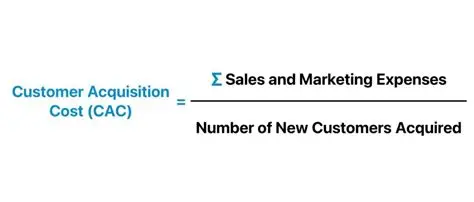
Customer Acquisition Cost measures the total expense required to acquire a new customer.
In its simplest form, CAC answers a straightforward question:
How much does the company spend to gain one paying customer?
These expenses typically include:
- Advertising costs
- Marketing software
- Sales salaries
- Commissions
- Agency fees
- Content creation
- Promotional campaigns
- Lead generation activities
If a company spends $20,000 on sales and marketing and acquires 100 customers, its CAC equals:
CAC = $20,000 ÷ 100
CAC = $200
On average, each customer costs $200 to acquire.
The arithmetic is simple.
The implications are not.
Because CAC influences virtually every aspect of business performance.
Why CAC Matters More Than Growth Alone
Growth often attracts attention.
CAC determines whether that attention is justified.
Consider two SaaS businesses.
Each acquires 1,000 customers.
Each generates identical revenue.
At first glance, they appear equally successful.
But one company spends $100,000 acquiring those customers.
The other spends $500,000.
The economics are fundamentally different.
One business has created efficient growth.
The other has purchased growth at a far higher price.
Revenue may look identical today.
Profitability may look very different tomorrow.
This distinction explains why sophisticated operators rarely celebrate customer acquisition in isolation.
They ask a more important question:
What did those customers cost?
The Basic CAC Formula
The standard CAC calculation is straightforward.
CAC Formula
CAC = Total Sales and Marketing Costs ÷ Number of New Customers Acquired
For example:
| Expense Category | Monthly Cost |
|---|---|
| Paid Advertising | $15,000 |
| Marketing Software | $2,500 |
| Content Creation | $4,000 |
| Sales Salaries | $18,500 |
| Sales Commissions | $5,000 |
| Total Cost | $45,000 |
If these efforts produce 150 new customers:
CAC = $45,000 ÷ 150
CAC = $300
Each customer costs $300 to acquire.
Simple.
But understanding the number requires context.
CAC Is Not Really About Cost
This may sound contradictory.
But CAC is not primarily a cost metric.
It is an efficiency metric.
High CAC is not inherently bad.
Low CAC is not inherently good.
The critical question is what happens afterward.
Imagine acquiring a customer for $1,000.
That sounds expensive.
But suppose the customer generates $15,000 in revenue over five years.
Suddenly, the acquisition cost appears entirely reasonable.
Now imagine acquiring a customer for $50 who generates only $40 in revenue.
The acquisition looks inexpensive.
The economics are terrible.
CAC gains meaning only when paired with customer value.
The Relationship Between CAC and Customer Lifetime Value (LTV)
If CAC measures investment, Customer Lifetime Value (LTV) measures return.
Together, they form one of the most important relationships in SaaS economics.
Comparing CAC and LTV
| Metric | What It Measures | Key Question |
| CAC | Cost to acquire a customer | What did we spend? |
| LTV | Total customer value over time | What did we earn? |
A company spending $500 to acquire a customer who generates $5,000 in lifetime revenue has strong economics.
A company spending $500 to acquire a customer who generates $400 has a problem.
The Ideal Ratio
Many SaaS companies target:
LTV = 3:1
This suggests customers generate three times more value than acquisition costs.
The exact benchmark varies by industry.
The principle remains consistent.
Customer value should significantly exceed acquisition expense.
Why CAC Changes Over Time
One of the most misunderstood aspects of CAC is its fluidity.
Many founders treat it as a static number.
It isn't.
CAC evolves constantly.
Several factors influence it.
Competition
As markets become crowded, customer attention becomes more expensive.
Advertising costs often increase.
Differentiation becomes harder.
CAC rises.
Brand Awareness
Established companies frequently enjoy lower acquisition costs because trust already exists.
Recognition reduces friction.
Product-Market Fit
Strong product-market fit often improves acquisition efficiency.
Customers refer others.
Word-of-mouth accelerates growth.
Marketing becomes easier.
Channel Saturation
Even successful acquisition channels eventually lose efficiency.
What worked brilliantly last year may perform differently today.
CAC reflects these changes.
Understanding Blended CAC vs Channel CAC
Sophisticated companies rarely stop at overall CAC.
They examine acquisition costs by channel.
Why?
Because averages can conceal important insights.
Blended CAC
This metric includes all acquisition costs across all channels.
It provides a broad overview.
Channel CAC
This measures acquisition costs for individual channels such as:
- Paid search
- Organic search
- Social media
- Referrals
- Partnerships
- Email marketing
Different channels often produce dramatically different results.
Example
| Acquisition Channel | Spend | Customers Acquired | CAC |
| Paid Search | $20,000 | 100 | $200 |
| Content Marketing | $10,000 | 150 | $67 |
| Referral Program | $5,000 | 120 | $42 |
| Trade Events | $15,000 | 40 | $375 |
The lesson becomes obvious.
Not all growth channels are equally efficient.
Understanding channel-level CAC enables smarter resource allocation.
A Lesson I Learned Watching Growth Become Expensive
Several years ago, I worked with a SaaS company experiencing remarkable customer growth.
The numbers looked extraordinary.
Every month brought more signups.
Revenue continued climbing.
Leadership felt understandably optimistic.
Then acquisition costs began rising.
Gradually at first.
Almost imperceptibly.
Advertising became more competitive. Lead quality declined. Sales cycles lengthened.
Growth continued, but efficiency deteriorated.
What fascinated me was how long it took the organization to recognize the shift.
Revenue remained healthy, masking the underlying problem.
CAC eventually revealed what top-line growth could not.
The company was working harder and spending more for each new customer.
That realization triggered a strategic reset.
Marketing priorities changed. Referral programs expanded. Customer retention received greater attention.
The lesson was clear.
Growth metrics tell part of the story.
CAC often tells the part that matters most.
Why SaaS Companies Obsess Over CAC
Subscription businesses face a unique challenge.
Revenue arrives gradually.
Acquisition costs arrive immediately.
Imagine spending $1,200 to acquire a customer who pays $100 monthly.
The economics eventually work.
But not instantly.
The company must recover acquisition costs before profitability emerges.
This introduces another critical metric.
CAC Payback Period
The payback period measures how long it takes to recover acquisition expenses.
| CAC | Monthly Gross Profit | Payback Period |
| $600 | $100 | 6 Months |
| $1,200 | $100 | 12 Months |
| $2,400 | $100 | 24 Months |
Shorter payback periods generally improve cash flow and reduce risk.
This is why SaaS operators monitor CAC so closely.
Strategies for Reducing CAC
Companies often assume lower CAC requires spending less.
Not necessarily.
The objective is spending more efficiently.
Several approaches frequently improve acquisition economics.
Improve Conversion Rates
More conversions from existing traffic reduce acquisition costs.
Small improvements can have outsized effects.
Strengthen Referrals
Referred customers often cost less to acquire and retain longer.
Invest in Content
High-quality content can generate sustainable traffic over time.
Unlike paid advertising, its value often compounds.
Enhance Product-Market Fit
Products that solve meaningful problems frequently acquire customers more efficiently.
Satisfied customers become advocates.
Advocates reduce acquisition costs.
Common CAC Mistakes
Even experienced organizations sometimes miscalculate CAC.
Several errors appear repeatedly.
Excluding Sales Salaries
Acquisition costs extend beyond advertising.
Sales expenses matter too.
Ignoring Software Costs
Marketing platforms and sales tools contribute to acquisition costs.
Focusing Solely on CAC
A low CAC means little if customers fail to generate value.
Measuring Short-Term Results Only
Some acquisition channels produce value over longer horizons.
Premature conclusions can distort decision-making.
What CAC Really Measures
At first glance, CAC appears purely financial.
A cost metric.
A budgeting metric.
A spreadsheet metric.
Look closer.
CAC measures something deeper.
It measures friction.
The easier it is to persuade customers that a solution is valuable, the lower acquisition costs tend to be.
The harder that persuasion becomes, the higher costs rise.
In this sense, CAC becomes a reflection of market dynamics.
Customer demand.
Competitive intensity.
Brand strength.
Product relevance.
All leave fingerprints on the metric.
The Most Important Question CAC Forces Companies to Ask
When people ask, "What is Customer Acquisition Cost?" they often expect a formula.
And formulas are useful.
But the most valuable aspect of CAC is not mathematical.
It is strategic.
CAC forces organizations to confront a difficult question:
Is our growth creating value efficiently enough to sustain itself?
That question separates momentum from durability.
Because acquiring customers is relatively easy if cost is ignored.
Almost any business can purchase attention.
The challenge is acquiring customers economically while continuing to create meaningful value.
That balance defines healthy growth.
And perhaps that is why CAC remains one of the most influential metrics in SaaS.
Not because it measures spending.
But because it reveals whether spending is producing something durable.
Revenue can be purchased temporarily.
Sustainable customer relationships cannot.
CAC helps distinguish between the two.
- Arts
- Business
- Computers
- Игры
- Health
- Главная
- Kids and Teens
- Деньги
- News
- Personal Development
- Recreation
- Regional
- Reference
- Science
- Shopping
- Society
- Sports
- Бизнес
- Деньги
- Дом
- Досуг
- Здоровье
- Игры
- Искусство
- Источники информации
- Компьютеры
- Личное развитие
- Наука
- Новости и СМИ
- Общество
- Покупки
- Спорт
- Страны и регионы
- World

 English
 French
 Spanish
 Portuguese
 Deutsch
 Turkish
 Dutch
Dutch
 Italiano
 Arabic
 Romaian
 Portuguese (Brazil)
 Greek
Greek
