
What Is SaaS Marketing?
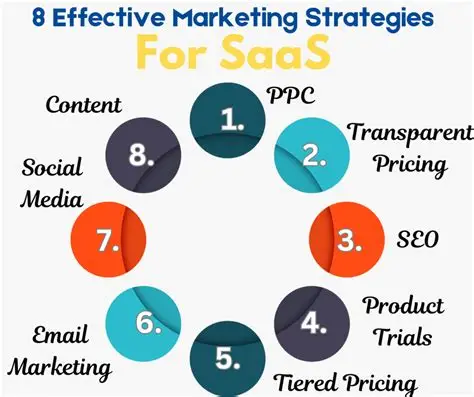
Most marketers think they are selling products.
SaaS marketers are selling something more complicated.
They are selling belief.
Not belief in a brand. Not belief in a feature set. Belief in a future state—a version of work that is faster, easier, more organized, more profitable, or simply less frustrating than the present.
That distinction changes everything.
A consumer buying a coffee maker can evaluate it within minutes. A business purchasing software may spend weeks researching vendors, comparing alternatives, consulting stakeholders, and assessing risk. The software itself is often invisible. What customers are actually buying is an outcome.
Fewer manual tasks.
Better collaboration.
More accurate forecasting.
Greater efficiency.
The challenge, then, is not merely generating awareness. It is helping prospective customers envision a different way of operating and giving them enough confidence to make the leap.
This is where SaaS marketing becomes fascinating.
Unlike traditional product marketing, SaaS marketing does not end when the customer clicks “Buy.” In many respects, that is where the real work begins.
Defining SaaS Marketing
SaaS marketing refers to the strategies, tactics, and processes used to attract, acquire, retain, and expand customers for Software-as-a-Service businesses.
At first glance, the definition sounds straightforward.
Yet embedded within that sentence is a significant shift in thinking.
Traditional marketing often focuses heavily on acquisition. SaaS marketing cannot afford that luxury.
Because SaaS companies generate recurring revenue, customer relationships extend beyond the initial sale. A customer who subscribes today may generate revenue for years—or leave next month.
As a result, SaaS marketing operates across the entire customer lifecycle:
- Awareness
- Consideration
- Evaluation
- Conversion
- Onboarding
- Retention
- Expansion
- Advocacy
Each stage influences revenue.
Each stage influences growth.
And perhaps most importantly, each stage influences the next.
Why SaaS Marketing Is Different
Software businesses operate under economic realities that differ dramatically from traditional companies.
A retailer sells inventory.
A manufacturer sells products.
A SaaS company sells access.
That distinction alters how marketing functions.
Revenue accumulates gradually through subscriptions.
Customer lifetime value becomes critically important.
Retention often matters as much as acquisition.
Sometimes more.
A customer acquired today may not become profitable for months. Consequently, marketers must think beyond immediate conversions.
The objective is not merely attracting customers.
The objective is attracting customers who stay.
This seemingly minor distinction reshapes everything from messaging and pricing to onboarding and customer success.
The Core Objective of SaaS Marketing
Ask ten SaaS executives about marketing, and many will mention lead generation.
They are not wrong.
They are simply incomplete.
The most effective SaaS marketing creates momentum across the customer journey.
It educates prospects.
Reduces uncertainty.
Demonstrates value.
Encourages adoption.
Supports retention.
Facilitates expansion.
Viewed this way, SaaS marketing resembles relationship building more than promotion.
The strongest SaaS brands do not merely communicate benefits.
They systematically remove barriers to trust.
The SaaS Marketing Funnel
The traditional funnel remains useful, but SaaS companies often think in terms of a more dynamic system.
Awareness
Potential customers discover a problem or become aware of possible solutions.
This stage frequently involves:
- Blog content
- Search engine optimization
- Social media
- Industry reports
- Podcasts
- Webinars
The goal is visibility.
Not conversion.
Yet.
Consideration
Prospects begin evaluating options.
They compare vendors.
Read reviews.
Download resources.
Attend demonstrations.
The questions become more specific.
Can this solve my problem?
Can I trust this company?
Conversion
A prospect becomes a customer.
Depending on the business model, this may involve:
- Free trials
- Freemium plans
- Sales consultations
- Product demonstrations
The conversion stage often receives disproportionate attention because it feels measurable.
But conversion is rarely the finish line.
Retention and Expansion
Recurring revenue changes the equation.
Customer success, product adoption, and ongoing engagement become marketing concerns.
A customer who expands usage may create more value than several newly acquired customers.
The funnel becomes a loop.
And that loop becomes the business.
Content Marketing: The Foundation of SaaS Growth
If SaaS marketing has a center of gravity, content marketing sits remarkably close to it.
The reason is behavioral.
Software buyers rarely wake up intending to purchase software.
They wake up intending to solve problems.
Someone searching:
- How to reduce customer churn
- Best CRM for startups
- Sales forecasting techniques
is seeking guidance before selecting a vendor.
Content bridges that gap.
High-quality content helps companies establish credibility before purchase conversations begin.
It also aligns naturally with long sales cycles.
Trust develops gradually.
Content facilitates that process.
Not through persuasion alone.
Through education.
SEO and the Economics of Intent
Few marketing channels align as closely with SaaS economics as search engine optimization.
SEO captures existing demand.
Someone searching for software categories, implementation guidance, or product comparisons has already expressed interest.
The challenge is visibility.
Companies invest heavily in:
- Educational articles
- Product comparison pages
- Industry research
- Customer success stories
- Knowledge centers
Unlike paid advertising, organic traffic can continue generating value long after publication.
That characteristic makes SEO particularly attractive in subscription businesses where customer lifetime value extends over years.
The return compounds.
And compounding tends to attract attention.
Product-Led Marketing
One of the most significant developments in SaaS marketing has been the rise of product-led growth.
Historically, marketing generated leads and sales closed deals.
Product-led companies alter the sequence.
Customers experience the product before making a purchase decision.
Examples include:
- Free trials
- Freemium models
- Interactive product tours
- Self-service onboarding
The software itself becomes a marketing asset.
This approach reduces friction.
Prospects no longer rely solely on marketing claims.
They evaluate value firsthand.
When executed effectively, the product becomes both demonstration and proof.
Comparing Major SaaS Marketing Channels
Different channels serve different objectives.
The strongest SaaS organizations understand the strengths and limitations of each.
| Marketing Channel | Primary Goal | Cost Efficiency | Scalability | Typical Impact |
|---|---|---|---|---|
| Content Marketing | Education | High | High | Long-term demand generation |
| SEO | Discovery | High | High | Sustainable traffic growth |
| Paid Search | Lead Acquisition | Medium | High | Immediate visibility |
| Social Media | Awareness | Medium | High | Brand exposure |
| Email Marketing | Nurturing | Very High | High | Conversion and retention |
| Webinars | Trust Building | High | Medium | High-intent engagement |
| Product-Led Growth | Conversion | High | High | User adoption |
| Referral Programs | Advocacy | Very High | Medium | High-quality leads |
| Partnerships | Distribution | High | Medium | Audience expansion |
No channel dominates universally.
Context matters.
Audience matters.
Timing matters.
Paid Advertising: Accelerating Growth
Organic strategies require patience.
Paid advertising provides speed.
Search advertising, social campaigns, retargeting initiatives, and sponsored placements can generate traffic almost immediately.
Yet speed introduces complexity.
Costs fluctuate.
Competition intensifies.
Efficiency varies significantly across industries.
Successful SaaS marketers therefore focus on economics rather than volume.
A lead is not inherently valuable.
A profitable customer is.
The distinction sounds obvious.
Many organizations ignore it.
Metrics such as customer acquisition cost (CAC), customer lifetime value (LTV), and payback period become essential for evaluating channel effectiveness.
The Role of Email Marketing
Email remains surprisingly resilient.
Despite repeated predictions of its decline, it continues to perform exceptionally well in SaaS environments.
Particularly because software purchases rarely occur after a single interaction.
Prospects require nurturing.
Customers require onboarding.
Existing users require engagement.
Email supports each objective.
Examples include:
- Educational sequences
- Product announcements
- Trial activation campaigns
- Customer onboarding
- Retention initiatives
The channel succeeds because it reaches customers directly.
Not rented attention.
Owned attention.
There is a meaningful difference.
Customer Success Is Marketing
This idea initially feels counterintuitive.
Yet it may be one of the most important concepts in modern SaaS.
Customer success traditionally resides outside marketing departments.
Customers do not care about organizational charts.
Their experience is cumulative.
A poor onboarding experience weakens marketing effectiveness.
A frustrating support interaction undermines brand trust.
An exceptional implementation generates referrals.
Referrals generate pipeline.
The boundaries blur.
Consequently, many successful SaaS organizations treat customer success as an extension of marketing rather than a separate function.
Retention becomes part of growth.
And growth becomes part of retention.
A Lesson I Learned About SaaS Marketing
Several years ago, I observed two software companies competing in remarkably similar markets.
One invested heavily in advertising.
The other invested heavily in education.
The first company generated impressive traffic numbers. Website visits surged. Lead volume expanded.
The second company appeared slower.
Less flashy.
More methodical.
Its team produced research reports, webinars, implementation guides, and customer stories.
Initially, the first company seemed to be winning.
Then renewal data emerged.
The educational company retained customers at significantly higher rates.
Prospects arrived with clearer expectations. Customers adopted the product more effectively. Expansion revenue increased.
The lesson was difficult to ignore.
Marketing had not merely acquired customers.
It had shaped customer quality.
That distinction fundamentally changed how I think about SaaS growth.
The best marketing does not simply persuade people to buy.
It prepares them to succeed.
Metrics That Matter in SaaS Marketing
SaaS marketers operate within a measurement-rich environment.
Yet not all metrics deserve equal attention.
Several stand out.
Customer Acquisition Cost (CAC)
The cost of acquiring a customer.
Lower acquisition costs improve efficiency.
But context matters.
High-value customers may justify substantial acquisition investment.
Customer Lifetime Value (LTV)
The total revenue expected from a customer relationship.
LTV provides critical context for evaluating acquisition spending.
Conversion Rate
Measures how effectively prospects become customers.
Small improvements can significantly impact revenue.
Churn Rate
The percentage of customers who leave.
Churn often reveals more about long-term health than acquisition volume.
Net Revenue Retention (NRR)
Tracks retained and expanded revenue from existing customers.
Strong NRR indicates customers are growing alongside the product.
Together, these metrics reveal a more complete picture of performance.
The Future of SaaS Marketing
Technology evolves.
Buyer expectations evolve.
Marketing channels evolve.
Yet several themes appear increasingly important.
Personalization.
Product-led experiences.
Community building.
First-party data.
Customer education.
The common thread is relevance.
Customers increasingly expect experiences tailored to their needs rather than generic promotional messages.
Software companies capable of delivering that relevance gain a meaningful advantage.
Not because they shout louder.
Because they resonate more deeply.
The Bigger Truth About SaaS Marketing
SaaS marketing is often described as demand generation, lead acquisition, or pipeline creation.
Those descriptions are accurate.
They are also incomplete.
At its core, SaaS marketing is the process of reducing uncertainty.
Every prospective customer faces questions.
Will this work?
Will implementation succeed?
Will employees adopt it?
Will the investment pay off?
The strongest marketing addresses those concerns long before a contract is signed.
And perhaps that is the most revealing aspect of the discipline.
The best SaaS marketers are not merely promoting software.
They are helping customers make decisions.
Through education.
Through evidence.
Through trust.
Because software itself is rarely what customers desire.
They want better outcomes.
Better workflows.
Better results.
A better version of how work gets done.
The companies that understand this tend to approach marketing differently. They focus less on visibility and more on credibility. Less on attention and more on confidence.
And in a category crowded with features, pricing pages, and product claims, confidence may be the most valuable asset of all.
- Arts
- Business
- Computers
- Jogos
- Health
- Início
- Kids and Teens
- Money
- News
- Personal Development
- Recreation
- Regional
- Reference
- Science
- Shopping
- Society
- Sports
- Бизнес
- Деньги
- Дом
- Досуг
- Здоровье
- Игры
- Искусство
- Источники информации
- Компьютеры
- Личное развитие
- Наука
- Новости и СМИ
- Общество
- Покупки
- Спорт
- Страны и регионы
- World

 English
 Russian
 French
 Spanish
 Deutsch
 Turkish
 Dutch
Dutch
 Italiano
 Arabic
 Romaian
 Portuguese (Brazil)
 Greek
Greek
