
How Do I Improve SaaS Customer Retention?
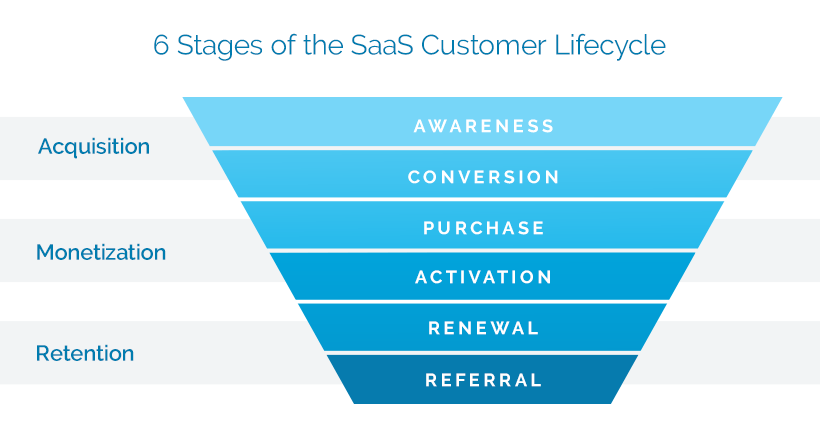
The most dangerous customer is not the one who complains.
It is the one who goes silent.
No support tickets.
No angry emails.
No public criticism.
Just a gradual decline in engagement.
Fewer logins.
Less product usage.
Missed onboarding milestones.
And then, one day, a cancellation notice arrives.
For many SaaS companies, retention feels mysterious because the final act receives all the attention. Leaders focus on the churn event itself while overlooking the dozens of smaller moments that preceded it.
But customer retention is rarely won or lost at renewal.
It is won—or lost—much earlier.
In the first week.
The first onboarding experience.
The first support interaction.
The first measurable outcome.
The first moment a customer asks a simple question: Is this product actually helping me?
That question sits at the heart of SaaS retention.
Because customers do not renew subscriptions out of habit alone. They renew because they continue to perceive value. Consistently. Repeatedly. Often enough that leaving feels less attractive than staying.
Which means improving customer retention is not primarily about preventing churn.
It is about making the customer’s success increasingly difficult to abandon.
What SaaS Customer Retention Really Measures
Customer retention refers to a company’s ability to keep customers over a specific period of time.
The formula is simple.
The implications are not.
Retention reflects whether customers continue paying for a service after their initial purchase. Yet beneath that definition lies something much more revealing.
Retention measures trust.
It measures satisfaction.
It measures product relevance.
Most importantly, it measures whether customers continue achieving meaningful outcomes.
This distinction matters because many companies mistakenly view retention as a customer loyalty issue.
Often, it is a value-delivery issue.
Customers rarely remain loyal to software simply because they like it.
They remain loyal because it solves a problem they still have.
Why Retention Matters More Than Acquisition
Growth stories often focus on acquisition.
More leads.
More demos.
More signups.
The narrative is understandable. Acquisition is visible. Retention is quieter.
Yet from an economic perspective, retention frequently carries greater leverage.
Consider two SaaS companies.
The first acquires 1,000 customers annually but loses 30% of them.
The second acquires 700 customers but retains 95%.
Which company creates more long-term value?
The answer becomes increasingly obvious over time.
Retention improves:
- Customer lifetime value (LTV)
- Profitability
- Net Revenue Retention (NRR)
- Referral generation
- Expansion revenue
- Sales efficiency
In many subscription businesses, a modest improvement in retention produces a larger financial impact than a significant increase in acquisition.
That reality explains why sophisticated SaaS companies obsess over retention metrics.
They understand that growth built on churn is fragile.
Growth built on retention compounds.
The Retention Problem Begins Earlier Than Most Companies Think
Many organizations view retention as a renewal-stage concern.
By then, the outcome is often largely determined.
The customer has already formed opinions.
Already experienced successes.
Already encountered frustrations.
Already evaluated alternatives.
Retention actually begins during onboarding.
Perhaps even before.
The moment expectations are established, the retention journey starts.
Every promise creates a benchmark.
Every benchmark creates expectations.
Every expectation influences satisfaction.
The strongest SaaS companies manage expectations as carefully as they manage product development.
Because disappointed customers are difficult to retain—even when the product performs well.
Onboarding: The Most Important Retention Strategy
If I were forced to identify a single retention lever with the greatest influence, onboarding would sit near the top of the list.
Why?
Because onboarding determines how quickly customers experience value.
And value creates momentum.
Many SaaS companies overload onboarding experiences with information.
Tutorials.
Documentation.
Feature walkthroughs.
Configuration steps.
Customers become overwhelmed.
The objective should not be comprehensive education.
The objective should be meaningful progress.
Successful onboarding answers one question:
"How quickly can we help this customer achieve their first important win?"
The faster customers experience success, the stronger retention tends to become.
Characteristics of Strong Onboarding
- Clear next steps
- Reduced setup complexity
- Guided activation paths
- Milestone tracking
- Early value realization
The best onboarding experiences feel less like training sessions and more like progress accelerators.
Time-to-Value Is a Retention Metric
One of the most overlooked concepts in SaaS retention is time-to-value.
Customers buy software because they expect results.
Not eventually.
Soon.
Every day that passes without visible value increases risk.
The psychology is straightforward.
Customers begin with optimism.
If outcomes arrive quickly, confidence grows.
If outcomes remain elusive, doubt emerges.
And doubt rarely supports retention.
Companies that improve retention often focus relentlessly on shortening the path between signup and success.
That effort may involve:
- Automated setup
- Industry-specific templates
- Personalized onboarding
- Dedicated implementation support
The goal is not merely product adoption.
The goal is meaningful outcomes.
Comparing High-Retention and Low-Retention SaaS Companies
Retention differences often emerge from operational behaviors rather than product capabilities.
| Area | High-Retention SaaS Companies | Low-Retention SaaS Companies |
|---|---|---|
| Onboarding | Structured and proactive | Generic and reactive |
| Customer Success | Strategic function | Support function |
| Product Adoption Monitoring | Continuous | Limited |
| Customer Communication | Consistent | Sporadic |
| Feedback Collection | Ongoing | Occasional |
| Product Development | Customer-informed | Internally driven |
| Renewal Process | Value-focused | Contract-focused |
| Executive Engagement | Active | Minimal |
The pattern is revealing.
Retention rarely depends on one initiative.
It reflects organizational discipline.
Product Adoption: The Leading Indicator
Retention often appears to be a financial metric.
In reality, product adoption usually predicts retention long before revenue data does.
Customers who regularly engage with software tend to stay.
Customers who disengage often leave.
The challenge is recognizing warning signs early.
Common indicators include:
- Declining login frequency
- Reduced feature usage
- Lower engagement levels
- Incomplete workflows
- Missed onboarding milestones
These behaviors frequently precede churn.
The strongest SaaS companies monitor them carefully.
Not because they enjoy analytics.
Because behavior tells a story.
And that story often arrives before cancellation notices.
Customer Success Is Not Customer Support
The distinction is subtle but important.
Customer support responds to problems.
Customer success prevents them.
Support is reactive.
Success is proactive.
Support asks:
"What went wrong?"
Customer success asks:
"How can we help customers achieve their goals?"
This shift fundamentally changes retention outcomes.
High-performing customer success teams focus on:
- Goal alignment
- Product adoption
- Strategic guidance
- Outcome measurement
- Expansion opportunities
Their purpose extends beyond solving issues.
They help customers succeed.
And successful customers tend to remain customers.
A Lesson I Learned About Retention
Several years ago, I worked with a software company facing a retention challenge.
Leadership believed feature gaps were driving customer losses.
The response seemed logical.
The product roadmap expanded dramatically.
New functionality arrived quickly.
Retention barely improved.
Eventually, customer interviews revealed a different reality.
Most departing customers were not asking for additional features.
They were struggling to use the features already available.
The problem was not capability.
It was adoption.
The company shifted resources toward onboarding, education, and customer success.
Feature development continued, but it no longer dominated the conversation.
Over the following year, retention improved significantly.
The lesson was memorable.
Companies often assume customers leave because the product cannot do enough.
Frequently, customers leave because they never learned how to unlock existing value.
Those are very different problems.
And they require very different solutions.
Building Feedback Loops
Retention improves when organizations understand customer experiences in real time.
This requires systematic feedback collection.
Common approaches include:
Customer Surveys
Structured feedback provides visibility into satisfaction and friction points.
Customer Interviews
Conversations often reveal insights that surveys miss.
Product Analytics
Behavioral data exposes usage patterns and adoption challenges.
Customer Advisory Groups
Strategic customers frequently identify emerging needs before broader market shifts occur.
The key is responsiveness.
Customers notice when feedback disappears into a void.
They also notice when feedback influences decisions.
That perception strengthens trust.
Why Communication Matters
Many SaaS companies communicate heavily during acquisition and sparingly afterward.
The imbalance creates problems.
Customers continue evaluating value long after implementation.
Consistent communication reinforces that value.
Effective communication may include:
- Product updates
- Best-practice guidance
- Success stories
- Educational resources
- Strategic recommendations
The objective is not volume.
It is relevance.
Useful communication reminds customers why they purchased the software in the first place.
The Role of Expansion in Retention
An interesting relationship exists between expansion and retention.
Customers who expand usage often become more difficult to lose.
Additional users.
Additional workflows.
Additional integrations.
Each increases dependency.
Dependency, when created through genuine value, strengthens retention.
This is why many successful SaaS companies focus not merely on renewals but on deeper adoption.
The more embedded the product becomes, the stronger the relationship tends to be.
Measuring Retention Effectively
Organizations frequently track retention through a handful of critical metrics.
Customer Retention Rate
Measures the percentage of customers retained over a specific period.
Revenue Retention
Tracks recurring revenue retention, including renewals and expansions.
Net Revenue Retention (NRR)
Accounts for expansion, contraction, and churn.
Product Adoption Metrics
Measures engagement and usage.
Customer Health Scores
Combines behavioral indicators to identify retention risk.
The most effective retention strategies blend financial and behavioral metrics.
One reveals outcomes.
The other predicts them.
Innovation and Retention
Retention is not merely operational.
It is strategic.
Customer expectations evolve.
Markets evolve.
Competitors evolve.
Products must evolve as well.
Innovation communicates commitment.
Customers want confidence that their software partner continues investing in future value.
The strongest SaaS companies balance stability with progress.
Reliable today.
Relevant tomorrow.
That combination supports long-term retention.
The Bigger Truth About SaaS Customer Retention
People often ask how to improve customer retention.
The question sounds tactical.
Should we launch a loyalty program?
Offer discounts?
Create renewal incentives?
Those actions may influence outcomes around the margins.
But retention is rarely determined by incentives alone.
It is determined by value.
The strongest SaaS companies understand this intuitively.
They focus less on convincing customers to stay and more on giving customers reasons to stay.
Every onboarding interaction.
Every support conversation.
Every product improvement.
Every success milestone.
Each contributes to a larger equation.
And perhaps that is the most important insight of all.
Customer retention is not fundamentally about preventing departures.
It is about strengthening relationships.
Customers remain loyal when software becomes useful.
They remain longer when it becomes important.
And they become advocates when it becomes indispensable.
The companies that consistently improve retention recognize that subscriptions are not renewed because contracts exist.
They are renewed because value persists.
Month after month.
Year after year.
Not through persuasion.
Through performance.
Because in SaaS, retention is rarely earned at renewal.
It is earned every day before it.
- Arts
- Business
- Computers
- Παιχνίδια
- Health
- Κεντρική Σελίδα
- Kids and Teens
- Money
- News
- Personal Development
- Recreation
- Regional
- Reference
- Science
- Shopping
- Society
- Sports
- Бизнес
- Деньги
- Дом
- Досуг
- Здоровье
- Игры
- Искусство
- Источники информации
- Компьютеры
- Личное развитие
- Наука
- Новости и СМИ
- Общество
- Покупки
- Спорт
- Страны и регионы
- World

 English
 Russian
 French
 Spanish
 Portuguese
 Deutsch
 Turkish
 Dutch
Dutch
 Italiano
 Arabic
 Romaian
 Portuguese (Brazil)
