
What is the difference between a trade deficit and a budget deficit?
What Is the Difference Between a Trade Deficit and a Budget Deficit?
The terms trade deficit and budget deficit both describe situations in which spending exceeds income or receipts, but they refer to very different parts of an economy. A trade deficit concerns a country’s transactions with the rest of the world, while a budget deficit concerns the finances of a government. Understanding the difference is important because the causes, consequences, and policy responses to the two deficits are not the same.
What Is a Trade Deficit?
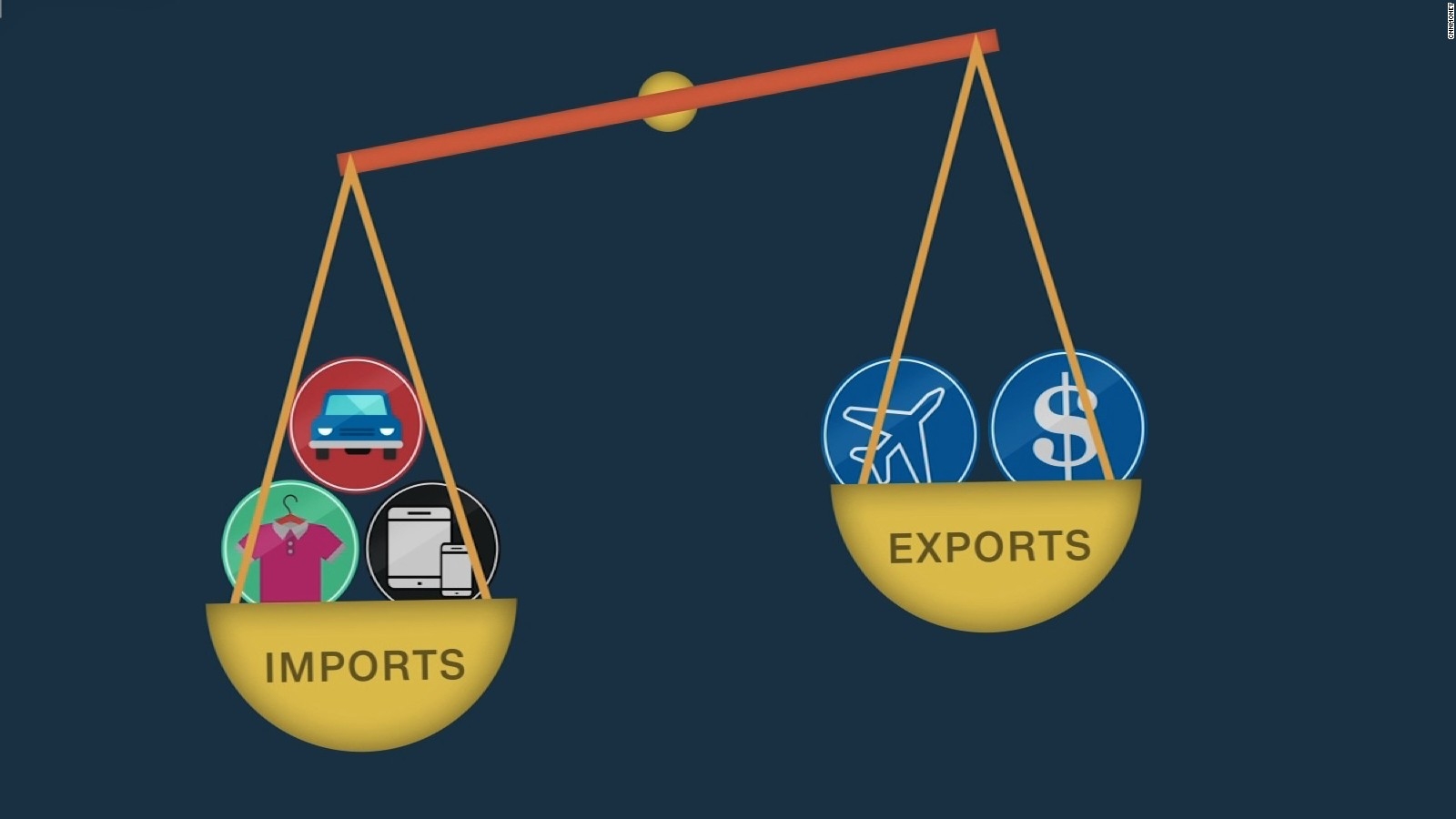
A trade deficit occurs when a country imports more goods and services than it exports over a particular period.
For example, suppose a country exports $500 billion worth of goods and services but imports $650 billion. Its trade deficit would be:
$650 billion − $500 billion = $150 billion
In simple terms, the country is purchasing more from foreign producers than it is selling to foreign buyers.
A trade deficit is part of a country's current account, although the current account is broader because it also includes income earned from abroad and certain transfers.
A trade deficit is not necessarily a sign that an economy is weak. Countries may run trade deficits because consumers and businesses demand imported products, because domestic investment is strong, or because the country has a high level of foreign investment flowing into it. The economic effects depend on why the deficit exists and how it is financed.
What Is a Budget Deficit?
A budget deficit occurs when a government spends more money than it receives in revenue during a given period, usually a fiscal year.
For example, if a government collects $4 trillion in taxes and other revenue but spends $5 trillion, it has a budget deficit of:
$5 trillion − $4 trillion = $1 trillion
Governments typically finance budget deficits by borrowing money. They may issue government bonds or other forms of debt to investors.
Government spending can include areas such as infrastructure, education, healthcare, defense, pensions, public-sector salaries, and interest payments on existing debt. Government revenue primarily comes from taxes, although governments can also receive income from fees, state-owned enterprises, and other sources.
A budget deficit therefore measures the difference between government revenue and government expenditure.
The Main Difference
The simplest way to distinguish the two is:
-
Trade deficit: A country imports more goods and services than it exports.
-
Budget deficit: A government spends more money than it collects in revenue.
The trade deficit involves international trade and payments, while the budget deficit involves government finances.
A trade deficit is measured through a country's external economic transactions. A budget deficit is measured through the government's fiscal accounts.
Different Causes
The causes of the two deficits are also different.
A trade deficit can result from strong domestic demand for imported products, weak export performance, differences in production costs, exchange-rate movements, or a country's dependence on imported energy, raw materials, technology, and manufactured goods.
For example, if consumers buy large quantities of foreign cars and electronics while domestic companies export relatively little, imports may exceed exports.
A budget deficit can result from government spending increasing faster than revenue, tax cuts, economic recessions, emergency programs, or major public investments. During a recession, for instance, tax revenues may decline while government spending on unemployment benefits and other support programs rises. This can cause the budget deficit to increase even without deliberate increases in spending.
How They Can Be Related
Although trade deficits and budget deficits are different, they can sometimes be connected.
One important concept is known as the twin deficits hypothesis. It suggests that a larger government budget deficit can contribute to a larger current account deficit under certain economic conditions.
Suppose a government increases spending without increasing taxes. This may raise domestic demand. If consumers and businesses use some of that additional purchasing power to buy imported goods, imports may increase. If exports do not rise by an equivalent amount, the trade deficit may widen.
However, the relationship is not automatic. A country can have a budget deficit without having a trade deficit, and it can have a trade deficit while its government budget is balanced or in surplus.
Many other factors affect international trade, including private-sector saving and investment, exchange rates, interest rates, economic growth, and international capital flows.
Different Economic Consequences
The consequences of a trade deficit depend heavily on its underlying causes.
A persistent trade deficit means that more money is being spent on foreign goods and services than foreign buyers are spending on the country's exports. However, the money does not simply disappear. Foreign sellers may invest their earnings in the country, purchase financial assets, or lend money to domestic borrowers.
A trade deficit can therefore be associated with significant foreign investment. It may also allow consumers to access a wider range of products at competitive prices.
Nevertheless, a prolonged trade deficit can create concerns if it reflects declining competitiveness, excessive dependence on foreign suppliers, or unsustainable external borrowing.
A budget deficit has different consequences. Government borrowing can increase public debt and, if deficits remain large for a long time, can raise debt-servicing costs. In some circumstances, increased government borrowing may also put upward pressure on interest rates or compete with private borrowers for available financing.
On the other hand, budget deficits can be useful. Governments may deliberately run deficits during recessions to support economic activity. They may also borrow to finance infrastructure, education, or other investments that could increase future economic growth.
How Governments Address Them
The policies used to address the two deficits are also different.
To reduce a trade deficit, policymakers might seek to increase exports, improve domestic productivity, strengthen competitiveness, encourage domestic production, or influence the exchange rate. Trade policies, investment in infrastructure, education, and technological development can all affect a country's international competitiveness.
Reducing a trade deficit through tariffs or import restrictions is another possibility, but such measures can increase prices for consumers and businesses and may provoke retaliation from trading partners.
To reduce a budget deficit, governments generally have two broad options: increase revenue or reduce spending. Raising taxes, improving tax collection, reducing government expenditures, or encouraging economic growth can all improve the government's fiscal position.
Governments can also allow the deficit to decline naturally when economic growth increases tax revenues and reduces the need for certain forms of support spending.
Why Neither Deficit Is Automatically Bad
It is tempting to view both types of deficits as inherently negative because the word "deficit" suggests a shortfall. However, neither is automatically harmful.
A trade deficit may reflect strong domestic demand, productive investment, and the ability to attract foreign capital. Similarly, a budget deficit may finance valuable public investments or provide economic support during difficult periods.
The important questions are why the deficit exists, how large it is, how long it lasts, and whether it is sustainable.
A government that consistently spends far more than it collects may eventually face serious debt problems. Likewise, a country that persistently imports far more than it exports may face external financial vulnerabilities if foreign financing becomes difficult to obtain.
Conclusion
The difference between a trade deficit and a budget deficit is fundamentally a difference in what is being measured.
A trade deficit occurs when a country's imports of goods and services exceed its exports. A budget deficit occurs when a government's expenditures exceed its revenues.
The two can influence one another, but they are not the same thing. A trade deficit is primarily an issue of a country's international economic relationships, while a budget deficit is a matter of government fiscal policy.
Neither deficit should be judged in isolation. Instead, economists examine the reasons behind the deficit, its size relative to the economy, how it is financed, and whether it contributes to sustainable economic growth. Understanding these distinctions helps explain why a country can have a large government budget deficit, a trade surplus, both deficits, or neither—and why each situation requires a different economic analysis.
- Arts
- Business
- Computers
- Spellen
- Health
- Home
- Kids and Teens
- Money
- News
- Personal Development
- Recreation
- Regional
- Reference
- Science
- Shopping
- Society
- Sports
- Бизнес
- Деньги
- Дом
- Досуг
- Здоровье
- Игры
- Искусство
- Источники информации
- Компьютеры
- Личное развитие
- Наука
- Новости и СМИ
- Общество
- Покупки
- Спорт
- Страны и регионы
- World

 English
 Russian
 French
 Spanish
 Portuguese
 Deutsch
 Turkish
 Italiano
 Arabic
 Romaian
 Portuguese (Brazil)
 Greek
Greek