
How Is AI Changing SaaS?
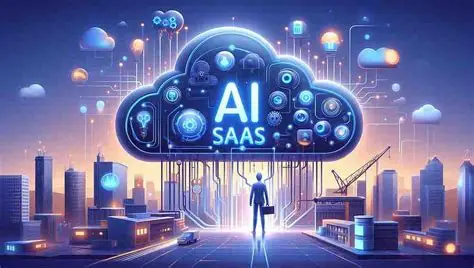
For years, SaaS companies sold software by asking customers to do something.
Click here.
Configure that.
Search for this.
Build a report.
Create a workflow.
Learn the interface.
AI changes the bargain.
Instead of forcing users to learn where the software keeps its capabilities, AI increasingly lets them describe what they want and expects the software to figure out how to get there.
That sounds like a user-interface improvement.
It isn't.
It reaches much deeper.
AI is changing how SaaS products are designed, priced, built, supported, marketed, and differentiated. It is changing what customers consider valuable. It is changing the economics of software. And, perhaps most importantly, it is challenging one of the foundational assumptions of SaaS: that the application itself is the product.
Increasingly, the product is the outcome.
The interface is becoming the means.
AI Is Turning SaaS From a Tool Into a Collaborator
Traditional SaaS generally behaves predictably.
You give the system structured inputs. The software applies predefined rules. It produces an output.
AI introduces a different interaction model.
A customer might write:
"Find the highest-risk accounts in our pipeline, explain why they're at risk, and draft follow-up emails for the sales team."
The software can potentially interpret the request, retrieve relevant information, reason over it, generate recommendations, and initiate actions.
That is a profound change in product design.
The user no longer needs to know which report to open.
They don't necessarily need to understand the database structure.
They may not even need to know which individual feature performs the task.
The software becomes less like a toolbox and more like an operator sitting between the user and the underlying system.
The Interface Is Becoming Less Important—and More Important
That contradiction matters.
Buttons and menus are becoming less central to certain workflows because natural-language interaction can replace sequences of clicks.
But the underlying interface does not disappear.
It changes.
Users still need visibility into what the AI did. They need ways to correct it, approve actions, inspect sources, change parameters, and understand uncertainty.
The winning SaaS products will not simply bolt a chatbot onto an existing dashboard.
They will redesign workflows around the new interaction model.
AI Is Compressing the Distance Between Data and Action
SaaS has always accumulated valuable data.
CRM platforms contain customer histories.
Accounting systems contain financial records.
HR platforms contain workforce information.
Project-management tools contain years of operational activity.
The problem has never been a total absence of data.
The problem has been converting data into decisions quickly enough.
AI attacks that gap.
A traditional analytics workflow might require a user to construct a query, select filters, generate a report, interpret the result, and decide what to do next.
An AI-enabled system can potentially compress those steps.
That creates a new competitive dimension: how quickly can software turn organizational information into useful action?
Consider the difference.
Traditional SaaS:
Data → Dashboard → Human interpretation → Decision → Action
AI-enabled SaaS:
Data → AI interpretation → Recommendation → Human approval → Action
And increasingly:
Data → AI interpretation → Authorized action
That last version is where things become interesting—and dangerous.
The Shift From Copilots to Agents
The first generation of enterprise AI largely behaved like a copilot.
It assisted.
It drafted.
It summarized.
It suggested.
The emerging model is more autonomous.
AI agents can potentially execute multi-step tasks using software tools, APIs, databases, and business rules.
A sales agent might research an account, identify recent activity, prepare a personalized message, update CRM fields, and schedule a follow-up.
A customer-support agent might classify a request, retrieve account information, diagnose a common problem, issue an approved credit, and close the ticket.
The difference is not merely technical.
It changes the economic value of software.
A product that helps an employee complete a task faster competes for a portion of that employee's time.
A product that completes the task itself competes for a portion of the labor required to perform it.
That is a much larger market.
But Autonomy Has a Price
The more authority an AI system receives, the more expensive mistakes become.
An inaccurate marketing suggestion is annoying.
An incorrect financial transaction is different.
A hallucinated answer in an internal knowledge base may create confusion.
A hallucinated answer delivered to a customer can create liability and reputational damage.
So AI SaaS needs something traditional SaaS often could avoid: explicit controls around uncertainty.
Permissions.
Approval thresholds.
Audit trails.
Human escalation.
Action logs.
Rollback mechanisms.
The more capable the AI becomes, the more carefully the product must define what it is not allowed to do.
AI Is Changing SaaS Economics
AI can improve margins.
It can also destroy them.
That is one of the less comfortable truths about AI-powered SaaS.
Traditional SaaS has attractive economics because serving another customer often requires relatively little incremental cost. Once the infrastructure and software exist, additional usage can be comparatively inexpensive.
AI inference changes the cost structure.
Every model request can consume compute.
Long prompts consume more tokens.
Large context windows cost more.
Complex agent workflows may make multiple model calls for one customer request.
The result is a potentially meaningful variable cost attached to usage.
Traditional SaaS vs. AI-Native SaaS
| Dimension | Traditional SaaS | AI-Enhanced SaaS | AI-Native SaaS |
|---|---|---|---|
| Primary interface | Forms, dashboards, menus | Interface + AI assistant | Natural language + autonomous workflows |
| Core value | Access to software | Faster work | Completed outcomes |
| Marginal compute cost | Generally predictable | Higher and usage-dependent | Potentially significant |
| Pricing model | Per user/seat | Seat + usage | Usage, outcome, workflow, or hybrid |
| Product differentiation | Features and workflow | Features + intelligence | Data, models, workflow execution |
| Human involvement | High | Medium–High | Potentially lower |
| Key risk | Feature competition | AI reliability | Autonomy, cost, trust |
| Main moat | Workflow + integrations | Workflow + data + AI | Proprietary data + workflow + distribution + execution |
That table reveals a problem for SaaS executives.
The traditional per-seat model assumes that people are the primary units of software consumption.
What happens when one employee can delegate work to five AI agents?
Does the customer still need five seats?
Probably not.
The pricing model starts to wobble.
Per-Seat Pricing May Not Survive Every AI Workflow
For decades, SaaS companies have loved seat-based pricing because it is simple.
Five employees need five licenses.
Two hundred employees need two hundred.
AI complicates that logic.
If an AI system performs thousands of tasks without being a human "seat," the value being delivered no longer maps neatly to employee count.
That creates several alternatives.
Usage-Based Pricing
Customers pay according to consumption.
API calls, documents processed, AI actions, or compute usage can become pricing units.
Outcome-Based Pricing
Customers pay for completed work.
For example, a system might charge based on resolved support cases rather than support representatives.
Hybrid Pricing
A platform may charge a base subscription plus AI usage.
This is likely to remain attractive because it gives vendors predictable recurring revenue while allowing them to recover variable model costs.
The deeper question is psychological.
Customers don't necessarily care how many tokens a model consumed.
They care whether the task was completed correctly.
Pricing based on internal infrastructure costs can therefore become an awkward abstraction.
AI Is Lowering the Cost of Building SaaS
There is another transformation happening behind the scenes.
AI is becoming part of the software development process itself.
Developers can use AI to:
- Generate boilerplate
- Write tests
- Explain unfamiliar code
- Refactor functions
- Produce documentation
- Diagnose errors
- Generate SQL
- Create prototypes
- Review pull requests
- Translate code between languages
That reduces the cost of producing certain kinds of software.
And that creates an uncomfortable implication.
If software becomes cheaper to build, software companies need stronger reasons to exist.
A feature that once required a specialized engineering team may become relatively easy to reproduce.
The result could be more competition, not less.
The New SaaS Moat Is Not "We Have AI"
That claim is rapidly becoming meaningless.
If two competitors can access similar foundation models, the model itself may provide little durable differentiation.
The moat moves elsewhere.
Data.
Distribution.
Workflow integration.
Customer relationships.
Proprietary feedback loops.
Brand trust.
Domain-specific knowledge.
Operational infrastructure.
And, increasingly, the ability to turn AI output into reliable action.
Imagine two companies using the same underlying model.
One has access to a customer's five years of structured operational data, deep integrations, historical outcomes, permission systems, and embedded workflows.
The other has a chat window.
They both have AI.
They do not have the same product.
AI Is Also Changing Customer Expectations
Once customers become accustomed to asking software questions conversationally, traditional interfaces can start to feel unnecessarily rigid.
That raises the standard for every SaaS company.
A customer may begin asking:
Why can't my CRM tell me which accounts need attention?
Why can't my accounting system explain this month's unusual expenses?
Why can't my project-management software identify projects likely to miss deadlines?
Why can't my analytics platform investigate the anomaly instead of merely displaying it?
The pressure spreads.
AI does not remain confined to the application where it first appears. It changes expectations across categories.
This is similar to what happened when mobile interfaces became standard: once users became accustomed to certain behaviors, products that lacked them began to feel outdated.
AI may create an even more aggressive expectation.
Software should understand what I mean.
The Lesson: Intelligence Without Context Is Mostly Theater
One lesson worth keeping in view is that AI capability and product value are not the same thing.
A model can produce remarkably fluent answers while having little understanding of a company's actual operating environment.
Context is the scarce resource.
A useful enterprise AI system needs access to the right information, at the right moment, under the right permissions, with enough structure to distinguish reliable evidence from speculation.
That means the competitive battle is moving away from simply asking, "Which model are you using?"
A better question is:
What does your system know, what can it do, and what prevents it from doing the wrong thing?
Those are product questions.
They are also business questions.
What SaaS Companies Should Do Now
The sensible response is not to add an AI assistant to every screen.
Start with workflows.
Find tasks that are expensive, repetitive, slow, information-heavy, or frustrating.
Then ask where AI can remove unnecessary human effort without introducing unacceptable risk.
The strongest opportunities often have four characteristics:
- The user already performs the task frequently.
- The required data already exists inside the SaaS platform.
- The workflow has measurable outcomes.
- Mistakes can be detected or constrained.
That fourth condition is easy to overlook.
An AI feature is far easier to commercialize when the system can verify whether it succeeded.
The future of AI SaaS will therefore belong less to products that simply generate impressive outputs and more to products that can prove those outputs are useful.
The Provocative Conclusion
AI may not destroy SaaS.
It may destroy the version of SaaS we became comfortable with.
The old model was straightforward: build software, sell access, add features, increase seats, renew subscriptions.
The emerging model is stranger.
Build systems that understand context.
Connect them to proprietary data.
Give them carefully bounded authority.
Charge for the value they create.
Then continuously measure whether they actually created it.
That is a fundamentally different business.
And it creates a brutal question for every SaaS company:
If AI can perform the work your software currently helps customers perform, what exactly are customers still paying you for?
If the answer is merely "access to our interface," the business may have a serious problem.
If the answer is "we reliably turn your data and intent into valuable outcomes," the opportunity is much larger.
The next generation of SaaS will not win because it has more AI features.
It will win because customers no longer think of those features as features at all.
They will think of them as work getting done.
- Arts
- Business
- Computers
- Spellen
- Health
- Home
- Kids and Teens
- Money
- News
- Personal Development
- Recreation
- Regional
- Reference
- Science
- Shopping
- Society
- Sports
- Бизнес
- Деньги
- Дом
- Досуг
- Здоровье
- Игры
- Искусство
- Источники информации
- Компьютеры
- Личное развитие
- Наука
- Новости и СМИ
- Общество
- Покупки
- Спорт
- Страны и регионы
- World

 English
 Russian
 French
 Spanish
 Portuguese
 Deutsch
 Turkish
 Italiano
 Arabic
 Romaian
 Portuguese (Brazil)
 Greek
Greek