
What Is Enterprise SaaS?
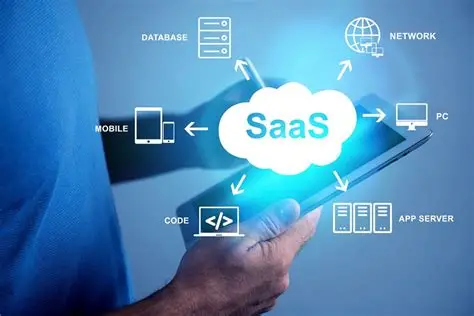
A company can survive without a stylish logo. It can survive a bad advertising campaign. It can even survive a CEO who says “synergy” too often.
Try taking away its enterprise software.
Payroll stops. Sales forecasts become unreliable. Procurement loses visibility. Customer records scatter across spreadsheets. Employees start emailing documents to one another with filenames like FINAL_v7_REALLY_FINAL.xlsx.
This is where Enterprise SaaS enters the story.
Enterprise SaaS—enterprise software delivered through the cloud on a subscription basis—is not merely software with a higher price tag. It is infrastructure for organizations whose operations have become too complicated, regulated, distributed, or economically consequential to manage with disconnected tools.
That distinction matters.
The small-business SaaS market often revolves around convenience: easier invoicing, simpler scheduling, faster collaboration.
Enterprise SaaS revolves around something more demanding.
Control.
Who has access? Who approved this transaction? Where did this number come from? Can the company prove what happened six months ago? Does the software integrate with the systems already running the business? What happens when 50,000 employees use it at once?
The answers determine whether enterprise software becomes another application—or becomes part of the company's operating architecture.
Enterprise SaaS, Defined
Enterprise SaaS is cloud-based software designed to serve the complex needs of large organizations.
The “SaaS” portion is straightforward. Instead of buying software outright, installing it on company-owned infrastructure, and managing upgrades internally, customers generally access the software over the internet and pay through recurring subscriptions or usage-based arrangements.
The “enterprise” portion is where things become interesting.
Enterprise customers tend to demand:
- Advanced security and identity controls
- Extensive integrations and APIs
- Administrative governance
- Compliance and audit capabilities
- High availability and reliability
- Custom workflows
- Data management
- Detailed reporting and analytics
- Dedicated support and implementation services
- The ability to serve large numbers of users and complex organizational structures
A five-person startup can tolerate a certain amount of mess.
A multinational bank cannot.
That difference shapes the entire enterprise SaaS business.
Enterprise SaaS Is Not Simply “SaaS for Big Companies”
The distinction is subtle but important.
A product does not become enterprise software merely because a large corporation purchases it.
Enterprise software is built around enterprise requirements.
Consider a collaboration application. At the consumer level, the product might ask whether you want to share a document.
At enterprise scale, the questions multiply.
Should an employee in Europe have access to the same document as an employee in the United States? What happens when that employee leaves? Can administrators audit access? Can the company enforce retention policies? Can the system connect to its identity provider? Can thousands of employees be provisioned automatically?
The underlying feature—“share a document”—has not changed much.
The surrounding architecture has.
That is the essence of enterprise SaaS.
The Enterprise SaaS Stack
It helps to think about the category in layers.
Systems of Record
These applications hold essential organizational data.
Examples include customer relationship management, enterprise resource planning, human capital management, financial systems, and supply-chain platforms.
Their importance comes from persistence.
The software becomes the place where the organization agrees that a particular piece of information is authoritative.
Systems of Engagement
These tools sit closer to employees, customers, and partners.
Communication, collaboration, customer support, marketing, and productivity applications often occupy this layer.
Their value comes from interaction.
Systems of Intelligence
Increasingly, enterprise software is adding analytics, machine learning, predictive capabilities, and generative AI.
This layer attempts to answer questions rather than merely store information.
Which customers are likely to churn?
Which invoices look suspicious?
Which sales opportunities deserve attention?
Which employees need additional support?
The boundaries between these layers are becoming less distinct.
A modern enterprise application may record the transaction, orchestrate the workflow, analyze the data, and recommend what should happen next.
That convergence is one reason Enterprise SaaS has become such a large strategic category.
The Economics Are Different, Too
Enterprise SaaS has a distinctive economic profile.
The customer acquisition process can be slow. Procurement departments may become involved. Security teams conduct reviews. Legal teams negotiate contracts. IT departments examine integrations. Executives want evidence of return on investment.
A deal that takes months to close can be frustrating.
It can also be extraordinarily valuable.
Enterprise contracts can generate substantial recurring revenue, and software embedded deeply into business operations can have high switching costs.
Here is the basic contrast:
| Dimension | Consumer SaaS | SMB SaaS | Enterprise SaaS |
|---|---|---|---|
| Typical buyer | Individual | Owner/department | Executive, IT, procurement |
| Sales cycle | Minutes to days | Days to weeks | Weeks to months or longer |
| Contract size | Low | Moderate | Often substantial |
| Pricing | Subscription | Subscription | Subscription, seats, modules, usage |
| Implementation | Self-service | Light assistance | Often complex |
| Security requirements | Basic to moderate | Moderate | Extensive |
| Integrations | Limited | Important | Often mission-critical |
| Customization | Low | Moderate | High |
| Support | Self-service | Standard | Dedicated/premium |
| Switching costs | Low | Moderate | Often high |
| Primary buying criterion | Convenience | ROI + ease | Risk, ROI, security, scale |
The tradeoff is obvious.
Enterprise SaaS is harder to sell.
But once a platform becomes embedded in critical operations, it can be harder to displace.
The Lesson I Learned: The Product Is Never Just the Product
I have watched teams evaluate enterprise software by focusing almost entirely on the visible interface.
That is understandable.
The interface is what people see.
But it is rarely what determines whether an enterprise product succeeds.
The lesson became clear to me when comparing products that appeared remarkably similar on the surface. One looked cleaner. Another had a more impressive demo. Yet the supposedly less elegant product often had the stronger enterprise position.
Why?
Because it had spent years solving the unglamorous problems.
Permissions.
Data migration.
Legacy integrations.
Audit trails.
Procurement requirements.
Administrative controls.
Customer support.
Implementation.
Those features rarely make a viral product demo.
They can determine whether a Fortune 500 company signs the contract.
That changed the way I think about enterprise software.
The moat is often hidden beneath the interface.
Why Integrations Matter So Much
Enterprise companies rarely operate one application.
They operate ecosystems.
A finance platform must communicate with payroll. Payroll connects to human resources. Sales software exchanges data with finance. Customer-support information flows into analytics. Identity systems determine who can access everything.
The enterprise SaaS provider therefore becomes one node in a much larger network.
This creates both an opportunity and a burden.
The more deeply integrated the software becomes, the more valuable it can be.
But every integration creates another technical dependency.
Enterprise SaaS companies therefore compete on something that customers may barely notice until it fails: interoperability.
The best enterprise application is often not the one that demands the organization change everything.
It is the one that fits into the machinery already running.
Security Is Part of the Product
For consumer software, security can feel like a background feature.
For enterprise SaaS, it is often a purchasing criterion.
Large organizations need to know where data is stored, who can access it, how identities are authenticated, how activity is logged, and what happens when something goes wrong.
Compliance requirements vary by industry and geography.
A healthcare organization has different concerns from a retailer. A financial institution operates under a different risk framework from a software startup.
Enterprise vendors therefore invest heavily in security certifications, controls, monitoring, encryption, identity management, governance, and compliance processes.
This produces an unusual characteristic of enterprise SaaS:
The invisible features can be more valuable than the visible ones.
Nobody celebrates an excellent audit log.
Until someone needs it.
Enterprise SaaS and the AI Inflection Point
Artificial intelligence is now complicating the traditional enterprise SaaS model.
For years, enterprise software largely followed a familiar pattern:
Human decides → software records → human acts.
AI introduces another possibility:
Software interprets → software recommends → human approves—or software acts.
That changes the role of the application.
A CRM system might not merely store customer interactions. It could summarize accounts, identify sales opportunities, draft follow-ups, forecast pipeline changes, and prioritize tasks.
An ERP platform might identify anomalies in financial data.
An HR system might answer questions about company policies or automate portions of employee administration.
The important shift is not that enterprise applications now have chat interfaces.
It is that software is beginning to participate in the work itself.
This could make the distinction between Enterprise SaaS and vertical AI SaaS increasingly blurry.
The database becomes an intelligence layer.
The workflow becomes partially autonomous.
The software becomes less passive.
The Enterprise SaaS Moat
What makes an enterprise SaaS company difficult to compete with?
It is rarely one feature.
The strongest companies tend to accumulate several advantages simultaneously.
Data
The system becomes a repository of critical business information.
Workflow
Employees learn to conduct important processes inside the platform.
Integrations
The application becomes connected to other essential systems.
Trust
Security, reliability, compliance, and reputation matter enormously to enterprise buyers.
Switching Costs
Once thousands of employees, years of data, and dozens of integrations depend on a platform, replacing it becomes a major organizational project.
These forces reinforce each other.
More users generate more data.
More data makes the product more useful.
More usefulness encourages deeper adoption.
Deeper adoption increases switching costs.
That is the enterprise SaaS flywheel.
But Enterprise SaaS Has a Weakness
The same characteristics that make enterprise software defensible can make it slow.
Large customers ask for customization.
Sales teams promise flexibility.
Implementation teams build workarounds.
Soon the product begins accumulating complexity.
This is one of the central tensions in enterprise SaaS:
Customers want software built for their organization. Software companies want products that scale without becoming consulting firms.
The balance is difficult.
Go too far toward standardization and customers leave.
Go too far toward customization and margins suffer.
The best companies find the narrow zone where configuration can solve most customer requirements without turning every deployment into a bespoke engineering project.
What Comes Next?
Enterprise SaaS is moving toward a more interesting—and more dangerous—future.
The old enterprise application was essentially a digital filing cabinet combined with a workflow engine.
The emerging version is closer to an operational partner.
It sees the data.
It understands the workflow.
It can identify anomalies.
It can suggest actions.
Increasingly, it may execute them.
That raises a provocative question.
If software can perform more of the work, why should enterprise companies continue buying software according to the number of employees who use it?
Perhaps the more meaningful unit will become the amount of work completed.
That would represent a fundamental shift in SaaS economics.
The enterprise software industry spent decades selling organizations better tools.
AI gives it the opportunity to sell something considerably more valuable: fewer steps between intention and outcome.
The Bottom Line
Enterprise SaaS is not simply cloud software sold to large companies.
It is the digital infrastructure through which modern organizations manage information, coordinate people, enforce rules, execute workflows, and increasingly automate decisions.
Its real value is rarely found in the screen.
It is found in what sits behind the screen: the integrations, permissions, data, processes, security controls, institutional knowledge, and accumulated trust.
That is why enterprise SaaS can look boring from the outside while being extraordinarily powerful underneath.
And perhaps the most important question for the next decade is not which enterprise applications will acquire the most users.
It is this:
When software becomes capable of doing the work, what exactly will companies still be paying humans—and software—to do?
The answer could redefine what “software” means in the first place.
- Arts
- Business
- Computers
- Jeux
- Health
- Domicile
- Kids and Teens
- Argent
- News
- Personal Development
- Recreation
- Regional
- Reference
- Science
- Shopping
- Society
- Sports
- Бизнес
- Деньги
- Дом
- Досуг
- Здоровье
- Игры
- Искусство
- Источники информации
- Компьютеры
- Личное развитие
- Наука
- Новости и СМИ
- Общество
- Покупки
- Спорт
- Страны и регионы
- World

 English
 Russian
 Spanish
 Portuguese
 Deutsch
 Turkish
 Dutch
Dutch
 Italiano
 Arabic
 Romaian
 Portuguese (Brazil)
 Greek
Greek