
SaaS Trends: The Shifts Reshaping Software—and the Businesses Behind It
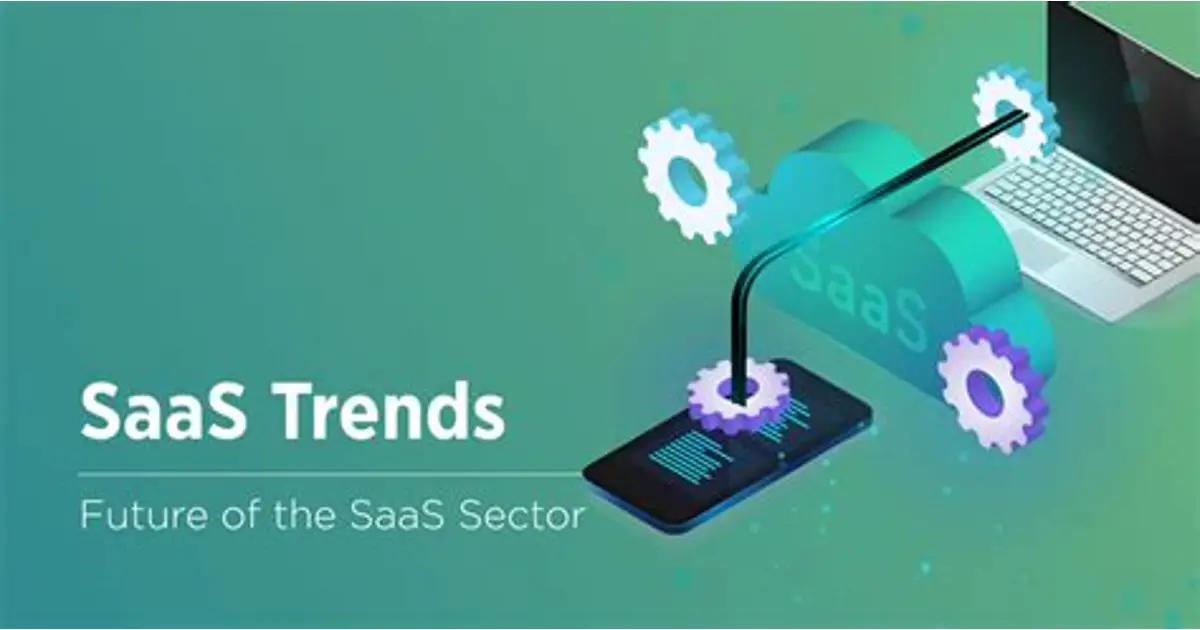
The SaaS industry has a peculiar habit.
It announces a new trend, turns it into a conference theme, gives it a memorable acronym, and then spends the next two years discovering where the economics actually work.
That pattern is happening again.
Artificial intelligence is changing product design. Usage-based pricing is challenging the old per-seat model. Vertical SaaS is becoming more specialized. Buyers are scrutinizing software spend more aggressively. Consolidation is changing the competitive landscape. And the distinction between a software product and a service is becoming less tidy by the quarter.
But there is a more consequential shift underneath all of this.
SaaS is moving from software as a tool toward software as an economic outcome.
That sounds abstract. It isn't.
Customers increasingly want to know what the software produces: revenue, savings, speed, accuracy, productivity, risk reduction. A long feature list has diminishing persuasive power when the buyer can ask a much harder question:
What did I actually get for the money?
That question is likely to shape the next phase of SaaS.
The Major SaaS Trends at a Glance
| SaaS Trend | What Is Changing | Primary Business Impact | Key Metric to Watch | Main Risk |
|---|---|---|---|---|
| AI-native SaaS | AI becomes central to workflows | Higher automation and new product categories | Revenue per employee / usage | Commoditization |
| Usage-based pricing | Customers pay according to consumption | Better alignment with value | Net revenue retention | Revenue volatility |
| Vertical SaaS | Products specialize by industry | Higher relevance and workflow depth | Expansion revenue | Smaller addressable markets |
| Product-led growth | Product experience drives acquisition | Lower sales friction | Activation-to-paid conversion | Weak enterprise conversion |
| SaaS consolidation | Companies reduce tool sprawl | Larger contracts, fewer vendors | Spend per account | Competitive displacement |
| Embedded finance | Software incorporates payments and financial tools | New revenue streams | Revenue per customer | Regulatory complexity |
| AI-assisted customer success | Support becomes more predictive | Lower service costs | Gross retention | Poor personalization |
| Outcome-based selling | Vendors sell measurable results | Stronger value proposition | Customer ROI | Difficult attribution |
| Security-first SaaS | Trust becomes a buying criterion | Greater enterprise eligibility | Win rate | Higher compliance costs |
| Hybrid pricing | SaaS combines seats, usage, and tiers | More monetization flexibility | ARPU / NRR | Pricing complexity |
The important point is that these trends do not exist independently.
They reinforce one another.
AI changes usage.
Usage changes pricing.
Pricing changes revenue predictability.
Revenue predictability changes valuation.
And customer consolidation changes which products get the opportunity to survive long enough to matter.
1. AI-Native SaaS Is Different From Adding an AI Button
There is a difference between software that contains AI and software that was designed around AI.
The first category is everywhere.
A summarization button appears. A chatbot is added. A few automated recommendations arrive in the dashboard.
Useful? Sometimes.
Transformative? Not necessarily.
AI-native SaaS asks a different question:
If software can reason, generate, classify, predict, and act, what should the workflow look like now?
That could eliminate steps rather than merely accelerate them.
A traditional expense-management product might help employees submit expenses.
An AI-native system could potentially identify transactions, categorize them, detect anomalies, request missing documentation, and route exceptions automatically.
The product has moved from interface to intervention.
That is a much larger change.
The New AI SaaS Metric: Work Eliminated
Traditional SaaS metrics emphasize usage.
More logins.
More seats.
More engagement.
AI introduces a strange possibility: less usage can sometimes mean more value.
If software resolves a task automatically, the customer may spend less time inside the product.
That creates an uncomfortable question for SaaS companies accustomed to engagement metrics:
What if the best product is the one customers barely need to touch?
That could force a rethinking of product analytics.
Instead of measuring clicks alone, companies may increasingly measure completed outcomes.
Tasks resolved.
Hours saved.
Errors prevented.
Revenue generated.
Cases closed.
That is a very different definition of software value.
2. Usage-Based Pricing Is Challenging the Seat
Per-seat pricing has an intuitive appeal.
One employee. One subscription.
Simple.
But it becomes awkward when software becomes more automated.
Suppose an AI system performs 100,000 actions on behalf of a company. How many “seats” should that require?
None?
Ten?
A thousand?
Usage-based pricing offers another answer: charge according to consumption.
This model can align price more closely with value, particularly in infrastructure, developer tools, communications, data, and AI.
But there is a trade-off.
Customers like predictability.
Usage creates variability.
A CFO may appreciate paying more when the company generates more value, but may dislike receiving a bill that is difficult to forecast.
That tension explains why hybrid pricing is becoming increasingly attractive.
A base subscription.
An included usage allowance.
Then additional charges above a threshold.
The model is more complicated.
The economics can be better.
3. Vertical SaaS Is Going Deeper
Horizontal software tries to solve a problem across industries.
Vertical SaaS starts with the industry.
Construction.
Healthcare.
Real estate.
Logistics.
Hospitality.
Legal services.
Manufacturing.
The advantage is specificity.
A vertical product can incorporate industry terminology, regulations, workflows, integrations, and customer expectations that generic software may overlook.
This creates a powerful form of defensibility.
The product does not simply perform a function.
It understands the environment in which the function occurs.
Why vertical SaaS can command loyalty
Consider two systems.
The first manages appointments.
The second understands the operational requirements of a specific medical practice, integrates scheduling with billing, handles industry-specific documentation, and connects to existing systems.
Both technically provide “scheduling.”
Only one is embedded in the customer's workflow.
That embeddedness matters.
Once software becomes operational infrastructure, switching costs rise.
And switching costs, properly earned, are a form of retention.
4. SaaS Buyers Are Consolidating Their Software Stacks
There was a period when adding another software subscription felt almost frictionless.
That era created enormous tool proliferation.
Now buyers are asking harder questions.
Can one platform replace three vendors?
Can an existing vendor provide another capability?
Does this application integrate cleanly with the systems already in place?
Does anyone actually use it?
This creates pressure on smaller SaaS companies.
A product can be good and still lose because the buyer prefers fewer vendors.
That means the competitive set is changing.
You are no longer competing only against products with similar functionality.
You may be competing against consolidation itself.
The Rise of the Platform Purchase
A customer who once purchased five specialized tools may increasingly prefer two broader platforms.
This does not eliminate niche SaaS.
It raises the bar.
Specialized companies need exceptional workflow depth, superior economics, proprietary data, differentiated distribution, or some combination of the four.
“Better interface” may not be enough.
5. Product-Led Growth Is Becoming More Selective
Product-led growth remains attractive because the product itself can reduce sales friction.
Let people try it.
Let them experience value.
Let successful users invite colleagues.
Let adoption spread.
Beautiful.
Except when the customer is a large enterprise with procurement requirements, security reviews, legal negotiations, integration work, and a six-figure budget.
Then someone probably needs to make a phone call.
The emerging lesson is not that product-led growth is replacing sales-led growth.
It is that the strongest companies are becoming better at knowing when each model works.
A small business may need self-service.
A multinational organization may need a sales engineer.
The product can generate demand while humans handle complexity.
That hybrid model is likely to remain important.
6. Customer Success Is Becoming More Predictive
Customer success once relied heavily on human judgment.
A customer success manager notices declining engagement.
They make a call.
They schedule a meeting.
They attempt an intervention.
AI can now analyze enormous quantities of behavioral signals.
Login frequency.
Feature adoption.
Support interactions.
Contract information.
Usage changes.
Payment behavior.
Expansion patterns.
The objective is not to replace customer success.
It is to identify risk earlier.
Imagine discovering that customers who stop using one particular feature for three consecutive weeks are significantly more likely to churn.
That creates an intervention opportunity.
The product can flag the account before the cancellation notice arrives.
This changes customer success from reactive service toward predictive intervention.
7. Security Is Becoming Part of the Product
Security used to be something customers evaluated after becoming interested in a product.
Increasingly, it determines whether they can buy the product at all.
Enterprise customers want answers about:
- Data handling
- Access controls
- Encryption
- Compliance
- Vendor risk
- Authentication
- Data residency
- Incident response
That changes the role of security.
It is no longer merely an engineering requirement.
It is part of sales.
A SaaS company that cannot pass a customer's security review may never reach the pricing discussion.
This creates an interesting paradox.
Security investment does not always generate obvious product differentiation.
But insufficient investment can eliminate entire markets.
8. Embedded Finance Is Expanding the SaaS Revenue Model
Software increasingly sits close to financial transactions.
Payments.
Payroll.
Invoicing.
Lending.
Insurance.
Expense management.
Banking services.
That creates an opportunity for SaaS companies to monetize financial activity occurring inside their workflows.
A restaurant-management platform might facilitate payments.
A commerce platform might provide financing.
An accounting platform might integrate financial services.
The software subscription becomes only one component of the revenue model.
That matters because SaaS companies have historically depended heavily on recurring subscription revenue.
Embedded financial products create another monetization layer.
But the regulatory and operational complexity is substantial.
More revenue opportunity does not mean free revenue.
9. Outcome-Based Selling Is Replacing Feature-Based Selling
One of the most interesting SaaS trends is not technological.
It is rhetorical.
Companies are changing how they sell.
Instead of:
“Here are 47 features.”
The pitch becomes:
“Here is what this will save you.”
Or:
“Here is how this will increase conversion.”
Or:
“Here is how much administrative work we can eliminate.”
That is a subtle but important change.
Features describe software.
Outcomes justify spending.
The more crowded the SaaS market becomes, the less persuasive feature accumulation becomes.
Customers have enough features.
They need fewer problems.
10. SaaS Companies Are Becoming More Obsessed With Economics
Growth still matters.
But growth without economic discipline is less compelling than it once appeared.
Founders and investors increasingly need to understand:
CAC
Customer acquisition cost.
LTV
Customer lifetime value.
NRR
Net revenue retention.
Gross margin
The economics left after delivering the product.
CAC payback
How quickly acquisition spending is recovered through gross profit.
These metrics reveal whether growth is durable or expensive.
A company growing rapidly while acquisition costs rise and retention falls is not necessarily winning.
It may simply be moving faster toward the same problem.
The SaaS Trend That Matters Most
If I had to choose one theme connecting all these changes, it would be economic accountability.
AI has to justify its cost.
Pricing has to justify its structure.
Features have to justify their complexity.
Marketing has to justify its acquisition cost.
Customer success has to justify its interventions.
Software itself has to justify its place in the budget.
That is a useful development.
It forces SaaS companies to think beyond adoption.
The question is no longer merely whether customers use the product.
It is whether the product creates enough value that customers continue to pay for it.
A Lesson From Watching SaaS Products Mature
One lesson I have repeatedly taken from studying software businesses is that early product success can be misleading.
A product can generate enthusiastic adoption because it is novel.
Another can generate less excitement but become deeply embedded in a customer's workflow.
The second company may ultimately have the stronger business.
That is why I pay close attention to what happens after the initial purchase.
Does usage deepen?
Does the customer expand?
Does the product become harder to replace?
Does the customer recommend it internally?
Does the software become part of how work gets done?
Those signals are quieter than a launch announcement.
They are also harder to fake.
Conclusion: The Next SaaS Winner May Not Look Like a SaaS Company
The conventional SaaS model is easy to describe.
Sell software.
Charge a subscription.
Acquire customers.
Retain them.
Expand accounts.
But the boundaries are moving.
Software is becoming automated labor.
Pricing is becoming tied to consumption.
Products are becoming industry-specific.
Customer success is becoming predictive.
Payments are becoming embedded.
Sales is becoming outcome-oriented.
And buyers are becoming increasingly intolerant of software that exists simply because someone managed to build it.
That last point may be the most important.
The SaaS market does not need more software.
It needs software that earns its budget every month.
For founders, that means the next competitive advantage may not come from adding another feature. It may come from understanding the customer's economics more deeply than competitors do.
For buyers, it means asking harder questions.
What does this product replace?
What does it save?
What does it enable?
What happens if we remove it?
And for SaaS companies themselves, there is an uncomfortable implication:
The future may belong less to the companies with the most software and more to the companies that can prove their software is worth keeping.
That is a much higher standard.
It is also a much healthier one.
- Arts
- Business
- Computers
- Games
- Health
- Home
- Kids and Teens
- Money
- News
- Personal Development
- Recreation
- Regional
- Reference
- Science
- Shopping
- Society
- Sports
- Бизнес
- Деньги
- Дом
- Досуг
- Здоровье
- Игры
- Искусство
- Источники информации
- Компьютеры
- Личное развитие
- Наука
- Новости и СМИ
- Общество
- Покупки
- Спорт
- Страны и регионы
- World

 Russian
 French
 Spanish
 Portuguese
 Deutsch
 Turkish
 Dutch
Dutch
 Italiano
 Arabic
 Romaian
 Portuguese (Brazil)
 Greek
Greek