
How Do I Write a Sponsorship Proposal?
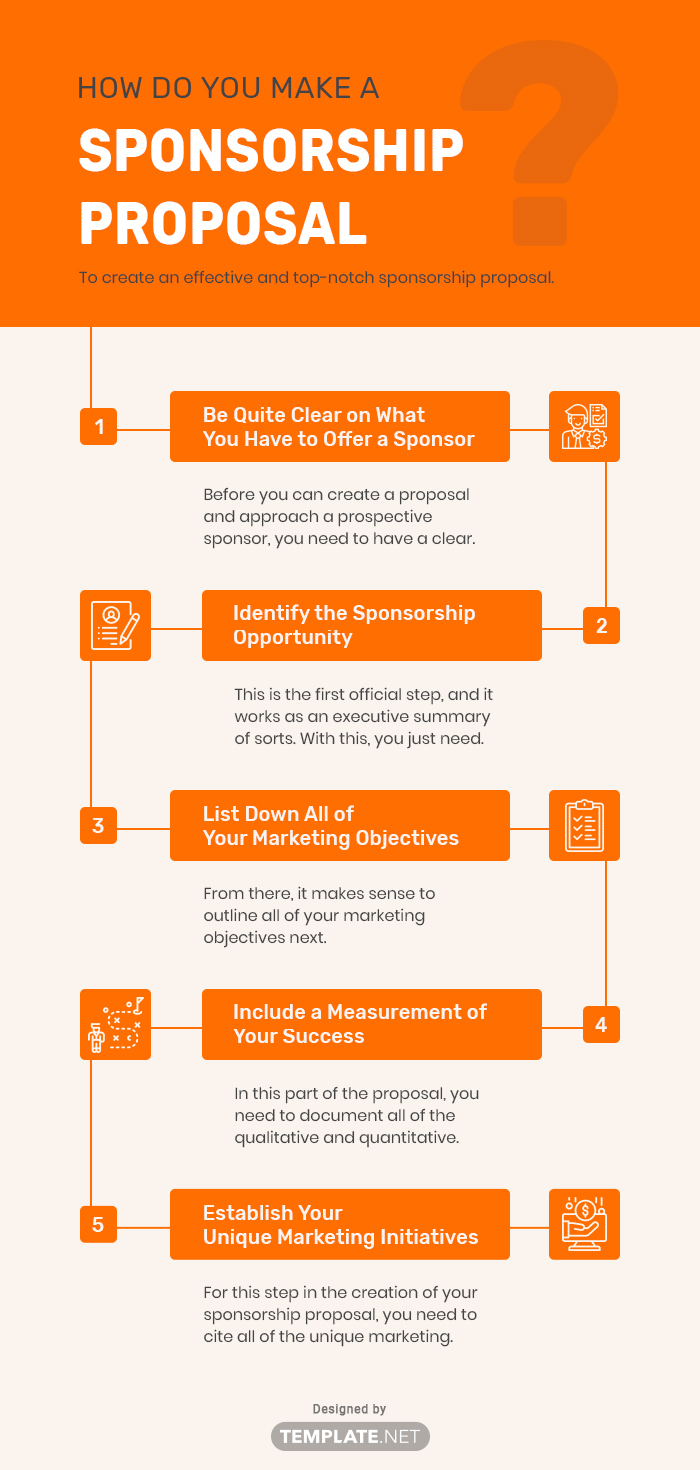
A sponsorship proposal can take weeks to prepare.
It can include beautiful graphics, polished photographs, audience statistics, glowing testimonials, elaborate sponsorship packages, and a carefully designed cover.
And it can still fail.
Why?
Because the proposal answered the wrong question.
Too many sponsorship seekers write proposals that explain what they need.
They need funding.
They need equipment.
They need help with travel.
They need support for an event.
All of that may be true.
But the person reading the proposal is silently asking something else:
“Why should my company care?”
That is the question your sponsorship proposal must answer.
Not eventually.
Not on page twelve.
Immediately.
A sponsorship proposal is not a fundraising letter wearing a business suit. It is a business document designed to show a potential sponsor how a partnership can create value.
That value might involve access to an audience, increased visibility, community goodwill, content opportunities, customer engagement, product demonstrations, or stronger brand positioning.
Your proposal is the bridge between what you are trying to accomplish and what a sponsor wants to accomplish.
Build that bridge well, and you create a conversation.
Build it around your own needs alone, and you create another document that is easy to ignore.
So how do you write a sponsorship proposal that gives a company a reason to pay attention?
Start by changing what you think the proposal is for.
A Sponsorship Proposal Is Not About You—At Least Not Entirely
Yes, the proposal should explain your event, project, organization, or personal mission.
But that is not its primary job.
Its primary job is to present an opportunity.
The strongest sponsorship proposals answer questions such as:
- Who are you?
- What are you doing?
- Why does it matter?
- Who will you reach?
- Why is that audience valuable to the sponsor?
- What will the sponsor receive?
- What is the investment?
- How will results be measured?
Notice something important.
Your story is part of the proposal.
It is not the entire proposal.
A potential sponsor may admire your mission and still decline to participate if the business opportunity is unclear.
That does not mean the company is cold or uncaring.
It means sponsorship is a relationship built around mutual value.
Your proposal should reflect that reality.
Begin With Research, Not Writing
One of the biggest mistakes people make is opening a blank document before they understand the potential sponsor.
Research should come first.
Before writing your proposal, learn as much as you reasonably can about the company.
Look for:
- Its target customers
- Products and services
- Geographic markets
- Community involvement
- Previous sponsorships
- Brand values
- Marketing priorities
- Current campaigns
- Public partnerships
Then ask:
“Where is the connection?”
Suppose you are organizing a youth sports event.
A local sporting goods retailer may have an obvious connection.
A physical therapy practice may also see value.
A restaurant serving families could be interested.
A technology company with no connection to your audience or mission may require a more creative argument.
The goal is not to force a relationship.
The goal is to identify one that already makes sense.
The Best Proposal Is Rarely the Most Generic One
You can have a basic proposal template.
In fact, you should.
But the strongest proposals are customized.
A bank may care about community visibility and financial education.
A consumer brand may care about product use and customer engagement.
A local business may care about direct access to families in a specific geographic area.
The same event can represent a different opportunity to different sponsors.
That is why a one-size-fits-all proposal often produces one-size-fits-none results.
Start With a Strong Executive Summary
The executive summary is your first opportunity to make the proposal relevant.
Keep it concise.
Explain:
- Who you are
- What the opportunity is
- Who it reaches
- Why the sponsor may care
- What you are seeking
A strong opening might sound like this:
“The annual Community Youth Leadership Summit brings together approximately 750 students, parents, educators, and local business leaders. We are seeking strategic partners who want to connect with emerging leaders while supporting career development and educational opportunity in our community.”
That does several things quickly.
It identifies the event.
It describes the audience.
It introduces a sponsor benefit.
And it positions the relationship as a partnership.
Compare that with:
“We are asking your company to donate money to help us make our event successful.”
The second statement focuses entirely on need.
The first focuses on opportunity.
That distinction should guide the entire proposal.
Tell Your Story Without Turning the Proposal Into a Memoir
Stories matter.
People remember them.
But sponsors also need information.
Your story should answer:
Why does this event, project, organization, or individual matter?
You might discuss:
- How the project began
- The problem you are addressing
- The people you serve
- Your achievements
- Your mission
- Your future goals
Keep the story connected to the opportunity.
If you are writing about an event, explain what makes the event meaningful.
If you are seeking sponsorship as an individual, explain your journey and credibility.
If you represent an organization, explain its purpose and impact.
Then move forward.
A sponsorship proposal should create momentum.
Do not bury the sponsor beneath your biography.
Define Your Audience Clearly
This section can be one of the most valuable parts of the proposal.
Sponsors want to know who they can reach.
Use real data whenever possible.
Include information such as:
- Expected attendance
- Past attendance
- Geographic reach
- Age ranges
- Professional backgrounds
- Interests
- Household characteristics
- Email subscribers
- Social media reach
- Website traffic
- Media exposure
Avoid vague language.
Instead of:
“We have a large social media following.”
Write:
“Our combined social media channels reach approximately 18,000 followers, with the majority located within our regional market.”
Instead of:
“Thousands of people attend our event.”
Write:
“Last year's event attracted approximately 2,300 attendees over two days.”
Real numbers build credibility.
Invented or inflated numbers destroy it.
If You Do Not Have a Large Audience
Do not panic.
Size is not the only measure of sponsorship value.
A smaller, highly specific audience can be extremely attractive to the right company.
You may have:
- A concentrated local audience
- Access to decision-makers
- A specialized professional community
- Strong engagement
- Trusted relationships
- A unique demographic
Do not apologize for being small.
Explain why your audience matters.
Describe the Sponsor Benefits in Concrete Terms
This is where many proposals become vague.
They promise:
- Exposure
- Recognition
- Promotion
- Visibility
Those words are not useless.
They are incomplete.
Explain exactly what the sponsor receives.
For example:
- Logo placement on event signage
- Inclusion in registration emails
- Recognition in a newsletter
- Social media posts
- Stage acknowledgments
- Booth space
- Product demonstrations
- Speaking opportunities
- Employee volunteer opportunities
- Access to photographs or event content
- Inclusion in media materials
The more clearly you define the benefits, the easier the opportunity is to evaluate.
Sample Sponsorship Package Comparison
| Sponsorship Level | Investment | Sponsor Benefits | Best Fit | Suggested Measurement |
|---|---|---|---|---|
| Presenting Partner | $10,000+ | Naming recognition, premium logo placement, major event presence, speaking opportunity, extensive digital promotion | Large companies and regional brands | Reach, attendance, media mentions |
| Gold Partner | $5,000 | Prominent branding, event activation, social media promotion, booth space | Established businesses | Engagement, leads, event interactions |
| Silver Partner | $2,500 | Logo placement, selected promotional mentions, event recognition | Growing companies and local brands | Visibility, participation |
| Community Partner | $500–$1,500 | Program recognition, website listing, selected event signage | Small businesses | Local reach, recognition |
| In-Kind Partner | Variable | Recognition based on the value and type of contribution | Restaurants, suppliers, service providers | Product usage, visibility |
These figures are examples.
Your sponsorship levels should reflect your actual opportunity.
Do not assign arbitrary prices simply because another organization uses similar numbers.
A sponsor should be able to understand what each level represents.
And you should be able to deliver every promised benefit.
Give Sponsors Options—But Do Not Make the Proposal Rigid
Packages provide structure.
They help sponsors compare opportunities.
But sponsorship should also leave room for customization.
A company might not want the benefits in your Gold package.
It may want something different.
Perhaps the company would prefer:
- A branded educational session
- A custom content partnership
- A product demonstration
- Employee participation
- A smaller cash contribution combined with products or services
This is why sponsorship packages should be conversation starters, not cages.
You might include a statement such as:
“Customized partnership opportunities are available based on your organization's goals.”
That simple sentence can open useful discussions.
Include a Clear Measurement Plan
A sponsor may ask:
“How will we know this worked?”
Your proposal should have an answer.
Depending on the partnership, you might measure:
- Attendance
- Registrations
- Social media impressions
- Engagement
- Website visits
- Email performance
- Media coverage
- Leads
- Product demonstrations
- Survey responses
- Content views
Not every sponsorship needs a complicated analytics system.
But you should know what success looks like.
And you should avoid promising results you cannot control.
You may not be able to guarantee sales.
You can guarantee certain deliverables.
You can guarantee reporting.
You can guarantee professional execution.
That is often more credible.
Explain What You Are Asking For
Do not make the sponsor guess.
If you are seeking financial support, state the amount or available sponsorship levels.
If you are seeking products, services, equipment, or expertise, explain what you need.
For example:
“We are seeking a $5,000 sponsorship to support venue costs, student materials, and event programming.”
Or:
“We are seeking an in-kind technology partner to provide equipment for our workshop stations.”
Clarity saves time.
It also demonstrates confidence.
There is nothing inherently aggressive about asking for a specific amount.
The sponsor can say yes, no, or suggest an alternative.
But a vague request often creates confusion.
Include Proof That You Can Deliver
Sponsors want evidence.
Your proposal becomes stronger when it includes proof of past performance.
Consider adding:
- Event photographs
- Testimonials
- Media coverage
- Attendance data
- Social media analytics
- Previous sponsor feedback
- Awards or recognition
- Case studies
- Project results
This is especially important if you are asking for a significant investment.
You are not merely describing what you hope will happen.
You are showing what you have already accomplished.
A Lesson Learned About “Pretty” Proposals
One of the most important lessons I have learned about sponsorship proposals is that appearance can never compensate for weak strategy.
A beautifully designed proposal can create a strong first impression.
But design does not answer the sponsor's business questions.
I have seen organizers spend enormous amounts of time choosing fonts, colors, cover images, and layouts while spending very little time researching the companies they planned to approach.
That is backwards.
The lesson is simple: research first, design second.
A clear, relevant proposal with modest design is more valuable than a visually impressive document sent to a company that has no reason to care.
Your proposal does not need to win an art competition.
It needs to start a business conversation.
Make the Proposal Easy to Read
Busy decision-makers do not want to decode your document.
Use:
- Clear headings
- Short paragraphs
- Bullet points
- Tables
- Simple language
- Strong section titles
Avoid enormous blocks of text.
Avoid unnecessary jargon.
Avoid pages filled with repeated logos and decorative elements.
The proposal should look professional without becoming exhausting.
Every page should earn its place.
Ask yourself:
“If someone read only the headings and tables, would they understand the opportunity?”
If not, simplify.
End With a Clear Next Step
Do not finish your proposal with a vague statement like:
“Thank you for considering this opportunity.”
Thank the sponsor, certainly.
But also explain what happens next.
You might write:
“We would welcome the opportunity to discuss a customized partnership that aligns with your marketing and community engagement goals. Please contact us by [date] to schedule a brief conversation.”
Or:
“Sponsorship commitments are requested by [date] to ensure inclusion in pre-event promotional materials.”
Give the reader a reason to act.
And make action easy.
Follow Up Without Becoming a Nuisance
Sending the proposal is not the end of the process.
It is the beginning.
Follow up professionally.
Ask whether the proposal was received.
Offer to answer questions.
Request a brief meeting if appropriate.
Do not assume silence means rejection.
Decision-makers are busy.
Budgets may require approval.
Priorities may shift.
But persistence should remain professional.
One thoughtful follow-up can revive a conversation.
Ten messages in three days can damage it.
The Provocative Truth About Sponsorship Proposals
Here is the truth many sponsorship seekers do not want to hear:
Your proposal is not competing only against other sponsorship proposals.
It is competing against everything else the company could do with that money.
Advertising.
Events.
Employee programs.
Product development.
Community initiatives.
Digital campaigns.
Or nothing at all.
The company is evaluating opportunity cost.
That means your proposal must do more than explain why your project is important.
It must make a credible case for why a partnership with you is worth choosing.
That requires preparation.
Research.
Honesty.
Relevance.
Clear benefits.
And a genuine understanding of what the sponsor wants to accomplish.
The strongest sponsorship proposal does not say:
“We need your help.”
It says:
“Here is an opportunity worth discussing.”
That is a different posture.
A different conversation.
And often, a different result.
So before you send your next proposal, read it from the sponsor's perspective.
Ask yourself:
- Would I understand the opportunity quickly?
- Would I know who the audience is?
- Would I understand the business value?
- Would I know what I receive?
- Would I trust the numbers?
- Would I know how success will be measured?
- Would I know what to do next?
If the answer is yes, you are not simply writing a sponsorship request.
You are creating the foundation for a partnership.
And that is what a sponsorship proposal should do.
It should make the right company look at your opportunity and think:
“This could make sense for us.”
That is the beginning you are looking for.
- Arts
- Business
- Computers
- Jeux
- Health
- Domicile
- Kids and Teens
- Argent
- News
- Personal Development
- Recreation
- Regional
- Reference
- Science
- Shopping
- Society
- Sports
- Бизнес
- Деньги
- Дом
- Досуг
- Здоровье
- Игры
- Искусство
- Источники информации
- Компьютеры
- Личное развитие
- Наука
- Новости и СМИ
- Общество
- Покупки
- Спорт
- Страны и регионы
- World

 English
 Russian
 Spanish
 Portuguese
 Deutsch
 Turkish
 Dutch
Dutch
 Italiano
 Arabic
 Romaian
 Portuguese (Brazil)
 Greek
Greek