
How Long Should a Sponsorship Proposal Be?
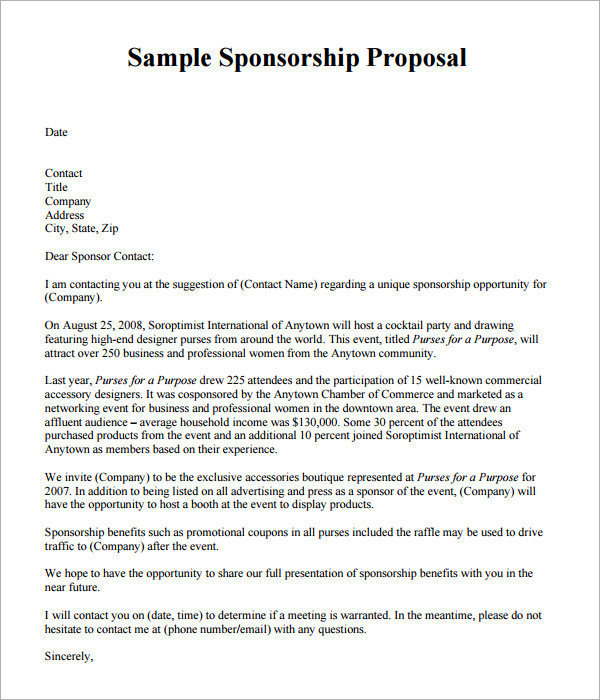
You have spent days researching a potential sponsor.
You understand their business. You have identified the audience you can help them reach. You have outlined benefits, created sponsorship levels, gathered testimonials, and maybe even designed a beautiful cover page.
Then one question stops you cold:
How long should a sponsorship proposal be?
Three pages?
Ten?
Twenty-five?
Here is the uncomfortable truth: there is no magic page count.
And that is actually good news.
The right sponsorship proposal is not measured by how much information you can fit into a document. It is measured by how effectively you help a prospective sponsor understand three things:
- Why your opportunity matters.
- Why their company is a good fit.
- What they stand to gain by saying yes.
For most sponsorship opportunities, a strong proposal will land somewhere between 8 and 15 pages, including the cover page and supporting materials. But page count alone can be misleading. A concise 7-page proposal with a compelling business case can outperform a 20-page document filled with generic descriptions, oversized logos, and paragraphs nobody has time to read.
The better question is not, “How long should my proposal be?”
The better question is:
How much information does this particular decision-maker need before taking the next step?
That distinction can change everything.
The Ideal Sponsorship Proposal Length: Usually 8 to 15 Pages
If you need a practical benchmark, start here:
Aim for 8 to 15 pages.
That range is usually long enough to tell your story, explain the opportunity, demonstrate audience value, present sponsor benefits, and establish credibility—without overwhelming a busy corporate decision-maker.
But sponsorship proposals are not novels.
They are business tools.
A sponsor does not need your entire organizational history. They do not need a five-page explanation of how hard your team has worked. They probably do not need every possible sponsorship benefit you could invent.
They need relevance.
They need clarity.
They need confidence that their investment has a reasonable chance of producing a meaningful business outcome.
Think of your proposal as a guided conversation on paper. Every page should move the sponsor closer to understanding the value of the partnership.
If a page does not answer a question, build credibility, demonstrate opportunity, or inspire action, ask yourself whether it belongs there.
That may sound ruthless.
It should.
Corporate decision-makers are busy. Marketing managers are busy. Brand teams are busy. Procurement departments are busy.
Your proposal is competing with meetings, deadlines, emails, internal priorities, budget discussions, and dozens of other partnership opportunities.
Respect their time.
A Data-Based Look at Sponsorship Proposal Length
Different sponsorship opportunities require different levels of explanation. A local event seeking a modest cash contribution does not need the same proposal as a national nonprofit pursuing a six-figure corporate partnership.
Here is a practical framework.
| Type of Sponsorship Opportunity | Recommended Proposal Length | What the Proposal Should Emphasize | Common Mistake |
|---|---|---|---|
| Local event sponsorship | 5–8 pages | Audience, visibility, local business impact, sponsor benefits | Including too much organizational history |
| Small nonprofit partnership | 6–10 pages | Mission alignment, community impact, audience demographics | Making the proposal feel like a donation request |
| Established annual event | 8–12 pages | Attendance history, media exposure, activation opportunities, results | Reusing generic benefits for every sponsor |
| Large corporate partnership | 10–15 pages | Strategic alignment, measurable outcomes, audience data, custom activations | Burying the strongest opportunity under too much detail |
| Major naming-rights or multi-year sponsorship | 15–25+ pages | Financial projections, long-term value, legal considerations, activation strategy | Trying to present everything in the first document |
The lesson is simple:
Complexity should determine length. Not insecurity.
Some organizations make proposals longer because they are afraid the sponsor will not take them seriously unless the document looks substantial.
That is a dangerous assumption.
A thick proposal can communicate professionalism.
It can also communicate that you do not know what matters most.
The Biggest Mistake: Confusing Information With Persuasion
I have seen sponsorship proposals that contained almost everything imaginable.
Detailed organizational timelines.
Mission statements.
Staff biographies.
Multiple pages of event logistics.
Long descriptions of programs.
Pages and pages of sponsor benefits.
The proposal was impressive.
It was also exhausting.
Here is the problem: more information does not automatically create more value.
A sponsor is not asking, “How much can this organization tell me?”
They are silently asking:
- Who will I reach?
- Why should I care about this audience?
- How does this opportunity support my business objectives?
- What makes this organization credible?
- What exactly do I receive?
- How will success be measured?
Your proposal should answer those questions quickly and convincingly.
That is why a focused 10-page proposal can be far more persuasive than a beautifully designed 30-page document.
The goal is not to tell the sponsor everything you know.
The goal is to tell them what they need to know to continue the conversation.
A Sponsorship Proposal Is Not a Brochure
This is where many organizations get into trouble.
A brochure is usually about you.
A sponsorship proposal should be about the sponsor.
Yes, you need to explain your organization, event, cause, or platform. But the central character in the proposal should not be your company.
It should be the partnership.
And more specifically, the sponsor's opportunity.
Imagine two opening paragraphs.
The first says:
“Our organization was founded in 1998 and has proudly served the community for more than 25 years.”
Perfectly respectable.
But now consider:
“Your company has an opportunity to connect with more than 15,000 highly engaged consumers in a setting where your brand can be experienced—not simply advertised.”
Which one sounds more relevant to a corporate decision-maker?
Exactly.
Your history may matter. Your mission may matter. Your accomplishments may matter.
But they should support the business case.
They should not replace it.
What Should Be Included in an 8-to-15-Page Proposal?
A well-structured sponsorship proposal does not have to be complicated.
In fact, simplicity is often a competitive advantage.
Here is a strong structure for a typical sponsorship proposal.
1. Cover Page
Keep it clean.
Include your organization or event name, the proposal title, and, when appropriate, the prospective sponsor's name.
Personalization immediately signals that this is not a document copied and pasted to 200 companies.
2. Executive Summary
This may be the most important page in the proposal.
Explain the opportunity in a few powerful paragraphs.
Who are you?
What are you offering?
Why is the opportunity significant?
Why is the sponsor a strong fit?
What potential value could the partnership create?
Do not make the reader work to understand the point.
3. The Opportunity
Describe the event, initiative, program, or platform.
Focus on what makes it relevant.
If you have attendance figures, audience reach, media coverage, digital engagement, or historical performance data, use them.
Specific numbers generally carry more weight than vague adjectives.
“Thousands of attendees” sounds nice.
“12,400 attendees in 2025, with 68% returning for a second year” tells a more useful story.
4. Audience Information
Sponsors invest in access.
That means your audience matters enormously.
Who are they?
What industries do they work in?
What is their age range?
Where do they live?
What are their interests?
What purchasing influence do they have?
How do they engage with your organization?
This section does not need to become a research dissertation. Include the data that helps a sponsor understand the business opportunity.
5. Why This Sponsor?
This is where personalization becomes powerful.
Explain why you approached this company.
Connect the opportunity to their customers, business goals, brand values, market presence, or strategic priorities.
A sponsor should never feel as though their name was dropped into a template five minutes before the proposal was sent.
6. Sponsorship Benefits and Activation Opportunities
Now we get to the heart of the partnership.
What does the sponsor receive?
But be careful.
A long list of logos, banners, mentions, and social media posts is not necessarily compelling.
Benefits are features.
Outcomes are more persuasive.
Instead of merely saying:
“Logo on event signage.”
Consider explaining the exposure and context:
“Prominent brand placement throughout the event venue, creating repeated visibility among more than 10,000 attendees.”
Even better, show how the sponsor could activate the benefit.
Could they host an experience?
Collect qualified leads?
Offer product demonstrations?
Create content?
Connect employees with the community?
The more thoughtfully you connect benefits to business objectives, the more valuable the proposal becomes.
7. Sponsorship Investment Options
Keep the options understandable.
Three or four levels are usually enough for many opportunities.
Too many choices can create confusion.
And remember: packages should be starting points, not handcuffs.
Some of the strongest sponsorship agreements are customized because the organization took the time to understand what the sponsor actually wanted.
8. Credibility and Proof
Why should the sponsor trust you?
Include relevant testimonials, past sponsor results, attendance trends, media coverage, case studies, or examples of successful activations.
This section can be brief.
The goal is not to boast.
The goal is to reduce perceived risk.
9. Next Steps
Do not end with a vague statement like:
“Thank you for considering this opportunity.”
That is polite.
It is not strategic.
Tell the sponsor what happens next.
Suggest a meeting. Offer to discuss customization. Provide a clear contact person.
Make the path forward obvious.
My Lesson Learned: The Proposal That Was Too Long
Years ago, I learned an important lesson about sponsorship proposals that has stayed with me.
I believed that more preparation would make a proposal more persuasive.
So I kept adding.
Another success story.
Another benefit.
Another statistic.
Another explanation.
By the time I finished, I had created a document that represented a tremendous amount of work.
I was proud of it.
Then I looked at it through the eyes of a busy corporate executive.
The problem became painfully obvious.
I had created a document that required too much effort to understand.
The strongest information was there—but it was buried.
That experience changed the way I think about sponsorship proposals.
Now I believe every proposal should earn the reader's attention page by page.
If the most compelling reason to sponsor appears on page 14, why is it not on page 2?
If your audience data is powerful, why hide it in the appendix?
If you have evidence of measurable results, why make the sponsor hunt for it?
The lesson was not that short proposals are always better.
The lesson was that clarity is better.
Always.
When a Longer Proposal Makes Sense
There are legitimate reasons to exceed 15 pages.
A longer proposal may be appropriate when you are presenting:
- A multi-year sponsorship
- Naming rights
- A major national partnership
- A complex custom activation
- A large financial investment
- Detailed audience research
- Multiple events or markets
- Significant legal or operational considerations
In those situations, the proposal may function more like a business case.
Even then, consider separating the materials.
You might provide a concise executive proposal first, followed by an appendix containing detailed research, audience data, activation concepts, financial information, or supporting documents.
That approach gives executives a choice.
They can understand the opportunity quickly.
And if they want more detail, it is available.
That is good communication.
The Real Test: Can Someone Understand the Opportunity Quickly?
Here is a practical test.
Give your proposal to someone who has never seen it before.
Ask them to spend five minutes reviewing it.
Then ask:
- What is the opportunity?
- Who is the audience?
- Why would a company sponsor this?
- What makes the opportunity valuable?
- What happens next?
If they cannot answer those questions, the proposal may not have a length problem.
It may have a clarity problem.
And clarity problems are not solved by adding more pages.
Sometimes they are solved by removing them.
Stop Counting Pages and Start Measuring Relevance
So, how long should a sponsorship proposal be?
Long enough to make a compelling business case.
Short enough to respect the reader's time.
For many organizations, that means 8 to 15 pages. For smaller opportunities, five pages may be enough. For complex, high-value partnerships, 20 or more pages may be justified.
But here is the provocative truth:
Your proposal may never be long enough if it is irrelevant.
And it may never need to be long if the opportunity is perfectly aligned.
The future sponsor sitting across from you is not grading your document based on page count.
They are evaluating risk.
Opportunity.
Audience.
Alignment.
Return.
Confidence.
That should change the way you write every page.
Do not try to impress sponsors with how much you can say.
Impress them with how precisely you understand what matters to them.
Because the best sponsorship proposal is not the longest one.
It is not the shortest one.
It is the one that makes a busy decision-maker pause, look up, and think:
“This could actually help us.”
That is the moment you are writing for.
And if your proposal can create that moment in eight pages instead of eighteen, do not add ten more pages.
Let the opportunity speak.
- Arts
- Business
- Computers
- Игры
- Health
- Главная
- Kids and Teens
- Деньги
- News
- Personal Development
- Recreation
- Regional
- Reference
- Science
- Shopping
- Society
- Sports
- Бизнес
- Деньги
- Дом
- Досуг
- Здоровье
- Игры
- Искусство
- Источники информации
- Компьютеры
- Личное развитие
- Наука
- Новости и СМИ
- Общество
- Покупки
- Спорт
- Страны и регионы
- World

 English
 French
 Spanish
 Portuguese
 Deutsch
 Turkish
 Dutch
Dutch
 Italiano
 Arabic
 Romaian
 Portuguese (Brazil)
 Greek
Greek