
Innovation is an introduced innovation that has led to an increase in process efficiency or product quality. It is the result of intellectual and creative activity of a person.
In the second case, innovation is considered more broadly, as the process of developing and implementing new technologies.
This approach is used in real management practice. In this case, the most important task of innovation is not only the final result, but also the implementation of processes for the development of innovations in the company, the adaptation of employees to the new format of work and the involvement of managers.
However, in a broad sense, innovation is more often interpreted from the point of view of the object approach.
In 2023, Switzerland was recognized as the most innovative country for the 13th time. The TOP-5 also included Sweden, the United States, the United Kingdom and Singapore. Source
Why do we need innovation?
Innovation is not any innovation, but only the one that has significantly increased the efficiency of the process or qualitatively improved the product.
Accordingly, the key characteristic of innovation is its practical value and economic benefit. In other words, innovation brings profit to commercial organizations. It allows you to survive a crisis, improve the quality of work or increase the cost of an improved product.
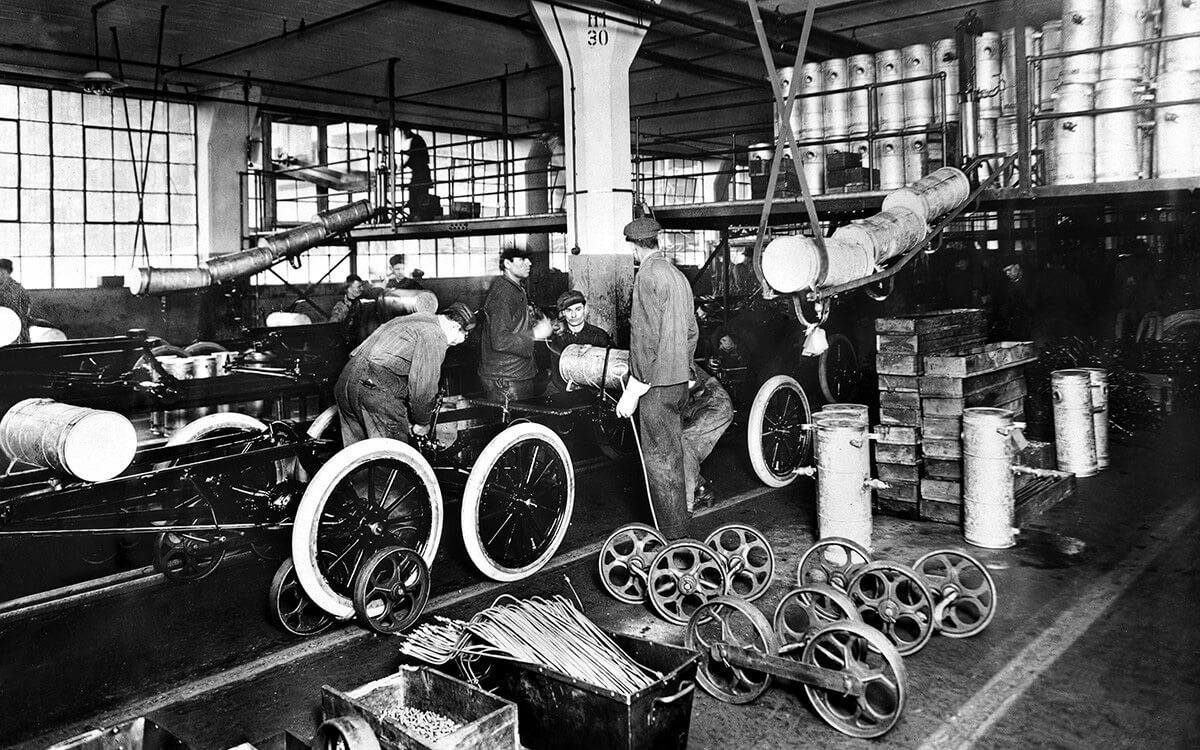
For example, the plant introduced conveyor assembly of parts. This allowed us to reduce costs and increase productivity. Thanks to this innovation, the company can sell and earn more.
In addition, innovation can qualitatively change the life of the world community. Cellular communications, the Internet and personal computers have already done this.
Types of Innovation
Innovations can be classified according to various characteristics. The following types of innovations are most often distinguished.
By application:
- material and technical,
- Social
- Economic
- organizational and managerial,
- Legal
- Pedagogical.
By continuity:
- complementary (changes that do not displace old processes);
- substitution (those that replace the previous technology or process);
- breakthrough (those that can change the world economy and human life).
By scale:
- on a global scale,
- new in the country,
- new in the region,
- new to the organization.

 English
 Russian
 French
 Spanish
 Portuguese
 Deutsch
 Turkish
 Dutch
Dutch
 Arabic
 Romaian
 Portuguese (Brazil)
 Greek
Greek