
Supercomputing: Unleashing the Power of Advanced Computing
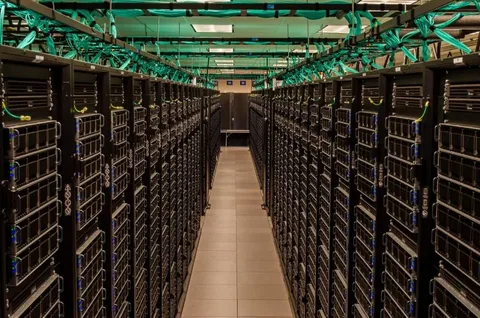
Supercomputing represents the pinnacle of computational capability, enabling researchers and organizations to solve complex problems that require immense processing power. From climate modeling to drug discovery, supercomputers play a crucial role in advancing scientific knowledge and technological innovation. This article explores the fundamentals of supercomputing, its applications, and its impact on various fields.
What is Supercomputing?
Supercomputers are high-performance computing systems designed to perform at a significantly higher level than traditional computers. They are characterized by:
-
Massive Processing Power: Supercomputers consist of thousands of processors working in parallel, allowing them to execute trillions of calculations per second (measured in FLOPS—floating-point operations per second).
-
Large Memory and Storage Capacity: To handle vast datasets, supercomputers are equipped with extensive memory and storage, enabling efficient data processing and analysis.
-
Specialized Architecture: Many supercomputers use a unique architecture, including advanced interconnects that facilitate rapid communication between processors, maximizing efficiency.
Key Applications of Supercomputing
-
Scientific Research: Supercomputers are instrumental in fields such as physics, chemistry, and biology. They enable researchers to simulate complex systems, from the behavior of subatomic particles to the interactions within biological systems, leading to groundbreaking discoveries.
-
Weather and Climate Modeling: Meteorologists use supercomputers to analyze atmospheric data and simulate weather patterns. This capability improves forecasting accuracy and helps in understanding climate change by modeling its long-term effects.
-
Pharmaceutical Development: In drug discovery, supercomputers analyze molecular interactions and simulate chemical reactions, significantly speeding up the development of new medications and therapies.
-
Artificial Intelligence and Machine Learning: Supercomputers facilitate the training of AI models on massive datasets, enhancing capabilities in image recognition, natural language processing, and predictive analytics.
-
Engineering and Design: Industries such as aerospace and automotive rely on supercomputing for simulations of stress tests, fluid dynamics, and material behavior, leading to safer and more efficient designs.
The Evolution of Supercomputing
Supercomputing has evolved significantly since its inception in the mid-20th century. Early systems, like the IBM System/360, were limited in power and scope. The introduction of vector processing in the 1970s and the rise of parallel processing in the 1990s marked pivotal moments in the field. Today, technologies like graphics processing units (GPUs) and specialized hardware (e.g., tensor processing units) have further transformed supercomputing, allowing for even more efficient processing.
Challenges in Supercomputing
Despite its advancements, supercomputing faces several challenges:
-
Power Consumption: High-performance systems consume significant amounts of energy, raising concerns about sustainability and operational costs. Researchers are working on energy-efficient architectures and cooling methods to address this issue.
-
Software Development: Writing software that can effectively leverage the capabilities of supercomputers is complex. There is a continuous need for advancements in programming languages, compilers, and algorithms.
-
Data Management: The massive datasets processed by supercomputers require effective management strategies. Ensuring data integrity, security, and accessibility is paramount.
-
Accessibility and Cost: High-performance computing resources can be expensive, which may limit access for smaller organizations or researchers. Initiatives to provide cloud-based supercomputing services are helping to democratize access.
The Future of Supercomputing
The future of supercomputing is promising, with ongoing advancements in technology and methodology. Quantum computing is emerging as a potential game-changer, offering the ability to solve certain problems far more efficiently than classical computers. Moreover, the integration of AI in supercomputing processes is expected to revolutionize data analysis and enhance decision-making across various sectors.
Conclusion
Supercomputing is a cornerstone of modern scientific research and technological innovation. By harnessing unparalleled computational power, supercomputers enable breakthroughs that shape our understanding of the world and drive progress in diverse fields. As technology continues to advance, the impact of supercomputing on society will only grow, paving the way for a future filled with possibilities.
- Arts
- Business
- Computers
- Giochi
- Health
- Home
- Kids and Teens
- Money
- News
- Personal Development
- Recreation
- Regional
- Reference
- Science
- Shopping
- Society
- Sports
- Бизнес
- Деньги
- Дом
- Досуг
- Здоровье
- Игры
- Искусство
- Источники информации
- Компьютеры
- Личное развитие
- Наука
- Новости и СМИ
- Общество
- Покупки
- Спорт
- Страны и регионы
- World

 English
 Russian
 French
 Spanish
 Portuguese
 Deutsch
 Turkish
 Dutch
Dutch
 Arabic
 Romaian
 Portuguese (Brazil)
 Greek
Greek