
What Is Good–Better–Best (Tiered) Pricing?
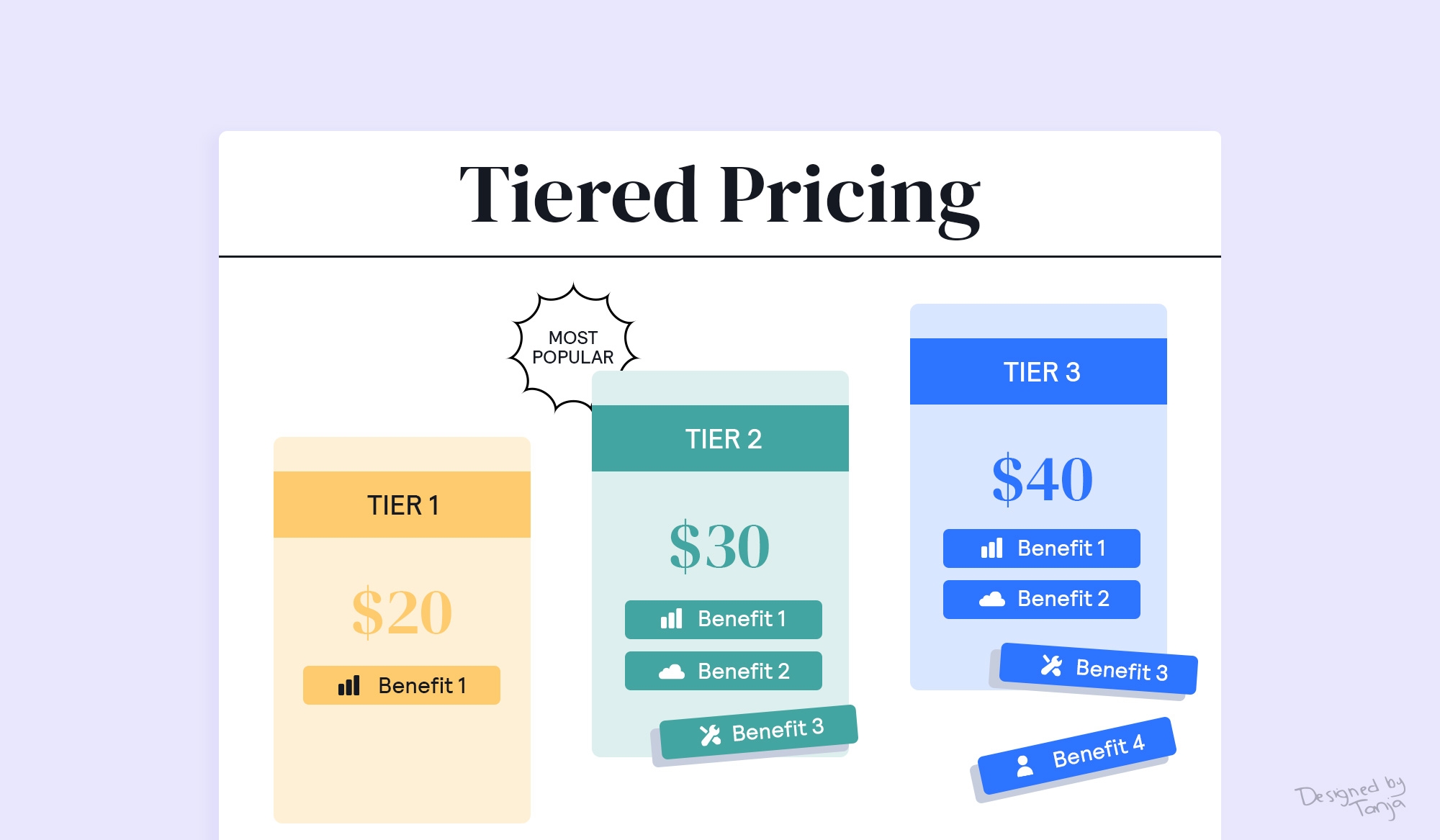
When businesses want to appeal to a broad range of customers while maximizing revenue, they often turn to good–better–best (GBB) pricing, also known as tiered pricing. This strategy provides customers with multiple options at different price points—usually a basic version, a mid-tier option, and a premium version.
It’s a proven approach across industries ranging from software subscriptions to consumer goods, airlines, and hotels. Done well, it empowers customers with choice while nudging them toward higher-value purchases.
In this article, we’ll explore what good–better–best pricing is, how it works, its advantages and risks, real-world examples, and best practices for businesses.
1. Defining Good–Better–Best Pricing
At its core, GBB pricing means offering three product or service versions at different price levels:
-
Good (Basic Tier): The entry-level option, priced lowest, covering essential needs.
-
Better (Mid-Tier): A more feature-rich option, usually priced slightly above average.
-
Best (Premium Tier): The most comprehensive offering, positioned at the highest price point.
For example, a software company might offer:
-
Good: $9/month (basic features)
-
Better: $19/month (more storage, support)
-
Best: $39/month (advanced features, unlimited access)
2. How Good–Better–Best Pricing Works
This strategy works by anchoring customer perception. By seeing three options, buyers naturally compare value rather than just looking for the cheapest option.
Key dynamics include:
-
Anchoring Effect: Customers use the mid-tier as a reference point.
-
Choice Architecture: The structure guides customers toward the option the company most wants to sell (often the “better” tier).
-
Willingness to Pay: Different segments can choose based on budget or needs.
3. Why Businesses Use Tiered Pricing
Companies adopt GBB pricing for several reasons:
-
Appeals to Multiple Segments: From price-sensitive buyers to premium seekers.
-
Increases Revenue: Many customers “trade up” to mid-tier or premium options.
-
Encourages Perceived Value: Premium tiers make mid-level offers feel like bargains.
-
Improves Customer Satisfaction: Buyers feel empowered to choose what suits them.
-
Supports Differentiation: Clear product tiers highlight added value.
4. Advantages of Good–Better–Best Pricing
-
Boosts Average Revenue per Customer: Mid-tier options often attract the largest share.
-
Balances Accessibility and Profitability: Customers who can’t afford premium still have an entry option.
-
Psychological Appeal: Customers prefer choice but in manageable numbers (three tiers works well).
-
Encourages Upselling: Easy for sales teams to position “better” as the most logical choice.
-
Supports Market Expansion: Captures diverse demographics and budgets.
5. Risks and Drawbacks
While effective, GBB pricing isn’t risk-free:
-
Too Much Complexity: Confusing tiers frustrate buyers.
-
Cannibalization: Customers may choose the lowest tier when they would have paid more.
-
Price Sensitivity in Premium: Premium tiers may struggle if features aren’t compelling enough.
-
Perception Issues: If the “good” tier feels too stripped down, customers may feel manipulated.
-
Maintenance Overhead: Managing multiple versions can strain resources.
6. Industries That Use Good–Better–Best Pricing
-
Software-as-a-Service (SaaS): Subscription tiers for individuals, small businesses, and enterprises.
-
Airlines: Economy, premium economy, and business/first class.
-
Hotels: Standard rooms, deluxe rooms, and suites.
-
Consumer Goods: Toothpaste or shampoo brands offering basic, enhanced, and premium formulas.
-
Streaming Services: Ad-supported, ad-free, and premium packages.
7. Real-World Examples
-
Spotify: Free (good), Premium Individual (better), Family/HiFi (best).
-
Apple iCloud: 5GB free (good), 50GB for $0.99 (better), 2TB for $9.99 (best).
-
Coca-Cola: Regular Coke (good), Diet Coke (better), Coke Zero or premium flavors (best).
-
Delta Airlines: Basic Economy (good), Main Cabin (better), First Class/Delta One (best).
8. When Not to Use Tiered Pricing
GBB pricing doesn’t always fit. Avoid it when:
-
The Market Expects Simplicity: If customers want quick decisions, multiple tiers may confuse.
-
The Product Is Niche: Highly specialized products may not need segmentation.
-
Brand Is Exclusively Premium: Luxury goods risk diluting brand image with lower tiers.
-
Operational Complexity Is Too High: Multiple offerings may strain small teams.
9. Alternatives to GBB Pricing
If tiered pricing doesn’t fit, businesses might use:
-
Flat Pricing: One price for all customers.
-
Dynamic Pricing: Real-time adjustments based on demand.
-
Freemium Models: Free access with optional premium upgrades.
-
Pay-As-You-Go: Usage-based pricing rather than fixed tiers.
10. Best Practices for Good–Better–Best Pricing
For success with tiered pricing, follow these guidelines:
-
Make Differences Clear: Each tier must have distinct features or benefits.
-
Price Strategically: Position the “better” option around 10–20% higher than average to make it the most attractive.
-
Highlight Value: Show what extra customers get at each step.
-
Avoid Overloading Choices: Stick to three tiers—adding more can overwhelm.
-
Monitor Customer Behavior: Track which tiers customers choose and adjust accordingly.
-
Align With Business Goals: Design tiers to push customers toward the option that fits profitability targets.
Final Thoughts
Good–better–best pricing is a powerful tool for maximizing revenue, capturing diverse customer segments, and creating choice without overwhelming buyers. By strategically designing tiers, businesses can guide customers toward the most profitable option while still offering accessibility.
However, success depends on execution. If tiers aren’t clearly differentiated or if the pricing feels manipulative, customers may react negatively. The best implementations balance transparency, fairness, and psychological insights.
For many industries, especially SaaS, airlines, and consumer goods, good–better–best pricing is not just a strategy—it’s the backbone of their revenue models.
- Arts
- Business
- Computers
- Spellen
- Health
- Home
- Kids and Teens
- Money
- News
- Personal Development
- Recreation
- Regional
- Reference
- Science
- Shopping
- Society
- Sports
- Бизнес
- Деньги
- Дом
- Досуг
- Здоровье
- Игры
- Искусство
- Источники информации
- Компьютеры
- Личное развитие
- Наука
- Новости и СМИ
- Общество
- Покупки
- Спорт
- Страны и регионы
- World

 English
 Russian
 French
 Spanish
 Portuguese
 Deutsch
 Turkish
 Italiano
 Arabic
 Romaian
 Portuguese (Brazil)
 Greek
Greek