
What’s the Difference Between a Lead and a Prospect?
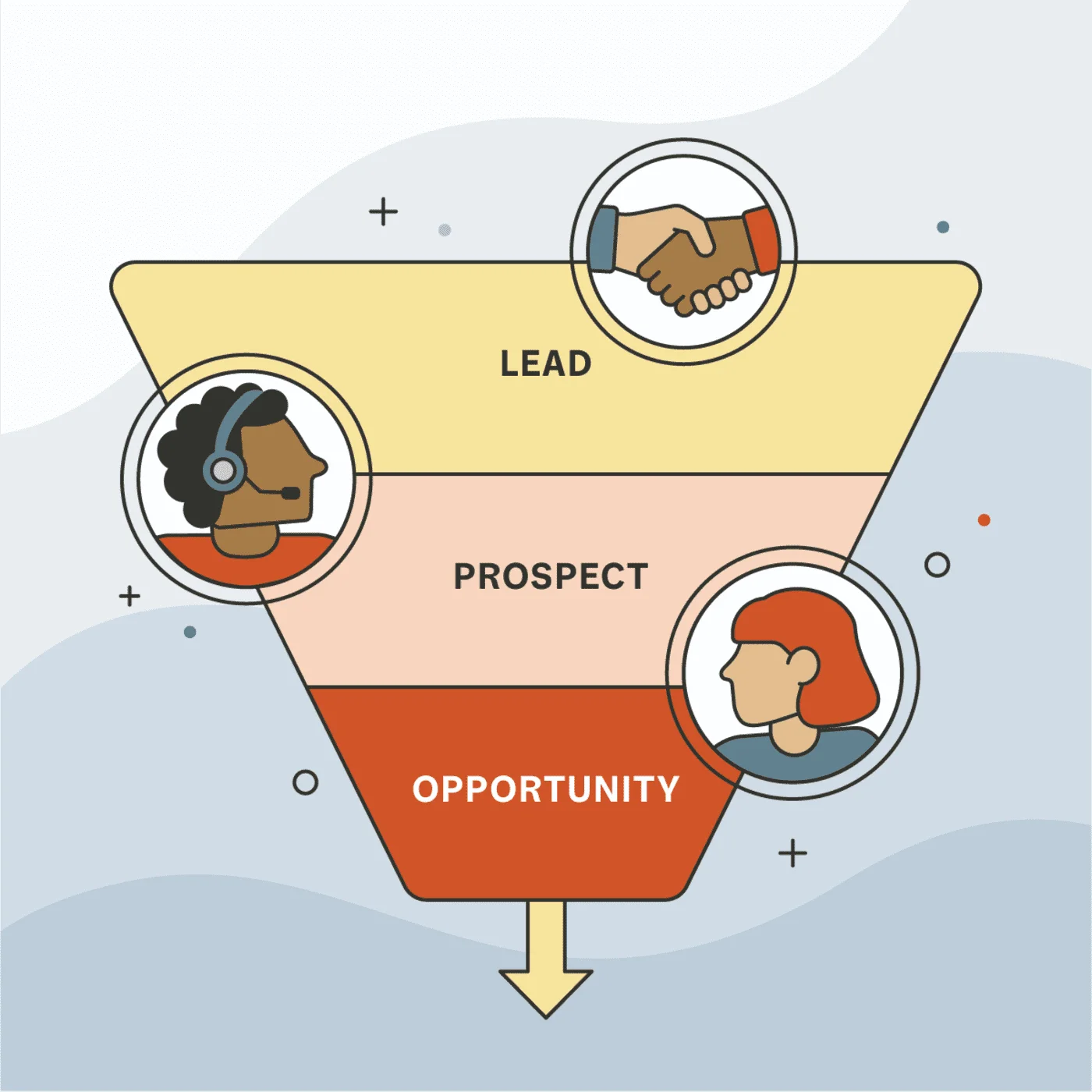
If you’re new to sales, prospecting, or startup growth, there’s one distinction you must understand before sending a single cold email or picking up the phone:
Leads and prospects are NOT the same thing.
They might sound similar, and many beginners mistakenly use the words interchangeably, but they represent different stages of the customer journey — and mixing them up can destroy your pipeline, clutter your CRM, and waste hours chasing the wrong people.
This article breaks down the difference clearly and simply, then shows you how to move someone from being just a lead to becoming a qualified prospect who’s ready for a deeper sales conversation.
You’ll learn:
-
The simple definitions of leads and prospects
-
Examples of each
-
Why this distinction matters in sales
-
How to convert a lead into a prospect
-
The frameworks professionals use
-
Mistakes to avoid
Let’s break it all down.
1. What Is a Lead? (Simple Definition)
A lead is anyone who might be a customer — but you don’t know yet.
A lead has shown some level of interest or fits your target audience, but you have not confirmed that they have:
-
a real need
-
a real problem
-
a real budget
-
real decision-making power
-
real intent to buy
A lead is simply a potential buyer, nothing more.
Examples of leads:
-
Someone who filled out a form on your website
-
Someone who downloaded your eBook
-
A person you found on LinkedIn who fits your target market
-
Someone who visited your booth at an event
-
A name from a purchased email list
-
Someone who liked your social media post
-
A website visitor who viewed your pricing page
All of these people might possibly be customers.
But until you validate their need or interest, they remain leads.
2. What Is a Prospect? (Simple Definition)
A prospect is a lead that you have qualified and confirmed is a good fit.
This means you’ve done enough research or interaction to determine:
-
They are within your ICP (ideal customer profile)
-
They have the problem your product solves
-
They may be open to a solution
-
They could realistically buy
A prospect is a lead with potential that’s been validated.
Examples of prospects:
-
Someone who replied positively to your cold email
-
A lead who asked for a demo
-
A person who confirmed they have a problem your product solves
-
Someone who expressed interest at a trade show
-
A founder who says, “Yes, we’ve been struggling with this issue.”
-
A manager who sends you their availability for a call
These people aren’t guaranteed to buy — but they’re worth your time.
3. The Core Difference (Easy Chart)
| Stage | Lead | Prospect |
|---|---|---|
| Awareness level | Barely knows you, or not at all | Shows real interest |
| Fit with ICP | Unknown | Confirmed fit |
| Problem awareness | Unknown | Confirmed pain point |
| Engagement | Minimal or none | Responded, engaged, or interacted |
| Sales priority level | Low | High |
In one sentence:
A lead is a possibility.
A prospect is an opportunity.
4. Why This Difference Matters (Especially for Founders)
Most new founders waste time because they treat every lead like a prospect.
This leads to:
-
bloated CRMs
-
endless follow-ups with uninterested people
-
low demo-to-close rates
-
confusing metrics
-
long sales cycles
When you separate leads from prospects, you focus your time on people who might actually buy.
This leads to:
-
faster sales
-
clearer pipelines
-
higher-quality conversations
-
predictable revenue
A founder’s most precious resource is time.
So qualifying leads is a mission-critical skill.
5. How a Lead Becomes a Prospect (The Qualification Process)
Qualification is the process of determining whether a lead should be promoted to a prospect.
You can qualify someone using:
A. Research (before outreach)
This is called pre-qualification.
You check:
-
their job title
-
their company size
-
whether they resemble your best customers
-
whether they’re using a competitor
-
if they show signs of needing your solution
This transforms a “random person” into a “potential prospect.”
B. Interaction (after outreach)
This is called post-qualification.
A lead becomes a prospect when they:
-
reply to your email
-
answer a discovery question
-
express interest
-
click key links
-
join a call
-
ask for pricing
-
describe their problem
These are the signals that matter.
6. Qualification Frameworks: How Pros Do It
Now let’s go deeper with the formal frameworks you’ll see in companies:
1. BANT
-
Budget
-
Authority
-
Need
-
Timeline
A BANT-qualified prospect is considered a “hot” opportunity.
2. MEDDIC
Ideal for complex B2B deals.
-
Metrics
-
Economic buyer
-
Decision criteria
-
Decision process
-
Identify pain
-
Champion
More advanced, used by high-level SDRs and AEs.
3. CHAMP
-
Challenges
-
Head authority
-
Authority
-
Money
-
Priority
Great for startups with newer sales processes.
4. SPIN Selling
A conversation-based framework:
-
Situation
-
Problem
-
Implication
-
Need payoff
This one is fantastic for discovery calls.
7. Real Examples: Lead vs Prospect in Different Scenarios
Scenario 1: B2B SaaS
-
Lead: A VP of Sales viewed your pricing page.
-
Prospect: That VP replies, “We’re exploring tools to help SDRs automate outreach.”
Scenario 2: Freelance Designer
-
Lead: Someone followed you on Instagram.
-
Prospect: Someone messaged, “What are your rates for a new brand identity project?”
Scenario 3: Local Service Business
-
Lead: Someone visits your “book appointment” page.
-
Prospect: They call and ask, “Do you have availability this week?”
Scenario 4: Enterprise Sales
-
Lead: You found a CIO on LinkedIn.
-
Prospect: CIO agrees to a discovery call.
This is the difference between guesses and signal.
8. Mistakes Beginners Make (And How to Avoid Them)
Mistake #1 — Treating all leads like prospects
You waste time chasing unresponsive people.
Mistake #2 — Not using an ICP
Without a target, every lead looks “good.”
Mistake #3 — Pitching before qualifying
Selling too early often pushes people away.
Mistake #4 — Assuming interest
Downloading a PDF ≠ wanting to buy.
Mistake #5 — Not tracking qualification steps
If you don’t measure pipeline stages, you can’t improve.
9. How to Move More Leads Into Prospects (Simple Formula)
Use the LQC Method:
1. Lead → Identify
Find someone who fits your ICP.
2. Qualify → Validate
Confirm need, authority, or problem.
3. Convert → Engage
Get them into a real conversation.
Repeat this daily and your pipeline becomes predictable.
10. Summary: The Clear Difference
Here’s the final clarity:
**A lead is someone who could buy.
A prospect is someone who might actually buy.**
A lead is a name.
A prospect is a person.
A lead is uncertain.
A prospect is validated.
A lead is a possibility.
A prospect is an opportunity.
- Arts
- Business
- Computers
- Παιχνίδια
- Health
- Κεντρική Σελίδα
- Kids and Teens
- Money
- News
- Personal Development
- Recreation
- Regional
- Reference
- Science
- Shopping
- Society
- Sports
- Бизнес
- Деньги
- Дом
- Досуг
- Здоровье
- Игры
- Искусство
- Источники информации
- Компьютеры
- Личное развитие
- Наука
- Новости и СМИ
- Общество
- Покупки
- Спорт
- Страны и регионы
- World

 English
 Russian
 French
 Spanish
 Portuguese
 Deutsch
 Turkish
 Dutch
Dutch
 Italiano
 Arabic
 Romaian
 Portuguese (Brazil)