
How Do I Memorize a Speech?
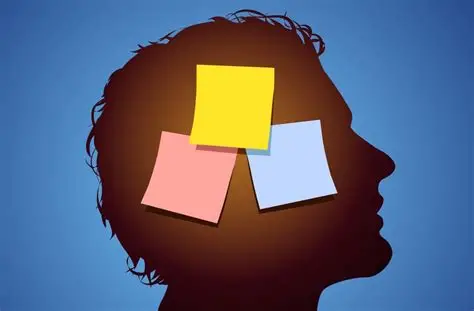
Memorizing a speech is one of the most common challenges people face in public speaking—whether you're giving a class presentation, delivering a debate case, presenting at a competition, or speaking at an event. Many people assume that great speakers have a magical memory or natural talent, but the truth is much simpler: they use specific techniques that make memorization easier, faster, and more reliable.
This article breaks down exactly how to memorize a speech—not by brute force, but by understanding how memory works, how speeches are structured, and how your brain learns best. By the end, you’ll have a full system you can apply to any speech, from a 5-minute classroom talk to a long keynote.
Why Memorizing a Speech Feels Hard
Before learning how to do it efficiently, it helps to understand why memorization can feel so overwhelming:
1. You’re trying to memorize word-for-word
Most beginners make the mistake of trying to remember every sentence exactly as written. This is extremely hard because your brain is not built to store long blocks of text like a computer.
2. You don’t understand the structure
If the speech feels like one giant blob of information, it becomes impossible to hold in your mind. Structure is what makes memory “sticky.”
3. You don’t rehearse the right way
Reading silently over and over might feel productive, but it doesn’t build speaking memory. Your brain needs active recall—not passive reviewing.
4. Nerves get in the way
Stage fright can scramble memory because anxiety competes for your brain’s attention. The more prepared and rehearsed you are, the easier it is to stay calm.
Now that you know the obstacles, let’s break down the process that experts use.
The Four Levels of Memorizing a Speech
There are four levels of memory you need to build:
-
Memorizing the structure (the backbone)
-
Memorizing the ideas (the muscles)
-
Memorizing transitions (the joints)
-
Memorizing key sentences (the details)
Trying to memorize everything at once is like trying to build a house in one single step. Instead, layer your memory gradually.
Step 1: Memorize the Structure (The Backbone)
This is the most important step. If you remember the structure, you will never get lost—even if your mind goes blank.
Break your speech into “chunks”
Every well-written speech has sections. For example:
-
Introduction
-
Point 1
-
Point 2
-
Point 3
-
Conclusion
Each point might have subpoints, stories, evidence, or examples.
Turn each section into a simple phrase
For example:
-
Intro: “Problem: teens lack sleep”
-
Point 1: “Why sleep matters”
-
Point 2: “Causes of sleep deprivation”
-
Point 3: “Solutions students can use”
-
Conclusion: “Call to action: small habits matter”
Now instead of memorizing 1,500 words, you are remembering 5 main chunks.
Create a visual map
Your brain loves images. Try:
-
Drawing a mind map
-
Creating a flowchart
-
Using symbols for each section
-
Assigning a color to each chunk
Even if you never look at the visual again, the act of creating it strengthens your memory.
Step 2: Memorize the Ideas (The Muscles)
Once you know the structure, fill in each chunk with the core idea, not the exact wording.
For example, for “Why sleep matters”:
-
Better grades
-
Better mood
-
Better health
-
Long-term benefits
You’re not memorizing the sentences—just the key ideas you want to talk about.
Your brain organizes ideas much more easily than exact word sequences.
Why this works
When you memorize ideas instead of script, you can:
-
Sound natural
-
Speak with flexibility
-
Avoid panicking if you forget a sentence
-
Use different examples depending on the moment
This is why great speakers rarely memorize word for word.
Step 3: Memorize Your Transitions (The Joints)
Transitions connect your ideas, and they’re often the parts people forget during a speech.
Examples:
-
“This brings me to my next point…”
-
“Another important factor is…”
-
“Now let’s look at why this matters.”
-
“A common misconception is…”
Why transitions matter:
-
They remind your brain what comes next
-
They keep the speech flowing smoothly
-
They make you sound confident and organized
Spend extra time practicing the transitions, because this is often where nerves can cause memory gaps.
Step 4: Memorize Key Sentences (The Details)
These are the parts you should memorize word-for-word:
Memorize word-for-word only if it’s:
-
Your opening sentence
-
Your closing sentence
-
A key statistic
-
A quote
-
A rhetorical question
-
Important definitions
These create a strong impact and help you feel anchored at the beginning and end.
If you forget a minor phrase, no one will care. But remembering your opening and closing lines builds confidence and gives the speech a polished feel.
The 7 Most Effective Memorization Techniques
Different brains work differently, so choose the ones that click with you. You can combine multiple techniques for maximum effect.
1. The Chunking Method
We already mentioned chunking the structure, but you can chunk within each section too.
Example:
-
Point 1 → three subpoints
-
Point 2 → two examples
-
Point 3 → one story + one statistic
Chunking reduces cognitive load and organizes memory.
2. The “Walk the Room” Method (Memory Palace)
This is one of the oldest and most powerful memory techniques.
How to use it:
-
Look around your room (or any familiar place).
-
Select 5–10 distinct locations.
-
Mentally place each part of your speech in a location.
-
When you give your speech, visualize walking through that space.
Example:
-
Desk = Introduction
-
Chair = Point 1
-
Bookshelf = Point 2
-
Closet = Point 3
-
Door = Conclusion
Your brain remembers physical locations incredibly well.
3. Rehearse Out Loud
Your brain stores spoken memory differently from written memory.
Speak out loud to:
-
Build “speech memory”
-
Practice pacing
-
Hear what sounds awkward
-
Strengthen recall
-
Train your voice and delivery
Silent reading is passive. Speaking out loud is active.
4. Record Yourself and Listen
Your voice becomes your study tool.
Benefits:
-
You absorb the speech through repetition
-
You hear what parts flow well
-
You notice forgotten sections
-
You learn the rhythm naturally
This works especially well while doing chores, walking, or relaxing.
5. Write the Speech from Memory
Grab a blank page and write the entire outline or summary from memory. Don’t look at your speech until you finish.
Why this works:
-
It forces active recall
-
It reveals weak spots
-
It makes your memory more durable
Do this 3–5 times and your memory skyrockets.
6. Use Timed Run-Throughs
Set a timer for the speech length. Practice delivering it within that timeframe.
Benefits:
-
You learn pacing
-
You avoid rambling
-
You train your brain to follow the structure under time pressure
It also helps make memorization more automatic.
7. Sleep Between Practice Sessions
Memory builds during sleep.
If you practice today and sleep on it, you will remember more tomorrow—even if you don’t practice again.
Spacing > Cramming.
How Long Does It Take to Memorize a Speech?
It depends on:
-
The length of the speech
-
Your experience
-
Your techniques
-
Your stress level
-
Your natural learning style
But generally:
-
5-minute speech: 2–4 hours of total spaced practice
-
10-minute speech: 4–7 hours
-
20-minute speech: 8–12 hours
This does not have to be in one day. Spread it out over multiple days and you’ll retain more with less effort.
How to Memorize a Speech Fast (If You’re Short on Time)
If you’re rushed:
-
Memorize the structure
-
Memorize the opening + closing
-
Memorize key sentences
-
Rehearse transitions
-
Practice out loud 5–7 times
Even with limited time, you can deliver a clear, organized speech.
How to Avoid Forgetting Your Speech on Stage
Even the best speakers sometimes blank out. Here’s how to prevent it:
1. Practice with mild distractions
Train your brain to stay focused under imperfect conditions.
Try:
-
Background noise
-
Moving around
-
Interruptions
-
Practicing with a friend watching
This makes your memory stronger.
2. Practice in the clothes you’ll wear
This reduces your brain’s “change overload” on the day of the speech.
3. Practice using real motions
If you will walk on stage, gesture with your hands, or hold a clicker—practice those things during rehearsal.
Muscle memory reinforces verbal memory.
4. Use breathing to prevent panic
Take a slow inhale (4 seconds) → hold (2 seconds) → exhale (6 seconds).
This activates your parasympathetic nervous system and clears your mind.
5. Know your “anchor sentence”
Every section should have one line that reminds you what comes next.
Example: “Teen sleep deprivation isn’t just inconvenient—it’s dangerous.”
If you forget the script, go back to your anchor sentence and continue.
What to Do if You Actually Forget Your Speech on Stage
If your mind goes blank:
1. Pause
Pauses look intentional.
Never apologize for forgetting—people can’t tell.
2. Repeat your last sentence
It buys time and cues your memory.
3. Jump to the next point
You don’t have to deliver your speech in perfect order unless it’s for competition scoring.
4. Have notecards (if allowed)
Not full paragraphs—just keywords.
How to Make Your Speech “Memory-Friendly” While Writing It
The secret to easy memorization is writing a speech that is naturally remembered.
Tips:
-
Use clear structure
-
Add stories (your brain remembers stories 22× better than facts)
-
Use repetition (“rule of threes”)
-
Use simple transitions
-
Use vivid visual images
-
Keep sentences shorter
A memorable speech is easier to deliver.
Signs You Have Fully Memorized Your Speech
You know the speech is truly memorized when:
-
You can give it without notes
-
You can start at any point, not just the beginning
-
You can deliver it while walking around
-
You can recover easily if interrupted
-
It feels automatic rather than effortful
This level takes practice, but it’s absolutely achievable.
Final Advice: Focus on Mastery, Not Perfection
You don’t need to memorize every single word.
You need to memorize:
-
The structure
-
The key ideas
-
The transitions
-
The opening and closing lines
Everything else can be flexible.
Memorization is not about robotic accuracy—it’s about confidence, clarity, and connection with your audience.
- Arts
- Business
- Computers
- Jocuri
- Health
- Home
- Kids and Teens
- Money
- News
- Personal Development
- Recreation
- Regional
- Reference
- Science
- Shopping
- Society
- Sports
- Бизнес
- Деньги
- Дом
- Досуг
- Здоровье
- Игры
- Искусство
- Источники информации
- Компьютеры
- Личное развитие
- Наука
- Новости и СМИ
- Общество
- Покупки
- Спорт
- Страны и регионы
- World

 English
 Russian
 French
 Spanish
 Portuguese
 Deutsch
 Turkish
 Dutch
Dutch
 Italiano
 Arabic
 Portuguese (Brazil)
 Greek
Greek
