
What Are Fixed vs. Variable Costs?
What Are Fixed vs. Variable Costs?
Understanding costs is one of the most important foundations of running a business, managing a project, or even analyzing personal finances. Among the many ways to categorize costs, the distinction between fixed costs and variable costs is one of the most practical and widely used. These two categories explain how expenses behave when activity levels—such as production or sales—change.
This article explains what fixed and variable costs are, how they differ, why the distinction matters, and how businesses use these concepts to make better decisions.
What Are Fixed Costs?
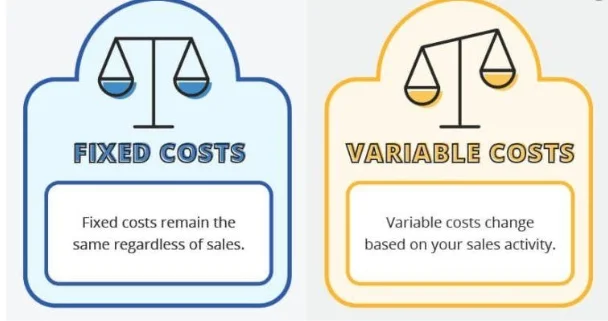
Fixed costs are expenses that do not change with the level of output or activity, at least in the short term. Whether a business produces one unit or ten thousand units, these costs stay the same.
Key Characteristics of Fixed Costs
-
Remain constant over a specific period
-
Do not depend on production volume
-
Must be paid even if the business is not operating
-
Easier to predict and budget for
Common Examples of Fixed Costs
-
Rent or lease payments
-
Salaries of permanent staff
-
Insurance premiums
-
Property taxes
-
Depreciation of equipment
-
Loan interest payments
For example, if a bakery pays $2,000 per month in rent, that amount stays the same regardless of whether it sells 100 loaves of bread or 5,000.
What Are Variable Costs?
Variable costs are expenses that change directly with the level of production or activity. As output increases, these costs rise; as output decreases, they fall.
Key Characteristics of Variable Costs
-
Fluctuate with production or sales volume
-
Often expressed as a cost per unit
-
Can drop to zero if production stops
-
Less predictable than fixed costs
Common Examples of Variable Costs
-
Raw materials
-
Direct labor paid per unit or per hour
-
Packaging costs
-
Sales commissions
-
Shipping and delivery costs
-
Utilities tied closely to usage (e.g., electricity for machinery)
For instance, if a bakery spends $0.50 on ingredients for each loaf of bread, producing more bread increases total ingredient costs, while producing less reduces them.
Fixed vs. Variable Costs: A Side-by-Side Comparison
| Feature | Fixed Costs | Variable Costs |
|---|---|---|
| Behavior | Stay constant | Change with activity |
| Predictability | High | Lower |
| Per-unit cost | Decreases as output rises | Usually constant |
| Zero production | Still incurred | Often zero |
| Examples | Rent, salaries | Materials, commissions |
Why the Difference Matters
Understanding the difference between fixed and variable costs is essential for decision-making, pricing, and profitability analysis.
1. Pricing Decisions
To set prices effectively, a business must cover both fixed and variable costs. Variable costs determine the minimum price at which selling more units makes sense, while fixed costs influence long-term pricing strategies.
2. Break-Even Analysis
The break-even point is the level of sales where total revenue equals total costs. Fixed and variable costs play different roles in this calculation:
-
Fixed costs determine how much revenue is needed before profits begin
-
Variable costs affect how quickly profits grow after break-even
3. Cost Control
-
Fixed costs are harder to reduce quickly but easier to plan for
-
Variable costs can often be adjusted more easily by changing production levels
Businesses often aim for the right balance rather than minimizing one type entirely.
4. Business Risk
High fixed costs increase financial risk because they must be paid regardless of sales. Businesses with high variable costs tend to be more flexible during slow periods.
Contribution Margin: Where Variable Costs Shine
The contribution margin is the amount remaining after variable costs are subtracted from revenue. It shows how much each unit contributes toward covering fixed costs and generating profit.
Contribution Margin = Sales Price − Variable Cost per Unit
Once fixed costs are covered, each additional unit sold adds directly to profit (assuming variable costs stay constant).
Mixed and Semi-Variable Costs
Not all costs fit neatly into fixed or variable categories.
Mixed (Semi-Variable) Costs
These contain both fixed and variable components.
Examples include:
-
Utility bills with a base fee plus usage charges
-
Salaries plus performance bonuses
-
Equipment leases with usage fees
For analysis, businesses often separate mixed costs into their fixed and variable portions using methods such as:
-
High-low method
-
Regression analysis
Fixed and Variable Costs in Different Industries
Manufacturing
-
Fixed: factory rent, machinery depreciation
-
Variable: raw materials, direct labor
Retail
-
Fixed: store lease, manager salaries
-
Variable: inventory purchases, credit card fees
Service Businesses
-
Fixed: office rent, administrative staff
-
Variable: hourly labor, travel expenses
The cost structure varies widely, which is why comparing businesses across industries requires care.
Short-Term vs. Long-Term Perspective
Costs that are fixed in the short term may become variable in the long term.
For example:
-
A lease is fixed monthly, but renegotiable over several years
-
Salaried staff may be fixed short-term but adjustable through restructuring
This distinction is crucial for long-term planning and investment decisions.
How Businesses Use Fixed and Variable Costs Strategically
-
Startups often prefer variable costs to reduce risk
-
Established firms may invest in fixed assets to lower per-unit costs
-
Automation increases fixed costs but reduces variable costs
-
Outsourcing reduces fixed costs but increases variable costs
The “best” structure depends on stability of demand, access to capital, and risk tolerance.
Common Misunderstandings
-
Fixed costs are not always unnecessary: They often enable efficiency and scale
-
Variable costs are not always small: In some industries, they dominate total costs
-
Costs are not permanently fixed or variable: Context and time horizon matter
Conclusion
Fixed and variable costs describe how expenses behave as activity levels change. Fixed costs stay constant regardless of output, while variable costs rise and fall with production or sales. Understanding this distinction helps businesses price products, control expenses, analyze risk, and plan for growth.
Rather than favoring one type over the other, successful businesses focus on managing the balance between fixed and variable costs in a way that aligns with their goals, industry, and market conditions.
- Arts
- Business
- Computers
- Giochi
- Health
- Home
- Kids and Teens
- Money
- News
- Personal Development
- Recreation
- Regional
- Reference
- Science
- Shopping
- Society
- Sports
- Бизнес
- Деньги
- Дом
- Досуг
- Здоровье
- Игры
- Искусство
- Источники информации
- Компьютеры
- Личное развитие
- Наука
- Новости и СМИ
- Общество
- Покупки
- Спорт
- Страны и регионы
- World

 English
 Russian
 French
 Spanish
 Portuguese
 Deutsch
 Turkish
 Dutch
Dutch
 Arabic
 Romaian
 Portuguese (Brazil)
 Greek
Greek
