
How Much Does Google AdWords Cost?
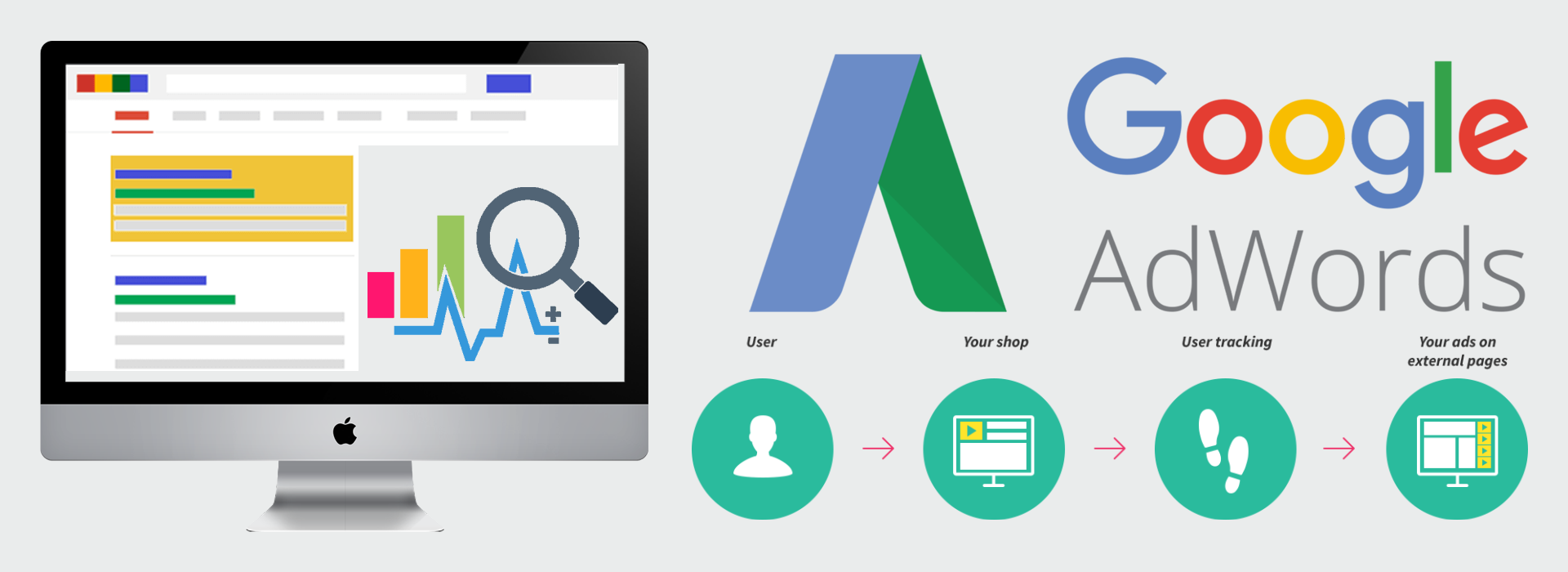
One of the first and most common questions asked by businesses considering Google AdWords—now called Google Ads—is simple but critical: How much does it cost? Unlike traditional advertising, Google AdWords does not have a fixed price list. There is no standard monthly fee, no required minimum spend for most advertisers, and no guaranteed cost per ad placement.
Instead, Google AdWords operates on a flexible, auction-based pricing system where advertisers control their spending while competing for visibility. This makes the platform accessible to small businesses and scalable for large enterprises—but it also makes costs harder to predict without understanding how pricing actually works.
This article explains how much Google AdWords costs, how pricing models work, what “per click” and “per month” really mean, and which factors most strongly influence advertising expenses.
The Core Pricing Model of Google AdWords
Google AdWords primarily uses a pay-per-click (PPC) pricing model.
This means:
-
Advertisers only pay when someone clicks their ad
-
Showing the ad itself is free
-
Costs are directly tied to user engagement
However, PPC is only the foundation. Actual costs vary widely depending on competition, strategy, and performance.
What Does “Cost Per Click” Mean?
Cost per click (CPC) is the amount an advertiser pays when a user clicks on their ad.
CPC is not fixed and depends on:
-
Keyword competition
-
Quality Score
-
Ad Rank
-
Industry demand
Some clicks may cost a few cents, while others can cost tens of dollars.
Average Google AdWords Costs
While exact costs vary, industry averages help provide context.
Across industries:
-
Average CPC often ranges from $1 to $2
-
Highly competitive industries may exceed $10–$50 per click
-
Niche or local keywords can be significantly cheaper
These are averages, not guarantees.
Why Google AdWords Does Not Have a Flat Monthly Cost
Google AdWords does not charge a monthly subscription fee.
Instead:
-
Advertisers set daily or monthly budgets
-
Google never exceeds the average monthly budget
-
Spending depends on clicks, not impressions
This makes the platform flexible but requires active budget management.
How Monthly Budgets Work
Advertisers define a daily budget for each campaign.
Google may spend:
-
Slightly more on high-traffic days
-
Less on slower days
But over a month, total spend will not exceed the daily budget multiplied by the average number of days.
Example of Monthly Spending
If you set:
-
$10 per day budget
Your approximate monthly spend would be:
-
$300 per month
Actual spending fluctuates daily but averages out.
Factors That Influence Google AdWords Costs
Several key factors determine how much advertisers pay.
Keyword Competition
High-demand keywords cost more.
Industries with intense competition include:
-
Legal services
-
Insurance
-
Finance
-
Real estate
More advertisers bidding increases prices.
Industry and Market
Different industries have different economic values per customer.
For example:
-
A single legal lead may be worth thousands
-
A retail product may have lower margins
Google AdWords pricing reflects this value.
Geographic Targeting
Location impacts cost.
Advertising in:
-
Large cities
-
Competitive regions
Typically costs more than rural or niche locations.
Quality Score
Quality Score strongly affects cost.
Higher Quality Score can:
-
Reduce CPC
-
Improve ad position
Poor Quality Score increases cost—even with high bids.
Ad Rank and Position
Top positions often cost more per click.
However:
-
Lower positions may still perform well
-
Conversion rates matter more than position
Cost efficiency matters more than visibility alone.
The Relationship Between Cost and Performance
Low CPC does not guarantee success.
What matters more is:
-
Cost per conversion
-
Return on ad spend (ROAS)
A higher CPC may be profitable if conversions are strong.
Cost Per Click vs Cost Per Conversion
Advertisers should focus beyond clicks.
Cost per conversion measures:
-
How much you pay to achieve a goal
-
Leads, sales, or sign-ups
Optimizing for conversions improves ROI.
How Bidding Strategies Affect Costs
Google AdWords offers multiple bidding strategies.
Manual CPC Bidding
Advertisers set maximum bids manually.
Pros:
-
Control
-
Transparency
Cons:
-
Time-intensive
-
Less responsive to real-time signals
Automated Bidding
Google adjusts bids automatically.
Strategies include:
-
Maximize clicks
-
Maximize conversions
-
Target CPA
Automation can improve efficiency but requires data.
How Automation Changes Cost Behavior
Automated bidding:
-
Adjusts bids based on likelihood of conversion
-
May increase CPC to capture high-value clicks
-
Often improves cost per conversion
Costs may rise initially but improve over time.
Minimum and Maximum Costs in Google AdWords
There is no official minimum spend.
Advertisers can start with:
-
As little as a few dollars per day
There is also no maximum spend.
Large advertisers may spend:
-
Thousands or millions monthly
The system scales with budget.
Are There Hidden Fees?
Google AdWords has no hidden platform fees.
However, additional costs may include:
-
Agency fees
-
Landing page development
-
Creative production
-
Tracking tools
These are external, not Google charges.
Display Ads vs Search Ads Costs
Different networks have different cost structures.
Search ads:
-
Higher CPC
-
Strong intent
Display ads:
-
Lower CPC
-
Broader reach
Choosing the right network affects spending.
YouTube and Video Advertising Costs
Video ads are often priced by:
-
Cost per view (CPV)
-
Cost per thousand impressions (CPM)
They are generally cheaper per interaction than search ads.
Cost Control Features in Google AdWords
Google provides tools to control spending.
These include:
-
Daily budgets
-
Bid limits
-
Scheduling
-
Targeting restrictions
Using these tools prevents overspending.
Why Some Advertisers Overspend
Common reasons include:
-
Poor keyword selection
-
Broad targeting
-
Weak landing pages
-
No conversion tracking
Overspending is often a strategy issue, not a platform issue.
Why Cheap Ads Can Be Expensive
Low-cost clicks that do not convert waste budget.
High-quality traffic, even if more expensive, often delivers better results.
Efficiency matters more than price.
Cost Differences by Campaign Type
Campaign type influences pricing.
Examples:
-
Search campaigns: higher CPC
-
Shopping campaigns: product-driven pricing
-
Display campaigns: lower CPC
-
App campaigns: performance-based
Each has unique cost dynamics.
The Role of Testing in Cost Optimization
Testing helps control costs.
Advertisers should test:
-
Keywords
-
Ad copy
-
Landing pages
-
Bidding strategies
Testing improves efficiency over time.
How Long It Takes to Stabilize Costs
New campaigns experience volatility.
During the learning phase:
-
CPC may fluctuate
-
Conversion rates vary
Stability improves as data accumulates.
Understanding Cost vs Value
Google AdWords costs should be evaluated relative to value.
Ask:
-
How much is a lead worth?
-
What is the lifetime value of a customer?
These metrics define acceptable costs.
Small Business vs Enterprise Costs
Small businesses:
-
Lower budgets
-
Narrow targeting
Enterprises:
-
Larger budgets
-
Broader reach
-
Advanced automation
Both can succeed with proper strategy.
Common Myths About Google AdWords Costs
Myths include:
-
“Google Ads is too expensive”
-
“Only big companies can afford it”
-
“Higher spend guarantees results”
None are universally true.
Budget Planning Best Practices
Effective budget planning involves:
-
Starting small
-
Measuring performance
-
Scaling what works
Incremental growth reduces risk.
When Google AdWords Becomes Expensive
AdWords becomes expensive when:
-
Competition increases
-
Quality Score drops
-
Conversion rates decline
Monitoring performance prevents cost escalation.
Long-Term Cost Efficiency
Over time, well-optimized accounts often see:
-
Lower CPC
-
Higher Quality Scores
-
Better conversion rates
Experience improves efficiency.
The True Cost of Google AdWords
The true cost is not clicks—it’s outcomes.
Advertisers should focus on:
-
Cost per lead
-
Cost per sale
-
Return on investment
This reframes spending as growth investment.
Conclusion
Google AdWords does not have a fixed cost. Instead, it offers a flexible, auction-based pricing model where advertisers control their spending through budgets and bids. Costs depend on factors such as keyword competition, Quality Score, industry, geography, and strategy. Advertisers can pay per click, per conversion, or per impression depending on campaign goals.
Understanding how Google AdWords pricing works allows businesses to budget intelligently, avoid waste, and maximize return on investment. When managed correctly, Google AdWords is not inherently expensive—it is scalable, measurable, and adaptable to nearly any budget.
- Arts
- Business
- Computers
- Oyunlar
- Health
- Home
- Kids and Teens
- Money
- News
- Personal Development
- Recreation
- Regional
- Reference
- Science
- Shopping
- Society
- Sports
- Бизнес
- Деньги
- Дом
- Досуг
- Здоровье
- Игры
- Искусство
- Источники информации
- Компьютеры
- Личное развитие
- Наука
- Новости и СМИ
- Общество
- Покупки
- Спорт
- Страны и регионы
- World

 English
 Russian
 French
 Spanish
 Portuguese
 Deutsch
 Dutch
Dutch
 Italiano
 Arabic
 Romaian
 Portuguese (Brazil)
 Greek
Greek
