
How Do You Scale Customer Acquisition?
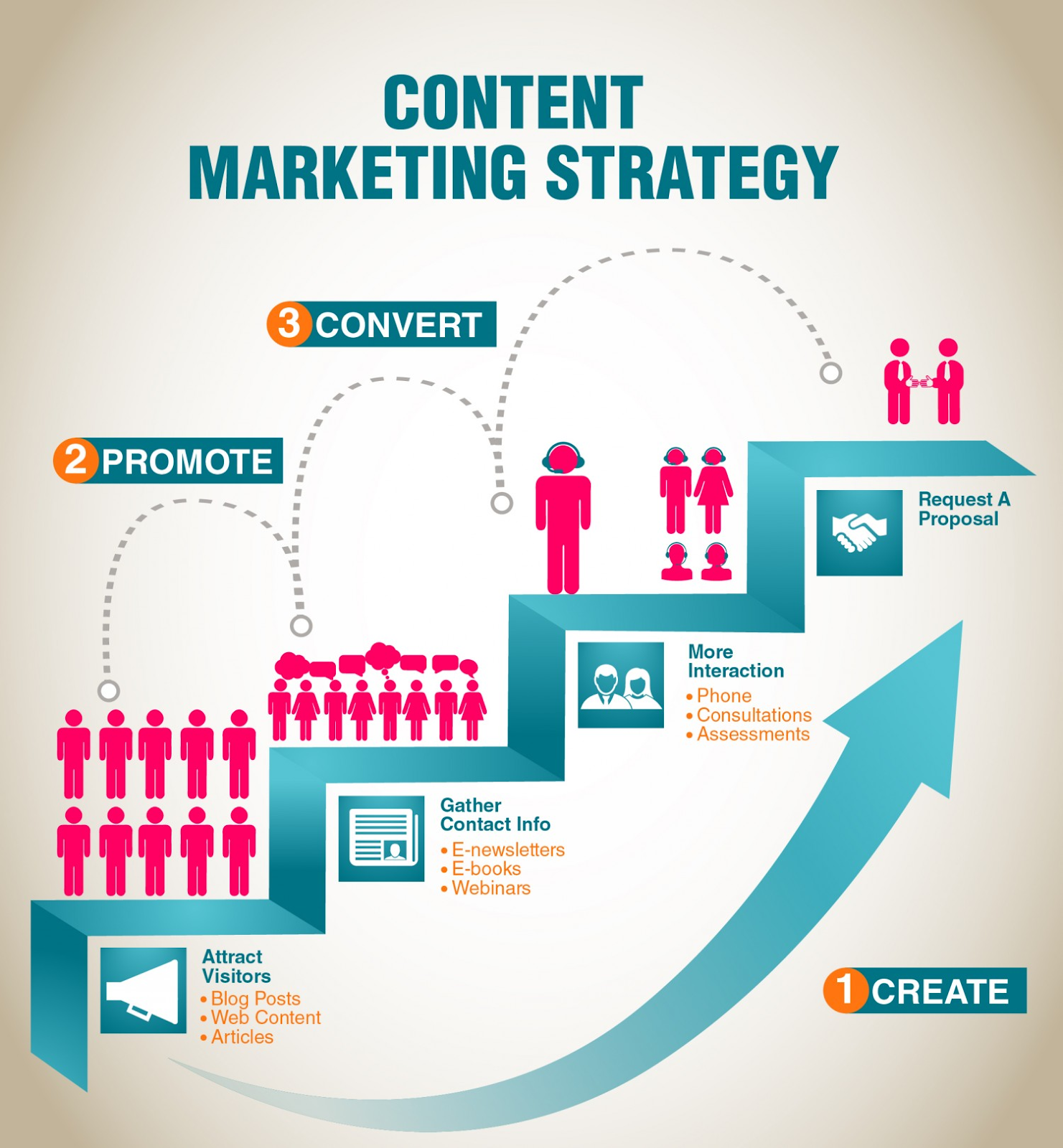
Scaling customer acquisition is one of the most challenging—and most important—phases of business growth. What works to acquire the first 100 or 1,000 customers often breaks when a company tries to reach 10,000, 100,000, or more. Costs rise, channels saturate, teams strain, and efficiency declines.
True acquisition scaling is not about “doing more.” It is about building repeatable, measurable, and sustainable systems that grow without collapsing margins or quality.
This article explains how to scale customer acquisition strategically, covering foundations, channels, metrics, team structures, common pitfalls, and proven growth models.
What Does It Mean to Scale Customer Acquisition?
Scaling customer acquisition means increasing the number of new customers without proportionally increasing costs or complexity.
A scalable acquisition system:
-
Maintains or lowers CAC as volume increases
-
Preserves customer quality and retention
-
Works predictably across time
-
Can be expanded with data and automation
Growth without scalability leads to burnout and unprofitability.
Why Scaling Customer Acquisition Is Difficult
Many businesses can acquire customers—but few can scale efficiently.
Common challenges include:
-
Rising ad costs
-
Channel saturation
-
Operational bottlenecks
-
Declining conversion rates
-
Poor attribution
-
Weak retention
Scaling exposes weaknesses that are invisible at small volumes.
Step 1: Validate Your Acquisition Foundation Before Scaling
Before scaling, your acquisition system must be proven.
Key questions to answer:
-
Do customers convert consistently?
-
Is CAC predictable?
-
Are customers retained?
-
Is LTV greater than CAC?
-
Can results be measured accurately?
Scaling an unstable system multiplies failure.
Product-Market Fit as a Prerequisite for Scale
Product-market fit is non-negotiable.
Signs you’re ready to scale:
-
Strong retention
-
High engagement
-
Word-of-mouth growth
-
Clear value proposition
-
Predictable conversions
Without product-market fit, acquisition scaling becomes increasingly expensive.
Step 2: Identify Scalable Acquisition Channels
Not all channels scale equally.
High-Scalability Channels
-
Paid advertising (with optimization)
-
SEO and content marketing
-
Product-led growth
-
Referrals and virality
-
Partnerships
Low-Scalability Channels
-
Manual outreach
-
One-off campaigns
-
Founder-led sales
-
Unsystematic tactics
Scaling requires channels that grow through systems, not effort.
Scaling Paid Acquisition
Paid acquisition is often the fastest way to scale—but also the riskiest.
How to Scale Paid Ads Successfully
-
Start with one proven channel
-
Optimize creatives and targeting
-
Improve landing page conversion
-
Expand budgets gradually
-
Test audiences and formats
Scaling spend without conversion optimization drives CAC up.
Managing Rising Costs in Paid Channels
As spend increases:
-
Competition increases
-
CPMs rise
-
Marginal efficiency declines
To counteract this:
-
Improve conversion rates
-
Expand creative variety
-
Use retargeting efficiently
-
Segment audiences
Efficiency matters more than volume.
Scaling SEO and Content Marketing
Content scales differently—it compounds over time.
Why Content Scales Well
-
Evergreen traffic
-
Lower marginal cost
-
Trust-building
-
Supports multiple channels
To scale content:
-
Build topic clusters
-
Standardize content production
-
Optimize for search intent
-
Repurpose content across platforms
Content scaling is slower—but more durable.
Scaling Product-Led Customer Acquisition
Product-led growth (PLG) is one of the most scalable acquisition models.
Why PLG Scales
-
Self-serve onboarding
-
Low CAC
-
Viral loops
-
Expansion revenue
Scaling PLG requires:
-
Strong onboarding
-
Clear activation moments
-
Usage-based conversion
-
Data-driven optimization
The product becomes the growth engine.
Scaling Referral and Word-of-Mouth Acquisition
Referrals scale when incentivized and systematized.
Effective referral systems include:
-
Clear rewards
-
Simple sharing mechanisms
-
In-product prompts
-
Social proof
Referrals produce high-quality customers at low cost.
Scaling Partnerships and Affiliates
Partnerships allow you to scale by leveraging other audiences.
Examples:
-
Affiliate programs
-
Co-marketing campaigns
-
Platform integrations
-
Channel partners
The key is alignment and performance tracking.
Step 3: Optimize Conversion Rates Before Increasing Volume
Scaling traffic without conversion optimization is inefficient.
Key Conversion Points to Optimize
-
Landing pages
-
Signup flows
-
Checkout processes
-
Onboarding experiences
-
Pricing pages
Small conversion improvements dramatically reduce CAC at scale.
Funnel Optimization for Scalable Acquisition
A scalable funnel is:
-
Simple
-
Data-driven
-
Automated where possible
Track conversion rates at every stage:
-
Visitor → Lead
-
Lead → Trial
-
Trial → Customer
-
Customer → Advocate
Leaks become expensive at scale.
Step 4: Build Analytics and Attribution Systems
You cannot scale what you cannot measure.
Essential analytics include:
-
Channel-level CAC
-
LTV by segment
-
Cohort analysis
-
Multi-touch attribution
-
Payback periods
Data allows confident scaling decisions.
Attribution Models for Scaling Acquisition
As acquisition grows, attribution becomes more complex.
Common models:
-
First-touch
-
Last-touch
-
Linear
-
Time-decay
-
Data-driven
Choose a model that reflects how customers actually convert.
Step 5: Scale Teams and Processes
People and processes must scale alongside acquisition.
Team Scaling Considerations
-
Specialization by channel
-
Clear ownership
-
Documented processes
-
Automation tools
Chaos increases when growth outpaces structure.
Automation and Technology for Scaling Acquisition
Automation reduces marginal cost.
Common tools include:
-
CRM systems
-
Marketing automation platforms
-
Ad management tools
-
Analytics dashboards
-
Customer data platforms
Tools enable scale without proportional headcount increases.
Scaling Customer Acquisition Internationally
Global expansion introduces new challenges.
Considerations include:
-
Localization
-
Cultural differences
-
Platform preferences
-
Compliance and privacy laws
Scaling globally requires careful testing and adaptation.
Scaling B2B vs B2C Customer Acquisition
B2B Scaling
-
Slower
-
Higher CAC
-
Sales-assisted
-
Focus on pipeline quality
B2C Scaling
-
Faster
-
Higher volume
-
Ad-driven
-
Focus on efficiency and retention
Scaling strategies must match the business model.
The Role of Retention in Acquisition Scaling
Retention determines how far acquisition can scale profitably.
High retention:
-
Increases LTV
-
Lowers effective CAC
-
Enables reinvestment
Scaling acquisition without retention creates churn-driven growth.
Unit Economics and Scaling Limits
Every business has natural scaling limits.
Monitor:
-
LTV:CAC ratio
-
Gross margins
-
Payback period
-
Churn rates
When economics deteriorate, scaling must slow or adjust.
Common Mistakes When Scaling Customer Acquisition
-
Scaling before product-market fit
-
Relying on one channel
-
Ignoring retention
-
Over-hiring too early
-
Underinvesting in analytics
Most scaling failures are predictable—and preventable.
When to Slow Down Scaling
Sometimes the right move is to pause.
Slow down when:
-
CAC spikes rapidly
-
Retention drops
-
Quality declines
-
Systems break
Sustainable growth beats fast growth that collapses.
Case Patterns of Successful Scaling
Successful companies often:
-
Master one channel before expanding
-
Build strong onboarding
-
Invest heavily in data
-
Balance paid and organic growth
-
Focus on customer experience
There are no shortcuts—only systems.
The Future of Scalable Customer Acquisition
Emerging trends include:
-
AI-driven optimization
-
Privacy-first measurement
-
Community-led growth
-
Creator partnerships
-
Product-led expansion
Scalability will increasingly depend on adaptability.
Final Thoughts
Scaling customer acquisition is not about chasing growth at all costs. It’s about building systems that grow predictably, efficiently, and sustainably. Businesses that focus on foundations, measurement, and long-term economics are the ones that scale successfully.
Growth is a marathon, not a sprint—and scalable acquisition is the engine that gets you there.
- Arts
- Business
- Computers
- Spellen
- Health
- Home
- Kids and Teens
- Money
- News
- Personal Development
- Recreation
- Regional
- Reference
- Science
- Shopping
- Society
- Sports
- Бизнес
- Деньги
- Дом
- Досуг
- Здоровье
- Игры
- Искусство
- Источники информации
- Компьютеры
- Личное развитие
- Наука
- Новости и СМИ
- Общество
- Покупки
- Спорт
- Страны и регионы
- World

 English
 Russian
 French
 Spanish
 Portuguese
 Deutsch
 Turkish
 Italiano
 Arabic
 Romaian
 Portuguese (Brazil)
 Greek
Greek
