
What Types of Facebook Ads Are There?
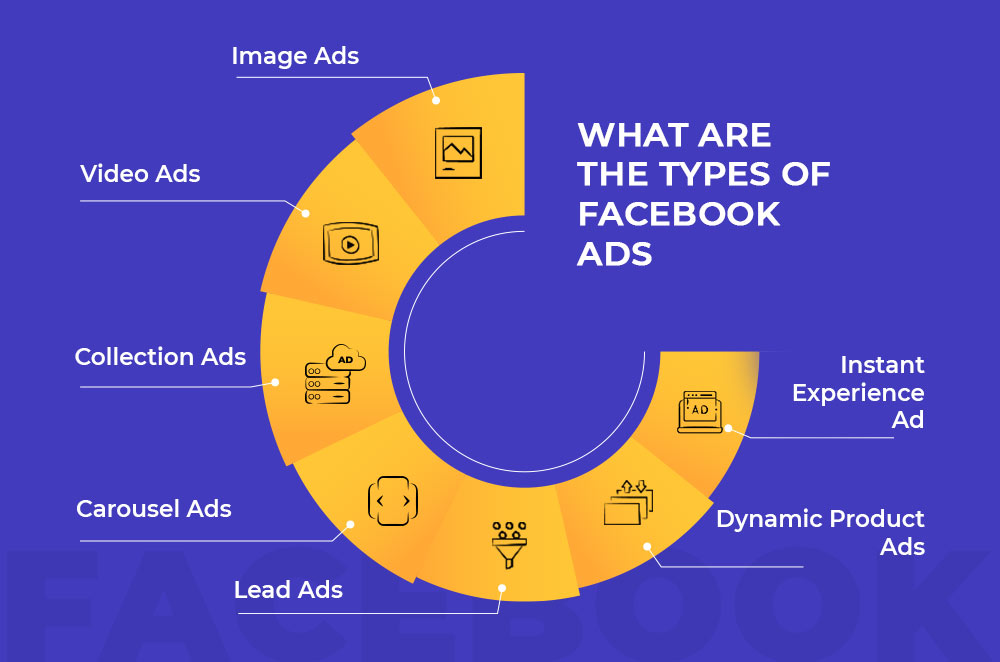
Facebook offers a wide range of ad formats designed to support different business goals, industries, and stages of the customer journey. One of the biggest mistakes advertisers make is choosing ad formats based on personal preference rather than strategic fit.
Each Facebook ad type serves a specific purpose. Some formats excel at awareness, others at engagement, and others at direct conversions. Understanding what types of Facebook ads exist and when to use each one is essential for improving performance, lowering customer acquisition cost, and scaling campaigns effectively.
This article provides a complete breakdown of the major Facebook ad types, how they work, their strengths and weaknesses, and best practices for using each format.
Why Facebook Ad Formats Matter
Facebook ad formats determine:
-
How users experience your message
-
How much attention your ad receives
-
How your content fits into the feed
-
What actions users are encouraged to take
Choosing the wrong format can limit performance even with strong creative and targeting.
The Core Facebook Ad Formats
Facebook supports several primary ad formats:
-
Image ads
-
Video ads
-
Carousel ads
-
Collection ads
-
Lead generation ads
Each format can appear across multiple placements, including Facebook Feed, Instagram Feed, Stories, Reels, and more.
Image Ads
What Are Facebook Image Ads?
Image ads are the simplest and most widely used Facebook ad format. They consist of:
-
A single image
-
Primary text
-
Headline
-
Call-to-action button
Despite their simplicity, image ads remain highly effective.
When Image Ads Work Best
Image ads perform well for:
-
Clear value propositions
-
Simple offers
-
Retargeting campaigns
-
Static promotions
-
Brand awareness
They are especially useful when speed and clarity matter.
Advantages of Image Ads
-
Easy to create
-
Load quickly
-
Low production cost
-
Clear messaging
-
Consistent performance
Image ads are ideal for rapid testing.
Disadvantages of Image Ads
-
Limited storytelling
-
Easier to ignore
-
Creative fatigue occurs faster
-
Less immersive than video
They rely heavily on strong visuals and copy.
Best Practices for Image Ads
-
Use high-contrast visuals
-
Avoid excessive text
-
Focus on one clear message
-
Design for mobile first
-
Test multiple variations
Simple does not mean lazy.
Video Ads
What Are Facebook Video Ads?
Video ads use motion, sound, and storytelling to capture attention. They can range from short clips to longer explainer videos.
Video ads appear in:
-
Feeds
-
Stories
-
Reels
-
In-stream placements
Why Video Ads Are So Powerful
Video ads:
-
Capture attention faster
-
Communicate emotion
-
Demonstrate products
-
Improve engagement
-
Perform well in algorithmic delivery
Facebook prioritizes video content.
Types of Video Ads
Common video ad styles include:
-
Product demos
-
User-generated content (UGC)
-
Testimonials
-
Explainer videos
-
Founder stories
-
Problem-solution narratives
Authenticity often beats production quality.
Video Length Best Practices
-
6–15 seconds for Stories and Reels
-
Under 30 seconds for feeds
-
Hook within first 3 seconds
-
Include captions for silent viewing
Shorter videos generally outperform longer ones.
Advantages of Video Ads
-
High engagement
-
Strong storytelling
-
Better recall
-
More algorithm-friendly
-
Versatile across funnel stages
Video is often the top-performing format.
Disadvantages of Video Ads
-
Higher production effort
-
Faster creative fatigue
-
Requires frequent refreshes
-
Poor hooks kill performance
Execution matters more than format.
Carousel Ads
What Are Facebook Carousel Ads?
Carousel ads allow advertisers to showcase multiple images or videos within a single ad. Users swipe horizontally to view each card.
Each card can have:
-
Its own image or video
-
Headline
-
Description
-
Destination URL
When Carousel Ads Work Best
Carousel ads are ideal for:
-
Showcasing multiple products
-
Highlighting features
-
Telling a step-by-step story
-
Comparing options
-
E-commerce catalogs
They offer flexibility without overwhelming users.
Advantages of Carousel Ads
-
Multiple messages in one ad
-
Interactive experience
-
Higher engagement potential
-
Good for product variety
They encourage exploration.
Disadvantages of Carousel Ads
-
Requires more creative assets
-
Users may not swipe
-
Performance depends on first card
-
Can dilute focus if poorly structured
The first card does most of the work.
Best Practices for Carousel Ads
-
Make the first card the strongest
-
Tell a cohesive story
-
Use consistent design
-
Highlight one benefit per card
-
Test different sequences
Intentional structure matters.
Collection Ads
What Are Facebook Collection Ads?
Collection ads are immersive, mobile-first ads designed for e-commerce. They combine:
-
A cover image or video
-
A grid of product images
-
An instant full-screen experience
They open into Facebook’s Instant Experience.
When Collection Ads Work Best
Collection ads perform best for:
-
E-commerce brands
-
Product discovery
-
Mobile shoppers
-
Visual catalogs
-
Mid-to-bottom funnel campaigns
They reduce friction between discovery and purchase.
Advantages of Collection Ads
-
Highly immersive
-
Mobile-optimized
-
Seamless browsing experience
-
Strong for impulse purchases
They feel native and engaging.
Disadvantages of Collection Ads
-
Limited customization
-
Requires product catalogs
-
Less suitable for non-ecommerce businesses
-
Creative setup is more complex
They are specialized by design.
Best Practices for Collection Ads
-
Use engaging cover visuals
-
Feature best-selling products
-
Ensure fast-loading images
-
Align with landing page experience
Speed and visuals drive success.
Lead Generation Ads
What Are Facebook Lead Generation Ads?
Lead generation ads allow users to submit contact information directly within Facebook without leaving the platform.
They use pre-filled forms that reduce friction.
When Lead Ads Work Best
Lead ads are effective for:
-
B2B lead generation
-
Service businesses
-
Webinars and events
-
Newsletter signups
-
Consultations and demos
They excel at low-friction acquisition.
Advantages of Lead Generation Ads
-
High conversion rates
-
Low cost per lead
-
Seamless user experience
-
Mobile-friendly
-
Fast data capture
Ease drives volume.
Disadvantages of Lead Generation Ads
-
Lead quality can be lower
-
Requires strong follow-up systems
-
Limited qualification without custom questions
-
Users may submit impulsively
Quality depends on funnel design.
Improving Lead Quality
To improve lead quality:
-
Add qualifying questions
-
Use intent-based messaging
-
Clearly state next steps
-
Integrate with CRM
-
Follow up quickly
Speed matters more than volume alone.
Other Facebook Ad Formats Worth Mentioning
Slideshow Ads
Slideshow ads use lightweight motion effects.
Pros:
-
Low bandwidth
-
Easy creation
-
Video-like feel
Cons:
-
Less engaging than real video
Instant Experience Ads
Instant Experiences create full-screen interactive pages.
Pros:
-
High engagement
-
Custom storytelling
Cons:
-
Higher setup complexity
Messenger Ads
Messenger ads drive conversations.
Best for:
-
Customer support
-
Personalized offers
-
Lead qualification
Requires active management.
Matching Ad Formats to Funnel Stages
Top of Funnel
Best formats:
-
Video ads
-
Image ads
-
Slideshow ads
Goal: attention and awareness.
Middle of Funnel
Best formats:
-
Carousel ads
-
Video testimonials
-
Engagement-based ads
Goal: education and trust.
Bottom of Funnel
Best formats:
-
Collection ads
-
Lead generation ads
-
Retargeting image ads
Goal: conversion.
Choosing the Right Format for Your Business Model
E-commerce Businesses
Top formats:
-
Video ads
-
Carousel ads
-
Collection ads
B2B and SaaS Businesses
Top formats:
-
Lead generation ads
-
Video explainers
-
Image ads with strong copy
Local and Service Businesses
Top formats:
-
Lead ads
-
Image ads
-
Video testimonials
Creative Testing Across Formats
Best practice:
-
Test the same message across multiple formats
-
Compare CPA and ROAS
-
Let performance guide format selection
Do not assume one format is always better.
Common Mistakes When Using Facebook Ad Formats
-
Using the same creative everywhere
-
Choosing formats based on trends
-
Ignoring mobile experience
-
Overloading ads with information
-
Not testing alternatives
Format choice should be strategic.
How Facebook’s Algorithm Treats Different Formats
Facebook prioritizes:
-
User engagement
-
Ad relevance
-
Native experiences
Formats that feel organic often outperform polished ads.
The Role of Creative Consistency Across Formats
Consistency builds:
-
Brand recognition
-
Trust
-
Recall
Variation keeps performance fresh.
Balance both.
The Future of Facebook Ad Formats
Trends include:
-
Short-form video dominance
-
Reels-first delivery
-
Immersive shopping experiences
-
AI-assisted creative generation
Formats will evolve, but fundamentals remain.
Final Thoughts
Facebook offers a diverse range of ad formats, each designed to serve a specific purpose within the customer journey. There is no universally “best” ad type—only the best format for your goal, audience, and message.
The most successful advertisers understand how to match ad formats to funnel stages, test relentlessly, and let performance—not preference—drive decisions.
- Arts
- Business
- Computers
- Jocuri
- Health
- Home
- Kids and Teens
- Money
- News
- Personal Development
- Recreation
- Regional
- Reference
- Science
- Shopping
- Society
- Sports
- Бизнес
- Деньги
- Дом
- Досуг
- Здоровье
- Игры
- Искусство
- Источники информации
- Компьютеры
- Личное развитие
- Наука
- Новости и СМИ
- Общество
- Покупки
- Спорт
- Страны и регионы
- World

 English
 Russian
 French
 Spanish
 Portuguese
 Deutsch
 Turkish
 Dutch
Dutch
 Italiano
 Arabic
 Portuguese (Brazil)
 Greek
Greek