
What Is Economic Growth?
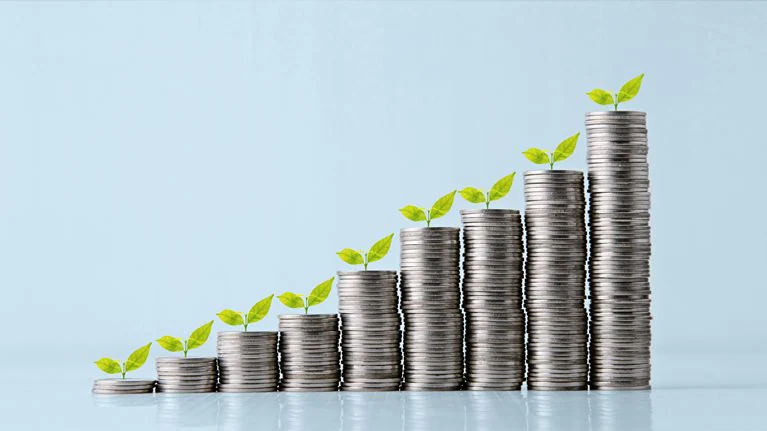
What Is Economic Growth?
GDP Growth, Development, and Productivity
Economic growth is one of the most widely discussed concepts in economics because it is closely linked to living standards, employment, and a country’s overall prosperity. Governments, businesses, and citizens often judge economic success by how fast an economy is growing. However, economic growth is more than just a single number. To understand it properly, we need to look at GDP growth, how growth differs from economic development, and the role of productivity.
Understanding Economic Growth
Economic growth refers to an increase in the production of goods and services in an economy over time. When an economy grows, it is able to produce more output than before, which usually means higher incomes, more jobs, and greater consumption possibilities.
Growth is typically measured on an annual basis and compared over time to see whether an economy is expanding or contracting. Positive growth indicates expansion, while negative growth for two consecutive quarters is commonly described as a recession.
Economic growth matters because it helps improve material living standards. When an economy grows faster than its population, people on average can enjoy higher incomes, better access to goods and services, and improved public services such as healthcare and education.
GDP and GDP Growth
The most common measure of economic growth is Gross Domestic Product (GDP). GDP represents the total monetary value of all final goods and services produced within a country’s borders during a specific period, usually a year or a quarter.
How GDP Is Measured
GDP can be measured in three main ways:
-
The production approach, which adds up the value added at each stage of production.
-
The income approach, which sums incomes earned by households and firms, such as wages, profits, rent, and interest.
-
The expenditure approach, which adds total spending in the economy:
GDP = Consumption + Investment + Government Spending + (Exports − Imports).
Although calculated differently, all three methods should theoretically give the same result.
GDP Growth Rate
GDP growth is the percentage increase in real GDP (GDP adjusted for inflation) from one period to another. Using real GDP is important because it shows changes in actual output rather than changes caused by rising prices.
For example, if a country’s real GDP grows by 3% in a year, it means the economy produced 3% more goods and services than the previous year.
Limitations of GDP as a Measure
While GDP growth is useful, it has important limitations:
-
It does not measure income distribution. GDP can grow while inequality increases.
-
It does not account for non-market activities, such as household work or volunteer services.
-
It ignores environmental costs, such as pollution and resource depletion.
-
It does not directly measure well-being or happiness.
Because of these limitations, GDP growth alone does not provide a complete picture of a country’s progress.
Economic Growth vs. Economic Development
Economic growth and economic development are related but not the same.
Economic Growth
Economic growth focuses on quantitative increases in output and income. It answers the question: How much is the economy producing compared to before?
Growth can occur even if the benefits are unevenly distributed or if social conditions do not improve significantly.
Economic Development
Economic development is a broader and more qualitative concept. It refers to improvements in living standards, health, education, income equality, and overall quality of life. Development includes economic growth but goes beyond it.
Indicators of economic development often include:
-
Life expectancy
-
Literacy and education levels
-
Poverty rates
-
Access to clean water and healthcare
-
Income distribution
For example, a country may experience strong GDP growth due to oil exports, but if most citizens remain poor and lack access to basic services, economic development may be limited.
Relationship Between Growth and Development
Economic growth is often a necessary condition for development because it provides resources for investment in health, education, and infrastructure. However, growth alone does not guarantee development. Effective institutions, good governance, and inclusive policies are essential to turn growth into real improvements in people’s lives.
The Role of Productivity
A key driver of long-term economic growth is productivity.
What Is Productivity?
Productivity measures how efficiently resources are used to produce goods and services. The most common measure is labor productivity, which is output per worker or per hour worked.
Higher productivity means that workers can produce more with the same amount of effort, time, or resources.
Why Productivity Matters
Productivity growth is crucial because:
-
It allows wages to rise without causing inflation.
-
It increases business profits, encouraging investment.
-
It improves competitiveness in global markets.
-
It supports sustainable long-term economic growth.
In contrast, growth based only on using more labor or more natural resources has limits. Productivity growth allows economies to expand without simply working longer hours or depleting resources.
Sources of Productivity Growth
Productivity can increase due to several factors:
-
Technological progress, such as new machines, software, or production methods.
-
Human capital development, including better education, training, and skills.
-
Capital investment, such as factories, tools, and infrastructure.
-
Efficient institutions, including strong legal systems, stable governments, and well-functioning markets.
-
Innovation and entrepreneurship, which create new products and processes.
Countries that invest heavily in education, research, and technology tend to experience higher productivity growth over time.
Sustainable Economic Growth
In recent years, the concept of sustainable economic growth has become increasingly important. This type of growth aims to meet current needs without compromising the ability of future generations to meet theirs.
Sustainable growth considers:
-
Environmental protection
-
Responsible use of natural resources
-
Social inclusion
-
Long-term economic stability
An economy that grows rapidly by damaging the environment or increasing inequality may face serious problems in the future, including health crises, social unrest, and economic instability.
Conclusion
Economic growth is a central goal for most countries because it increases production, incomes, and opportunities. GDP growth is the most common way to measure economic growth, but it has important limitations and does not fully capture human well-being.
Understanding the difference between economic growth and economic development is essential. While growth focuses on increasing output, development emphasizes improvements in quality of life and social conditions.
Productivity plays a critical role in driving long-term economic growth. Through innovation, education, and efficient institutions, productivity allows economies to grow in a sustainable and inclusive way.
Ultimately, the most successful economies are those that combine steady GDP growth with rising productivity and meaningful economic development, ensuring that growth leads to real and lasting improvements in people’s lives.
- Arts
- Business
- Computers
- Jogos
- Health
- Início
- Kids and Teens
- Money
- News
- Personal Development
- Recreation
- Regional
- Reference
- Science
- Shopping
- Society
- Sports
- Бизнес
- Деньги
- Дом
- Досуг
- Здоровье
- Игры
- Искусство
- Источники информации
- Компьютеры
- Личное развитие
- Наука
- Новости и СМИ
- Общество
- Покупки
- Спорт
- Страны и регионы
- World

 English
 Russian
 French
 Spanish
 Portuguese
 Deutsch
 Turkish
 Dutch
Dutch
 Italiano
 Arabic
 Romaian
 Greek
Greek