
What is Behavioral Economics?
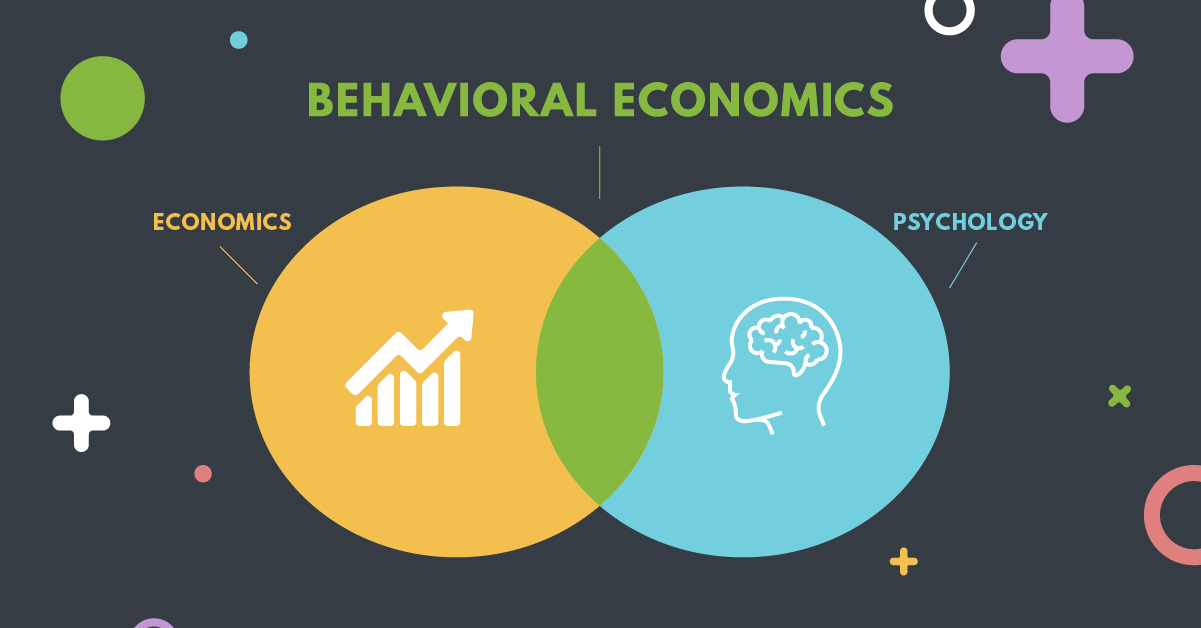
What is Behavioral Economics?
Behavioral economics is a field that blends insights from psychology with traditional economics to understand how people make decisions. Unlike classical economics, which assumes that individuals are perfectly rational and always act in their self-interest, behavioral economics recognizes that humans are often influenced by biases, emotions, and social factors. This approach seeks to explain why people sometimes make choices that seem illogical or counterproductive and how these patterns can shape markets, policies, and personal behavior.
The Origins of Behavioral Economics
Traditional economic theory is grounded in the concept of homo economicus, the idea that people are fully rational actors who make decisions to maximize utility. While this model is mathematically elegant, it often fails to predict real-world behavior. For instance, people may save too little for retirement, overeat, or make impulsive purchases—even when they know these actions are harmful in the long term.
Behavioral economics emerged in the mid-20th century as psychologists and economists began collaborating to study these anomalies. Early pioneers like Herbert Simon introduced the concept of bounded rationality, which suggests that humans are rational only within limits. Later, psychologists Daniel Kahneman and Amos Tversky formalized these ideas with prospect theory, showing that people value gains and losses differently and often make decisions based on perceived losses rather than objective outcomes. Kahneman’s work earned him the Nobel Prize in Economics in 2002, solidifying behavioral economics as a respected field.
Key Concepts in Behavioral Economics
Several key concepts help explain why humans deviate from the rational model:
1. Heuristics: People often use mental shortcuts to make decisions quickly. While heuristics can be useful, they sometimes lead to systematic errors, called cognitive biases. For example, the availability heuristic causes people to overestimate the likelihood of events they can easily recall, like plane crashes or lottery wins.
2. Loss Aversion: Research shows that losses feel more painful than equivalent gains feel pleasurable. For instance, losing $50 hurts more psychologically than the joy of gaining $50. This bias affects financial decisions, investment behavior, and even consumer choices.
3. Overconfidence: Many individuals overestimate their knowledge, skills, or control over events. Overconfidence can lead to excessive risk-taking in investing, business, and personal life.
4. Framing Effects: The way information is presented can influence decisions. People react differently depending on whether a choice is framed as a potential gain or loss. For example, saying a medical procedure has a 90% survival rate is more reassuring than saying it has a 10% mortality rate, even though both statements are equivalent.
5. Social Preferences: Humans are influenced by fairness, reciprocity, and peer behavior. Decisions are not made in isolation; people consider how their actions align with social norms or how they compare with others.
Behavioral Economics in Practice
Behavioral economics has practical applications across various fields, from public policy to business strategy:
1. Public Policy and “Nudges”: Governments and organizations use behavioral insights to guide better decisions. Richard Thaler, another Nobel laureate, popularized the concept of nudging, which involves designing choices that steer people toward beneficial behaviors without restricting freedom. Examples include automatically enrolling employees in retirement savings plans, arranging healthier foods at eye level in cafeterias, or sending reminders to pay taxes on time.
2. Finance and Investing: Investors are not always rational. Behavioral economics explains phenomena like stock market bubbles, where optimism and herd behavior inflate prices beyond intrinsic value, and panic selling during crashes. Understanding biases like loss aversion or overconfidence can improve investment strategies and risk management.
3. Marketing and Consumer Behavior: Businesses leverage behavioral insights to influence purchasing decisions. Limited-time offers, free trials, or framing a product as “popular” exploit psychological tendencies to encourage sales. Recognizing these effects can help consumers make more informed choices and avoid impulsive spending.
4. Health and Well-being: Behavioral economics helps design interventions that encourage healthier lifestyles. For example, small financial incentives or gamified apps can motivate exercise, vaccination, or medication adherence by tapping into rewards, habit formation, and social influence.
Criticisms and Challenges
While behavioral economics offers powerful insights, it is not without criticism. Some argue that the field lacks a unified theory and relies heavily on experiments that may not always translate to complex real-world situations. Additionally, behavioral interventions, like nudges, raise ethical questions: to what extent should policymakers manipulate choices, even for good outcomes?
Another challenge is overgeneralization. Human behavior is context-dependent, and what works in one culture or population may not work in another. Moreover, some critics argue that emphasizing biases might underestimate people’s capacity for rational thinking and adaptation.
The Future of Behavioral Economics
Behavioral economics continues to evolve, integrating with fields like neuroscience, data science, and artificial intelligence. Neuroeconomics, for example, studies how brain activity influences decision-making, providing a deeper understanding of risk, reward, and emotion. Big data and machine learning allow researchers to analyze large-scale behavioral patterns, helping tailor interventions and policies more precisely.
The field is also expanding into social and environmental challenges. Behavioral strategies are increasingly applied to promote sustainable consumption, reduce energy waste, and encourage pro-social behavior such as charitable giving or civic participation.
Conclusion
Behavioral economics bridges the gap between the idealized models of classical economics and the messy reality of human behavior. By acknowledging that people are not perfectly rational, it provides a more realistic framework for understanding decision-making. From influencing financial choices to shaping public policies and marketing strategies, behavioral economics has profound implications for everyday life.
Ultimately, the field encourages a deeper appreciation of human complexity. It reminds us that understanding ourselves—our biases, heuristics, and social tendencies—is crucial for making better decisions, both individually and collectively. While it does not offer a magic formula for perfect decision-making, behavioral economics equips us with the tools to recognize our cognitive blind spots and design environments that help us thrive.
- Arts
- Business
- Computers
- الألعاب
- Health
- الرئيسية
- Kids and Teens
- مال
- News
- Personal Development
- Recreation
- Regional
- Reference
- Science
- Shopping
- Society
- Sports
- Бизнес
- Деньги
- Дом
- Досуг
- Здоровье
- Игры
- Искусство
- Источники информации
- Компьютеры
- Личное развитие
- Наука
- Новости и СМИ
- Общество
- Покупки
- Спорт
- Страны и регионы
- World

 English
 Russian
 French
 Spanish
 Portuguese
 Deutsch
 Turkish
 Dutch
Dutch
 Italiano
 Romaian
 Portuguese (Brazil)
 Greek
Greek
