
What Is the Brexit Deal?
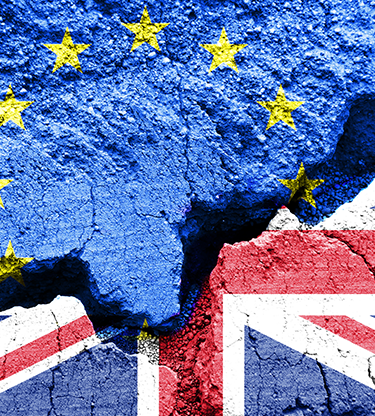
What Is the Brexit Deal?
The phrase “the Brexit deal” can be confusing, because it does not refer to just one single document. In reality, Brexit is covered by several agreements between the United Kingdom (UK) and the European Union (EU). Together, these agreements set out how the UK left the EU and how the two sides now work with each other.
In simple terms, the Brexit deal explains three big things:
-
how the UK left the EU,
-
what happened during the transition period, and
-
how the UK and the EU trade and cooperate today.
This article explains the main parts in clear language.
What is Brexit?
Brexit is the UK’s decision to leave the European Union.
In a referendum in June 2016, voters in the UK were asked whether the country should remain in or leave the EU. A narrow majority voted to leave. After several years of political debate and negotiations, the UK formally left the EU on 31 January 2020.
However, leaving the EU did not instantly change everything. A set of legal agreements was needed to manage the process and the future relationship. These agreements are what people usually mean when they talk about “the Brexit deal”.
The first part: the Withdrawal Agreement
The most important early agreement is called the Withdrawal Agreement. It was signed by the UK and the EU in 2020.
Its main purpose was to organise an orderly exit. It answered practical questions such as:
-
What happens to EU citizens living in the UK, and UK citizens living in the EU?
-
How would the UK settle its financial commitments to the EU?
-
What rules would apply while both sides prepared for the future relationship?
One of the key parts of the Withdrawal Agreement was the transition period.
The transition period
The transition period lasted from 31 January 2020 until 31 December 2020.
During this time:
-
the UK was no longer an EU member,
-
but EU rules still largely applied in the UK,
-
and trade continued as if the UK were still inside the EU.
The idea was to avoid sudden disruption while a longer and more detailed agreement was negotiated.
Citizens’ rights
The Withdrawal Agreement protects the rights of millions of people.
EU citizens who were already living in the UK before the end of the transition period, and UK citizens living in EU countries, were allowed to stay. They kept important rights, such as access to work, healthcare, and social benefits, as long as they registered under new settlement systems.
This part of the Brexit deal is often considered one of the most important because it affects everyday life for real people.
The financial settlement
Another part of the Withdrawal Agreement deals with money. The UK had taken part in long-term EU budgets and commitments while it was a member. After leaving, it still had to pay its share of those obligations.
This is often described as the UK’s “divorce bill”, although in practice it is a complex calculation rather than a single fixed amount.
The Northern Ireland problem
The most politically sensitive issue in the Brexit deal is Northern Ireland.
Northern Ireland is part of the UK, but it shares a land border with the Republic of Ireland, which is an EU member. Before Brexit, that border was open and had no routine checks, which is important for peace and everyday life.
Brexit created a difficult question:
How can the UK leave the EU’s customs and trade system without creating a hard border between Northern Ireland and Ireland?
The original solution was the Northern Ireland Protocol, which is part of the Withdrawal Agreement.
Under this system:
-
Northern Ireland remains aligned with certain EU rules for goods,
-
checks take place on some goods moving from Great Britain into Northern Ireland,
-
and Northern Ireland effectively has a special trading position.
This avoids border checks on the island of Ireland, but it does create new barriers inside the UK itself. Many people and political parties in Northern Ireland strongly disagreed with this arrangement.
In 2023, the UK and the EU agreed on changes known as the Windsor Framework. This adjusted how the protocol works, reduced some checks on goods, and created new ways for Northern Ireland representatives to raise concerns about future EU rules.
Although the Windsor Framework improved relations, Northern Ireland remains one of the most complicated and sensitive parts of the Brexit settlement.
The second main part: the Trade and Cooperation Agreement
Once the UK had formally left, the next big question was how the UK and the EU would work together in the future.
This is covered by a separate deal called the Trade and Cooperation Agreement (TCA), which came into force in 2021.
This agreement governs most of the UK–EU relationship today.
Trade in goods
Under the Trade and Cooperation Agreement:
-
there are no tariffs and no quotas on goods traded between the UK and the EU, as long as goods meet certain rules of origin.
This means that, in theory, products are not charged extra simply for crossing the UK–EU border.
However, leaving the EU’s single market and customs union still created new barriers. Businesses now face:
-
customs paperwork,
-
border checks,
-
and regulatory requirements.
So while trade is still possible without tariffs, it is slower and more complex than when the UK was a member.
Services and financial industries
Services are extremely important to the UK economy, especially finance, law, and professional services.
The Brexit deal provides only limited access for services. UK firms no longer have automatic rights to operate across the EU in the same way as before. Instead, they must follow each country’s national rules.
This represents a significant change compared with EU membership, where services could move much more freely.
Movement of people
One of the main political goals of Brexit was to end free movement.
Under the Brexit deal:
-
EU citizens no longer have an automatic right to live and work in the UK,
-
and UK citizens no longer have that right in EU countries.
Short visits for tourism and business are still allowed without visas for limited periods, but long-term residence and work now require national immigration systems.
Cooperation beyond trade
The Trade and Cooperation Agreement also covers many other areas, including:
-
police and judicial cooperation,
-
data sharing,
-
transport and aviation,
-
energy,
-
and fishing.
For example, the UK and the EU still cooperate on criminal matters, but with fewer automatic systems than before. This makes cooperation possible, but less smooth.
Is the Brexit deal permanent?
No. The Brexit deal is not fixed forever.
Both the Withdrawal Agreement and the Trade and Cooperation Agreement contain review clauses and mechanisms for change. Either side can propose revisions, and in some areas either side can suspend parts of the agreement if serious disputes arise.
This means that the UK–EU relationship is now an ongoing political and diplomatic process rather than a finished event.
Why do people still argue about the Brexit deal?
Brexit changed the UK’s relationship with its biggest trading partner and reshaped its internal politics. People disagree about whether the outcomes are good or bad.
Supporters of the deal argue that:
-
the UK has regained control over its laws, borders, and trade policy,
-
and is free to make its own international agreements.
Critics argue that:
-
trade has become more difficult,
-
businesses face higher costs and paperwork,
-
and the special arrangements for Northern Ireland have created political instability.
Because Brexit affects the economy, migration, and the unity of the UK itself, debates about the deal remain intense.
In summary
When people talk about “the Brexit deal”, they usually mean a set of agreements between the UK and the EU, not a single document.
The most important parts are:
-
the Withdrawal Agreement, which organised the UK’s exit and included citizens’ rights and Northern Ireland arrangements, and
-
the Trade and Cooperation Agreement, which defines today’s relationship on trade, travel, and cooperation.
Together, these agreements explain how the UK left the EU and how the two sides now interact. Brexit is therefore not just a past decision, but an ongoing relationship that continues to develop.
- Arts
- Business
- Computers
- Oyunlar
- Health
- Home
- Kids and Teens
- Money
- News
- Personal Development
- Recreation
- Regional
- Reference
- Science
- Shopping
- Society
- Sports
- Бизнес
- Деньги
- Дом
- Досуг
- Здоровье
- Игры
- Искусство
- Источники информации
- Компьютеры
- Личное развитие
- Наука
- Новости и СМИ
- Общество
- Покупки
- Спорт
- Страны и регионы
- World

 English
 Russian
 French
 Spanish
 Portuguese
 Deutsch
 Dutch
Dutch
 Italiano
 Arabic
 Romaian
 Portuguese (Brazil)
 Greek
Greek
