
How Has Brexit Affected the UK Economy?
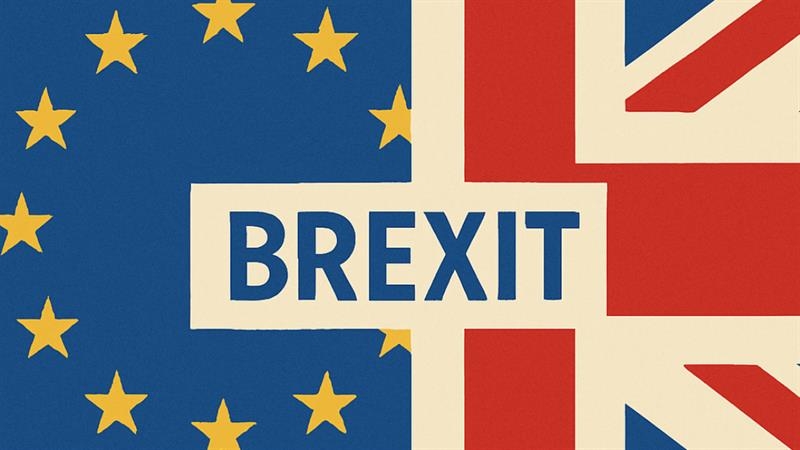
How Has Brexit Affected the UK Economy?
When the United Kingdom voted to leave the European Union in 2016 — a decision known as Brexit — it set in motion one of the most significant economic experiments in recent British history. The full effects of Brexit continue to unfold more than six years after the UK formally left the EU’s institutions and single market. Economists broadly agree that Brexit has had a real and measurable impact on the UK’s economy, although the exact scale and causes are debated. This article maps out the main ways Brexit has affected economic performance in the UK.
1. Slower Economic Growth and Lower GDP
One of the most widely cited findings from recent economic research is that the UK’s overall economic output (gross domestic product, or GDP) is smaller than it would likely have been if the UK had remained in the EU. Research combining macroeconomic data with firm-level surveys suggests that by 2025 the UK’s GDP was 6 % to 8 % below a “remain” scenario — meaning the economy is noticeably lower than it might have been without Brexit.
This trimming of output reflects several channels through which Brexit affects economic dynamics, including trade barriers, lower investment, and reduced productivity growth.
2. Trade with the EU Has Been Weaker
Before Brexit, the EU was by far the UK’s largest trading partner. Leaving the EU’s single market and customs union meant new rules, paperwork, and checks for goods crossing the UK-EU border — even if tariffs were largely avoided under the Trade and Cooperation Agreement.
This change has weighed on trade volumes:
-
Some sectors, such as food and drink, have seen exports to the EU fall sharply — one trade body reported a 34 % drop in food and drink exports by weight from pre-Brexit levels.
-
Trade stagnation persists: according to the World Trade Organization, UK trade’s contribution to GDP has “stagnated” since Brexit, with goods exports still below pre-pandemic levels.
Analyses point to higher non-tariff barriers — such as customs paperwork and regulatory checks — as an enduring drag on trade activity.
3. Business Investment Has Slowed
Investment by businesses — spending on new equipment, factories, and technology — is critical for growth. Multiple independent studies show that Brexit has depressed UK investment relative to a no-Brexit counterfactual.
For example, one major research project found business investment to be 12 % to 18 % lower by 2025 than it would have been if the UK had stayed in the EU. Other modelling suggests investment was around 13 % below what it might have been in 2023, with long-run effects potentially lasting into the mid-2030s.
Economists attribute this to prolonged uncertainty around trade arrangements, shifting supply chains, and reduced foreign direct investment — all factors that make firms more cautious about committing capital.
4. Productivity and Growth Potential
Productivity — the amount of output produced per hour of work — has been weak in the UK for years. Brexit appears to have contributed to this weakness by limiting competition and reducing access to the large continental European market.
Research estimates Brexit’s impact has shaved several percentage points off productivity growth and may continue to restrain it by dampening competition and investment incentives. Slower productivity growth means lower income growth for workers and less expansion of the economy over time.
5. Labour Market Effects
The end of free movement of people between the UK and EU countries reshaped labour supply. Fewer EU nationals now come to work in Britain, especially in sectors like construction, hospitality, healthcare, and agriculture where EU workers had been a large share of the workforce. This has contributed to labour shortages in some parts of the economy.
However, overall immigration to the UK has increased since Brexit — largely from non-EU countries — driven by different visa categories, such as students. Still, the composition and mobility of the workforce changed, and some employers report more administrative hurdles and higher labour costs when hiring from abroad.
6. Consumer Prices and Cost of Living
Brexit likely contributed to higher prices for some imported goods. Analyses connected part of the increase in the cost of food and other products to new trade frictions and border costs. For example, a City Hall report suggested that Brexit accounted for a portion of the rise in food prices between 2019 and 2023.
While inflation has been influenced by many factors — notably the COVID-19 pandemic and energy price shocks after Russia’s invasion of Ukraine — Brexit has been cited as one of several drivers of upward price pressure, especially on imported goods.
7. Sectoral Winners and Losers
Not all parts of the economy have been affected equally:
Financial services: The City of London remains an important global financial hub, but some financial institutions have shifted staff and assets to EU financial centers like Frankfurt and Paris in order to maintain access to EU markets.
Exporters selling outside the EU: Some UK companies have expanded trade with markets outside the EU, such as in Asia or North America. The UK government has signed new trade deals with countries like Australia and Japan, and export figures to non-EU countries have risen in certain categories.
Still, for many firms, especially small exporters, administrative costs and regulatory divergence with the EU have made exporting more difficult.
8. Long-Term Outlook and Ongoing Adjustments
Economists agree Brexit’s impact is not a short-term shock that ended once the UK left formal EU structures. Instead, it has created lasting changes to the economy that evolve over time. A “slow-burn” effect of uncertainty, trade barriers, and investment shifts means the economy continues to adapt years after the formal departure.
Some forecasts even suggest the gap between the UK’s actual economic performance and what it might have been with EU membership could widen further into the 2030s.
9. Politics and Policy Responses
Brexit’s economic effects have become a central theme in UK economic policy debates. Policymakers are considering strategies to boost growth, attract investment, and reduce trade frictions with the EU. Some proposals include negotiating more streamlined customs arrangements or adopting regulatory alignments in specific sectors to lower barriers.
Meanwhile, the UK government emphasizes opportunities to strike new global trade deals, assert regulatory independence, and attract international investment as part of a post-Brexit economic strategy.
Conclusion
Brexit has had a discernible effect on the UK economy across multiple dimensions. Research generally finds the UK’s GDP and investment levels are lower than they might have been had the country remained within the EU. Trade with the EU has weakened in some sectors due to new barriers, business investment slowed, and productivity growth has been subdued. Labour market shifts and higher administrative costs have also played a role.
At the same time, the UK continues to adapt, exploring new trade opportunities and adjusting its economic policies. Brexit’s legacy on the UK economy is complex and long-term, shaped by evolving global conditions as well as structural changes at home.
- Arts
- Business
- Computers
- Giochi
- Health
- Home
- Kids and Teens
- Money
- News
- Personal Development
- Recreation
- Regional
- Reference
- Science
- Shopping
- Society
- Sports
- Бизнес
- Деньги
- Дом
- Досуг
- Здоровье
- Игры
- Искусство
- Источники информации
- Компьютеры
- Личное развитие
- Наука
- Новости и СМИ
- Общество
- Покупки
- Спорт
- Страны и регионы
- World

 English
 Russian
 French
 Spanish
 Portuguese
 Deutsch
 Turkish
 Dutch
Dutch
 Arabic
 Romaian
 Portuguese (Brazil)
 Greek
Greek