
What is the EU–UK Trade Agreement?
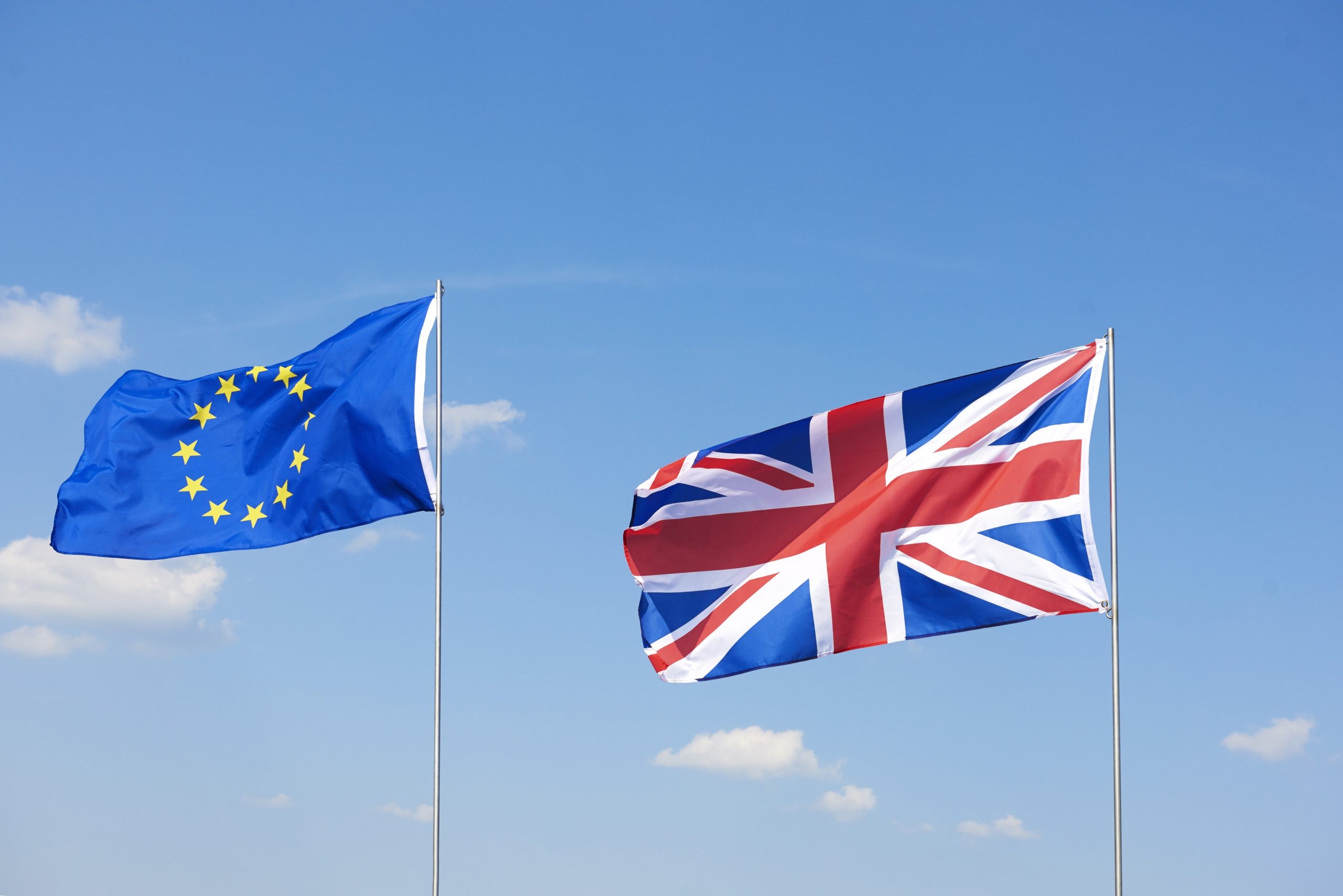
What is the EU–UK Trade Agreement?
The EU–UK Trade Agreement, formally known as the EU–UK Trade and Cooperation Agreement (TCA), is the main treaty that governs the relationship between the United Kingdom and the European Union after Brexit. It came into force in January 2021, following the UK’s decision to leave the EU.
In simple terms, the agreement sets the rules for how the UK and the EU trade with each other and how they cooperate in areas such as transport, energy, security and fishing.
It does not recreate the benefits of EU membership. Instead, it defines a new, more distant relationship between two separate markets.
Why was the agreement needed?
When the UK left the EU, it also left the EU’s single market and customs union. That meant that, without a new deal, trade between the UK and the EU would have fallen back on basic World Trade Organization rules.
Both sides wanted to avoid that outcome because the EU and the UK are major trading partners. The EU is the UK’s largest trading partner, and the UK is one of the EU’s most important external partners.
The EU–UK Trade and Cooperation Agreement was designed to:
-
avoid tariffs and quotas on most goods, and
-
provide a legal framework for ongoing cooperation.
The basic idea of the agreement
The agreement is built around a simple principle:
The UK and the EU are separate legal and economic systems, but they agree to cooperate and trade under shared rules.
This is very different from the situation before Brexit, when the UK helped make EU laws and was fully part of the EU’s internal market.
Under the new agreement:
-
the UK can set its own rules and policies, and
-
the EU treats the UK as a “third country”.
Trade in goods
One of the most important parts of the agreement is trade in goods.
The agreement allows:
zero tariffs and zero quotas on goods traded between the EU and the UK.
This means that, in principle, a product can be exported from the UK to the EU (and vice versa) without paying customs duties and without limits on quantities.
However, this only applies if the goods meet rules of origin. These rules are used to check whether a product really comes from the UK or the EU, rather than being imported from another country and simply re-exported.
Border checks and paperwork
Even though there are no tariffs or quotas, Brexit still created new barriers.
Because the UK left the single market and customs union, businesses now face:
-
customs declarations,
-
border checks,
-
product compliance checks, and
-
extra administrative costs.
So while trade is still possible without tariffs, it is not frictionless. This has been one of the most significant practical changes for businesses.
Trade in services
Services make up a very large part of the UK economy, especially areas such as:
-
financial services,
-
legal and professional services, and
-
digital services.
The agreement includes provisions on services, but these are much more limited than the rights the UK had inside the single market.
Under the agreement:
-
UK and EU service suppliers can still operate in each other’s markets,
-
but they must follow the national rules of the country they are working in.
There is no automatic right for UK firms to access the EU market in the same way as before, particularly for financial services. Market access is now more restricted and often depends on domestic regulations.
The “level playing field”
A central political issue in the negotiations was what is known as the level playing field.
The EU wanted to make sure that the UK would not gain an unfair competitive advantage by lowering standards in areas such as:
-
environmental protection,
-
labour rights, and
-
state subsidies to companies.
The agreement therefore contains commitments that both sides will:
-
maintain high standards in key areas, and
-
not weaken or reduce protections in ways that affect trade or investment.
If one side believes the other has broken these commitments, the agreement provides procedures for dispute settlement and, in some cases, for trade remedies.
Fisheries
Fishing was one of the most politically sensitive topics.
The agreement sets out how EU and UK fishing vessels can access each other’s waters and how fishing opportunities are shared.
It includes:
-
a transition period during which the EU’s fishing access to UK waters is gradually reduced, and
-
annual negotiations after that period to decide fishing arrangements.
Although fishing represents a small share of the overall economy, it has strong political and symbolic importance in both the UK and some EU countries.
Transport and aviation
The agreement also covers transport.
It allows:
-
road haulage operators to continue moving goods between the UK and the EU, and
-
airlines to continue operating flights between the two sides.
However, access is more limited than it was before Brexit. For example, UK airlines cannot operate domestic flights within EU countries, and vice versa.
Energy and climate cooperation
The agreement includes cooperation on energy and climate policy.
It supports:
-
electricity and gas trading,
-
cooperation on renewable energy, and
-
commitments to tackling climate change.
Both the EU and the UK reaffirm their support for international climate agreements and aim to coordinate in this area where possible.
Law enforcement and security
Another important part of the agreement concerns internal security and criminal justice.
The EU and the UK agreed to cooperate on:
-
data exchange,
-
combating serious crime and terrorism, and
-
law enforcement cooperation.
However, this cooperation is more limited than when the UK was part of the EU’s internal security systems, and it depends on continued compliance with data protection and human rights standards.
Governance and dispute resolution
The agreement sets up a complex system to manage the relationship.
This includes:
-
joint committees made up of EU and UK representatives, and
-
procedures to resolve disputes.
If one side believes the other is not complying with the agreement, it can trigger consultations and, if necessary, arbitration. In certain situations, trade measures such as tariffs can be introduced as a response.
This structure reflects the fact that the agreement is not a one-off deal, but an ongoing relationship that needs constant management.
What the agreement does not do
It is just as important to understand what the EU–UK Trade Agreement does not do.
It does not:
-
give the UK access to the EU single market,
-
allow free movement of people,
-
allow the UK to help shape EU laws, or
-
fully cover all areas of cooperation between the two sides.
In other words, it is a free trade agreement, not a membership arrangement.
Why the agreement matters
The EU–UK Trade and Cooperation Agreement matters because it sets the foundation for how the UK and the EU interact after Brexit.
It protects trade from the most severe barriers, such as tariffs and quotas, but it also marks a clear break from the deep economic integration that existed before. Businesses, workers and governments now operate in a relationship that is more distant, more complex and more dependent on ongoing negotiations.
Over time, the agreement can be adjusted, supplemented or, in some areas, renegotiated. The long-term shape of the EU–UK relationship will therefore continue to evolve.
In short, the EU–UK Trade Agreement defines a new partnership between close neighbours—one based on cooperation, but also on clear separation.
- Arts
- Business
- Computers
- Giochi
- Health
- Home
- Kids and Teens
- Money
- News
- Personal Development
- Recreation
- Regional
- Reference
- Science
- Shopping
- Society
- Sports
- Бизнес
- Деньги
- Дом
- Досуг
- Здоровье
- Игры
- Искусство
- Источники информации
- Компьютеры
- Личное развитие
- Наука
- Новости и СМИ
- Общество
- Покупки
- Спорт
- Страны и регионы
- World

 English
 Russian
 French
 Spanish
 Portuguese
 Deutsch
 Turkish
 Dutch
Dutch
 Arabic
 Romaian
 Portuguese (Brazil)
 Greek
Greek
