
How Does Brexit Affect Regulations and Laws?
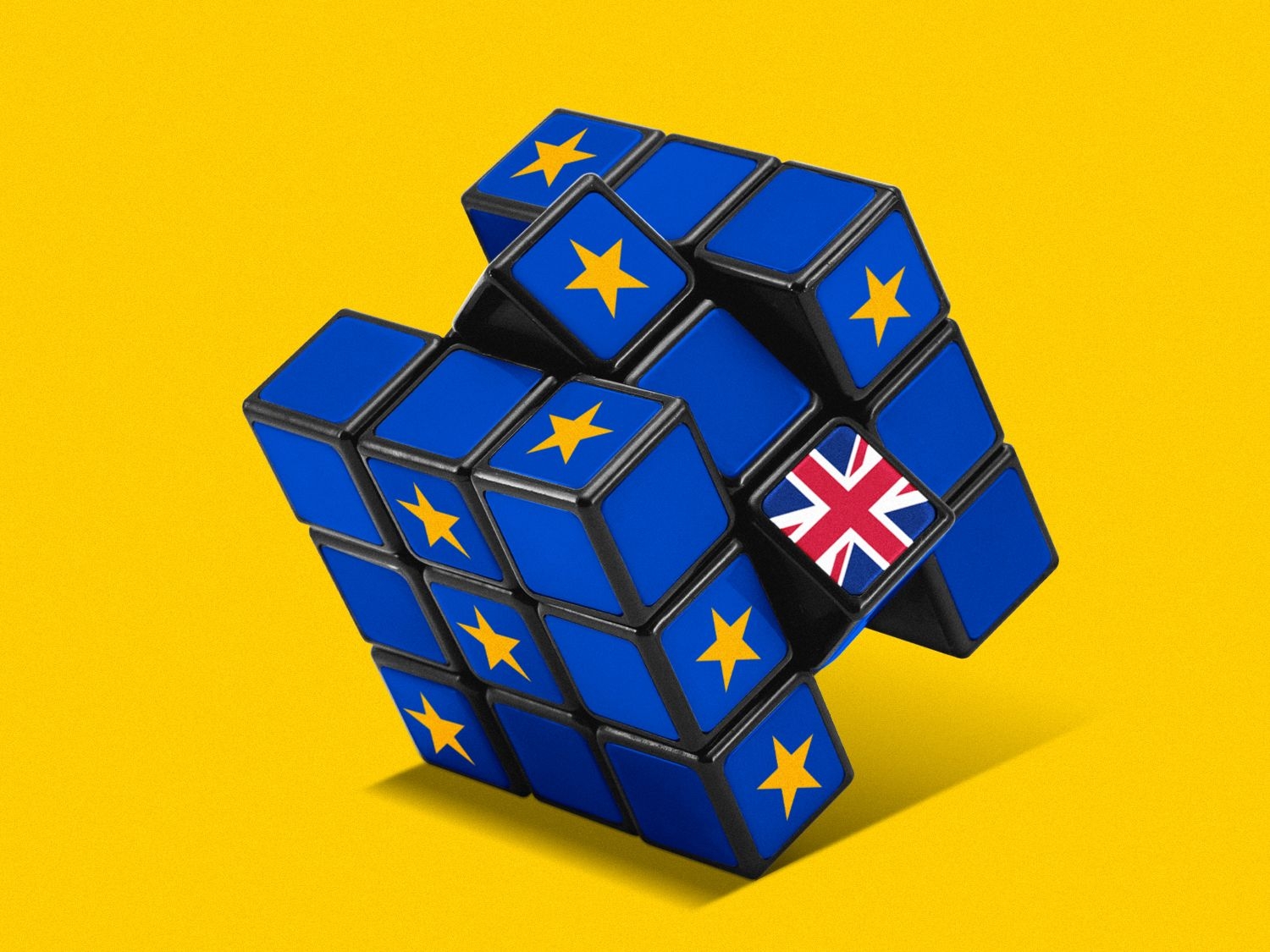
How Does Brexit Affect Regulations and Laws?
EU Law Replacement and Regulatory Divergence
On January 31, 2020, the United Kingdom (UK) formally left the European Union (EU), and the Brexit transition period ended on December 31, 2020. This seismic political shift didn’t just change trading relationships and travel arrangements — it transformed the legal and regulatory framework governing the UK. After nearly five decades of EU membership, the UK had to decide how to handle thousands of rules and standards that were previously set in Brussels.
1. The Legal Legacy of EU Membership
Before Brexit, EU law was a core part of UK law. This included regulations (directly applicable rules), directives (rules requiring national implementation), and the case law of the Court of Justice of the European Union (CJEU). These laws covered areas like:
-
Trade and customs
-
Consumer protection
-
Employment rights
-
Environmental standards
-
Data protection
-
Competition law
The biggest immediate question after Brexit was: What happens to all this EU law?
2. The Great Repatriation: EU Law in the UK After Brexit
To prevent legal chaos, the UK government passed the European Union (Withdrawal) Act 2018. The main idea was straightforward:
Retain existing EU law in UK domestic law at the moment of Brexit.
This concept is called “retained EU law.” Instead of disappearing overnight, EU regulations and the national laws implementing directives were brought into UK law as if they had been created by the UK Parliament.
This gave continuity — businesses, courts, and citizens could still rely on familiar rules immediately after Brexit. But retained EU law is now officially UK law, and the UK Parliament can change it.
3. EU Law Replacement: The Path to a UK-Only Rulebook
After Brexit, the UK government began reviewing, amending, or repealing retained EU laws to suit national priorities. There are three broad approaches:
a) Repeal Without Replacement
Some EU-based laws were simply removed from the books without a UK equivalent. This typically happens in areas where Westminster believes the EU rule is unnecessary or overly burdensome.
b) Reform or Replace With UK Law
In other cases, EU-derived laws remain but are updated to better reflect UK values or policy goals. For example:
-
Data protection: The UK kept the EU General Data Protection Regulation (GDPR) as domestic law but later made amendments so it now operates as the UK GDPR together with the Data Protection Act 2018.
-
Competition policy: The UK is developing its own approach to antitrust and merger control now independent from the EU system.
c) Devolve Power to Regional Governments
In Scotland, Wales, and Northern Ireland, devolved governments can make different decisions about retained EU law in areas they control (like the environment or agriculture). This creates complexity when UK-wide consistency is desired.
4. Regulatory Divergence: What It Means and Why It Matters
Once the UK is free to change laws that were once governed at the EU level, regulatory divergence becomes possible — and increasingly real.
Regulatory divergence means that over time, UK rules and EU rules may grow apart. This can happen in several areas:
a) Trade and Customs
-
The UK-EU Trade and Cooperation Agreement (TCA), signed in December 2020, allows tariff-free trade provided goods meet “rules of origin” requirements.
-
But regulatory divergence can make it harder to meet those requirements, increasing costs of checks and documentation.
b) Standards and Technical Regulations
The EU uses a harmonised system for product standards (CE marking). After Brexit, the UK introduced its own UK Conformity Assessed (UKCA) mark.
While products with UKCA marking can be sold in Great Britain, they cannot automatically access the EU market without CE marking or mutual recognition — this means businesses may have two sets of compliance processes.
c) Services and Financial Regulation
Services — especially financial services — are regulated differently from goods. Unlike goods, the TCA does not include comprehensive mutual recognition for services. Financial firms in the UK lost automatic access to the EU market and now rely on individual EU member states granting equivalence — a complex and conditional process.
d) Environmental and Worker Protection Rules
At first, most environmental and employment protections stayed on the books as retained EU law. In future, divergence could occur if the UK decides to weaken, strengthen, or reshape standards — for example on climate commitments or workplace rights.
5. The Northern Ireland Protocol: Unique Regulatory Challenges
Brexit produced a particularly complex situation for Northern Ireland. To avoid a hard border with the Republic of Ireland, the 1998 Good Friday Agreement principles meant keeping the border invisible. The solution was the Northern Ireland Protocol.
Under the Protocol:
-
Northern Ireland remains aligned with certain EU rules on goods.
-
This means products entering Northern Ireland must meet EU regulatory standards, and checks are required on goods moving from Great Britain to Northern Ireland.
The result is a regulatory and customs border in the Irish Sea, creating political, legal, and trade challenges between the UK and EU and within the UK itself.
6. Courts and Jurisdiction: Who Interprets the Law?
Before Brexit, the CJEU had the final say on interpreting EU law in the UK. Now:
-
UK courts interpret retained EU law, though they may look to CJEU decisions made before Brexit for guidance.
-
The UK Supreme Court is the highest court for these matters and no longer must follow future CJEU decisions.
However, the Brexit deal means the European Court of Justice may still have a limited role in disputes linked to the Northern Ireland Protocol and certain aspects of EU law that still apply there.
7. The Business Impact: Compliance, Costs, and Strategy
Regulatory divergence brings key business implications:
Increased Compliance Costs
-
Firms that sell in both markets must meet both UK and EU standards.
-
This can mean separate labels, certificates, tests, and quality assurance processes.
Trade Friction
Even without tariffs, regulatory checks and documentation add time and expense at borders, especially for perishable goods.
Strategic Decisions
Some companies have relocated functions or stock to EU member states to maintain market access for EU customers.
8. Prospects: Convergence, Competition, or Fragmentation?
The future path depends on UK policy choices and EU responses:
-
Convergence: The UK could choose to align closely with EU standards to simplify trade.
-
Divergence: It could pursue distinct regulations to promote innovation or deregulation in sectors like technology or finance.
-
Selective alignment: The UK might align in some areas but diverge in others, like environmental policy or digital laws.
Each path carries trade-offs between sovereignty, trade costs, competitiveness, and regulatory influence.
9. Conclusion: Balancing Autonomy and Integration
Brexit fundamentally changed how the UK handles law and regulation:
-
EU law didn’t disappear — it was transformed into UK law at the point of exit.
-
The UK now has the legal freedom to change retained EU law.
-
Regulatory divergence is already affecting trade, compliance, and legal interpretation.
-
Negotiations over the Northern Ireland Protocol and future cooperation frameworks will shape the UK–EU regulatory relationship for years.
The UK now faces a core question: how to balance national autonomy with the benefits of regulatory alignment with its largest trading partner. The choices made in the next decade will define the legal landscape for businesses, citizens, and governments on both sides of the Channel.
- Arts
- Business
- Computers
- Spiele
- Health
- Startseite
- Kids and Teens
- Geld
- News
- Personal Development
- Recreation
- Regional
- Reference
- Science
- Shopping
- Society
- Sports
- Бизнес
- Деньги
- Дом
- Досуг
- Здоровье
- Игры
- Искусство
- Источники информации
- Компьютеры
- Личное развитие
- Наука
- Новости и СМИ
- Общество
- Покупки
- Спорт
- Страны и регионы
- World

 English
 Russian
 French
 Spanish
 Portuguese
 Turkish
 Dutch
Dutch
 Italiano
 Arabic
 Romaian
 Portuguese (Brazil)
 Greek
Greek
