
Can the UK rejoin the EU after Brexit?
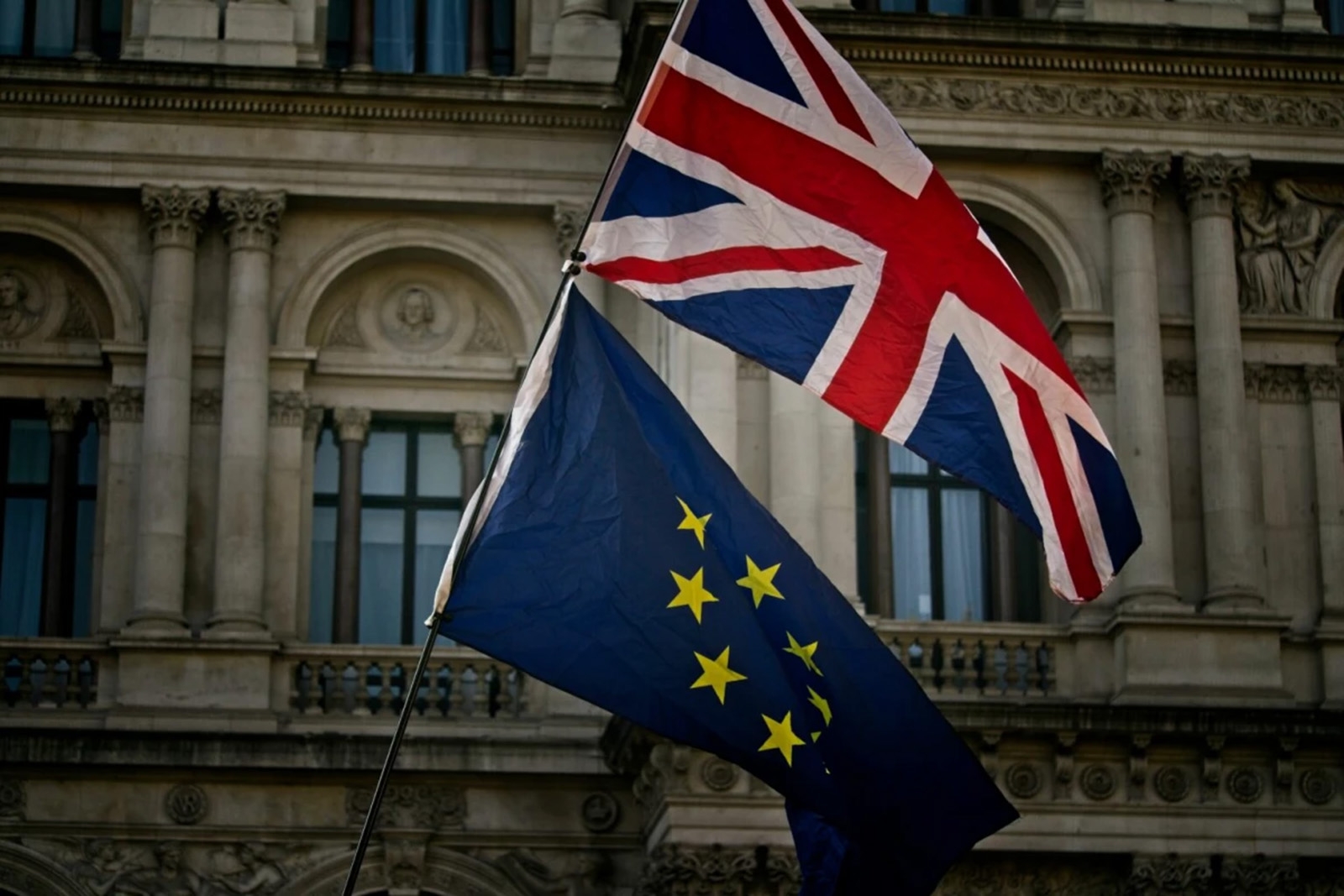
Can the UK rejoin the EU after Brexit?
Since the United Kingdom formally left the European Union in January 2020, the question of whether the UK could one day rejoin has never really disappeared. Public debate, especially among younger voters, has continued to grow. But rejoining the EU would not be simple, quick, or guaranteed. It would involve political choices at home, legal steps in Brussels, and a major shift in public consent.
So, can the UK rejoin the EU after Brexit?
The short answer is: yes, legally it can — but politically and practically, it would be very difficult.
Is rejoining legally possible?
There is nothing in EU law that permanently blocks a former member from joining again.
Under Article 49 of the Treaty on European Union, any European country that respects democratic values and the rule of law may apply for membership. The UK still clearly meets those basic conditions.
In other words, the UK would not have to invent a special process to return. It would apply in exactly the same way as any other candidate country.
However, this also means the UK would not automatically “restore” its old membership. It would start a fresh application.
Would the UK get its old deal back?
This is one of the biggest misunderstandings about rejoining.
Before Brexit, the UK had some very special arrangements inside the EU:
-
It stayed outside the euro.
-
It stayed outside the Schengen border-free travel area.
-
It had budget rebates and opt-outs from parts of EU law.
If the UK reapplied today, there is no legal obligation for the EU to offer the same exceptions again.
In fact, EU leaders have repeatedly made clear that any new member is expected to accept the full modern rulebook. That would almost certainly include:
-
a long-term commitment to join the euro, and
-
full participation in EU policies, unless specific opt-outs were agreed by all members.
So rejoining would almost certainly mean accepting more integration than the UK had before.
What would the process look like?
Rejoining would follow several major steps.
First, a UK government would have to formally decide to apply. That alone would be a major political moment.
Second, the European Commission would assess whether the UK meets EU standards across many policy areas — including competition law, environmental rules, labour protections, data regulation and financial regulation.
This is called the “accession process”, and it usually involves opening and closing dozens of negotiating chapters.
Third, once negotiations were finished, every EU member state would have to approve the UK’s entry. In most countries, that requires national parliaments, and in some cases referendums.
Finally, the UK itself would almost certainly need to approve rejoining through a public vote or a clear general election mandate. Given the scale of the decision, it would be politically impossible to avoid public consent.
Even for a country already familiar with EU law, this process would take several years.
Would the UK still meet EU standards?
In one sense, the UK starts from a strong position. It was fully compliant with EU law only a few years ago.
But since Brexit, UK regulation has begun to diverge from EU rules in some areas. Over time, this gap could grow. That matters because the EU does not treat past membership as a shortcut. What counts is whether a country meets current standards at the moment of accession.
Ironically, the longer the UK stays outside the EU, the harder technical alignment could become.
Would EU countries want the UK back?
This is another key uncertainty.
There is no automatic political enthusiasm for UK re-entry across Europe. Many EU governments still remember years of difficult negotiations, British opt-outs, and internal EU disputes driven by UK domestic politics.
From the EU’s perspective, the main concern would be stability. European leaders would want strong guarantees that the UK would not rejoin only to reopen old arguments a few years later.
However, the UK would also bring clear advantages:
-
a large economy,
-
major diplomatic and military capacity,
-
and a strong role in European security.
So while there would likely be caution, rejoining would not be viewed purely negatively. But the political mood in Europe would matter just as much as the political mood in Britain.
What about public opinion in the UK?
No UK government could realistically rejoin the EU without clear and durable public support.
Brexit exposed deep divisions over national identity, sovereignty, and economic priorities. Even if opinion polls were to show a consistent majority in favour of rejoining, politicians would still be wary of moving too quickly.
A second referendum, or a clear election commitment to rejoin, would almost certainly be required to avoid repeating the legitimacy problems that followed the original Brexit vote.
Rejoining would need to be framed not as reversing history, but as making a new choice for a changed political and economic environment.
Would rejoining fix the problems caused by Brexit?
This is where political debate often becomes unrealistic.
Rejoining the EU would reduce trade barriers with the single market and make it easier for businesses to operate across borders. It would likely help some sectors, especially manufacturing, agriculture, and higher education.
But it would not instantly undo all economic disruption. Many businesses have already restructured supply chains. Some investment decisions have permanently shifted.
Rejoining would be a long-term strategic move, not a quick economic repair.
What about sovereignty and control?
Supporters of Brexit often argued that leaving the EU restored parliamentary sovereignty and national control over laws and borders.
Rejoining would clearly involve accepting shared decision-making again. EU law would once more have legal force inside the UK, and British ministers would take part in collective negotiations rather than acting alone.
However, it is also true that membership gives influence. When the UK was inside the EU, it shaped financial regulation, climate policy, and security cooperation at a continental scale.
So the real question is not whether sovereignty would be shared — it would be — but whether the UK would judge that shared authority to be worthwhile.
Is rejoining likely in the near future?
In practical terms, rejoining in the short term is very unlikely.
No major UK political party currently has a formal policy of applying to rejoin the EU. Most political leaders are cautious and focused instead on improving the existing UK–EU relationship within the current framework.
Even if a future government decided to apply, negotiations would take years. Realistically, rejoining could not happen within a single parliamentary term.
In other words, rejoining is better understood as a long-term political possibility rather than an imminent policy plan.
So, can the UK rejoin the EU?
Yes — the UK can legally rejoin the European Union.
But doing so would require:
-
a clear political decision by a future government,
-
strong and sustained public support,
-
acceptance of today’s EU rules rather than yesterday’s special deals,
-
and the approval of every EU member state.
Rejoining would not be a return to the past. It would be entry into a different European Union, under different conditions, and in a very different political climate.
The real obstacle is not law. It is politics — both in Britain and across Europe.
- Arts
- Business
- Computers
- Games
- Health
- Home
- Kids and Teens
- Money
- News
- Personal Development
- Recreation
- Regional
- Reference
- Science
- Shopping
- Society
- Sports
- Бизнес
- Деньги
- Дом
- Досуг
- Здоровье
- Игры
- Искусство
- Источники информации
- Компьютеры
- Личное развитие
- Наука
- Новости и СМИ
- Общество
- Покупки
- Спорт
- Страны и регионы
- World

 Russian
 French
 Spanish
 Portuguese
 Deutsch
 Turkish
 Dutch
Dutch
 Italiano
 Arabic
 Romaian
 Portuguese (Brazil)
 Greek
Greek
