
What Is Capitalism?
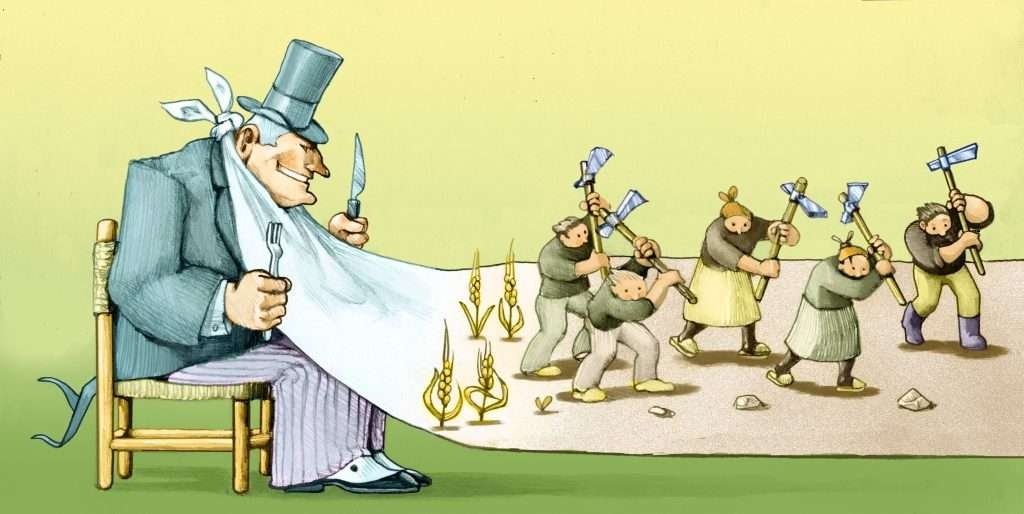
What Is Capitalism?
Capitalism is an economic system that organizes how goods and services are produced, sold, and distributed in a society. At its core, capitalism is based on private ownership, voluntary exchange, and competition in markets. It shapes how businesses operate, how people earn money, and how everyday products—from phones to food—are made available.
Although capitalism exists in many different forms around the world, most versions share a few basic ideas.
The main features of capitalism
1. Private ownership
In a capitalist system, individuals and companies can own property and businesses. This includes factories, shops, land, technology, and tools. A person can start a business, own it, and decide how it is run.
This is different from systems where the government owns most industries.
2. Markets and voluntary exchange
Capitalism relies on markets. A market is any place—physical or online—where buyers and sellers trade. Prices are mainly set by supply and demand rather than by government orders.
If many people want a product and there is little of it, the price usually rises. If there is a lot of something and few people want it, the price usually falls.
People choose what to buy, and businesses choose what to sell. The idea is that both sides enter trades voluntarily because they believe they will benefit.
3. Competition
Businesses compete with each other for customers. This competition encourages companies to improve quality, lower prices, and create new products. If a business fails to satisfy customers, it may lose money or even close.
Supporters of capitalism believe competition helps push innovation and efficiency.
4. Profit as a motive
In capitalism, profit plays a central role. Businesses aim to earn more money than they spend. Profit motivates entrepreneurs to take risks, invest in new ideas, and expand production.
Profit is also a signal. If many people buy a product, the business earns more profit, suggesting that the product is valuable to consumers.
How capitalism works in everyday life
Imagine a company that makes sports shoes. The owners decide what shoes to design, how many to produce, and how much to charge. They hire workers, buy materials, and sell the shoes to customers.
If customers like the shoes and buy a lot of them, the company earns profit and may grow. If customers do not like them, sales drop and the company may shrink or fail. Other shoe companies are also competing, offering different designs and prices.
In this way, millions of individual decisions—by shoppers, workers, and business owners—combine to shape the whole economy.
The role of government in capitalism
Capitalism does not mean the government does nothing. In most real countries, the government plays an important role.
Governments usually:
-
protect private property and enforce contracts
-
set safety and labor rules
-
collect taxes
-
provide public services such as roads, schools, and police
-
regulate some industries, such as banking, energy, and healthcare
The difference between countries is often not whether they are capitalist, but how much the government intervenes in markets and how strong social support systems are.
A brief history of capitalism
Capitalism developed gradually in Europe between the 16th and 18th centuries. As trade expanded and new technologies appeared, private businesses became more important. Over time, large industries replaced many small workshops.
The Industrial Revolution greatly accelerated capitalism. Factories, machines, and mass production transformed how goods were made. This also created large working populations in cities and new social challenges.
During the 19th and 20th centuries, capitalism spread around the world. Different countries adapted it to their own political and cultural systems.
Different forms of capitalism
There is no single, perfect model of capitalism. In practice, countries combine markets with government policies in different ways.
Some common types include:
Free-market capitalism
The government plays a smaller role in regulating businesses and markets. Supporters argue that this allows innovation and economic growth to happen more freely.
Social or mixed capitalism
Markets remain central, but the government provides strong social programs, such as healthcare, education, and unemployment support. Many European countries follow versions of this model.
State-influenced capitalism
Private businesses exist, but the government strongly guides major industries and investment. Some countries use this approach to steer economic development.
All of these systems still rely on private ownership and markets, which is why they are considered capitalist.
Advantages of capitalism
Supporters of capitalism often point to several strengths.
Encourages innovation
Because businesses compete and seek profit, they are motivated to create new products and better technology. Many major inventions and services have come from private companies operating in competitive markets.
Efficient use of resources
Prices send information. If something becomes more valuable or scarce, rising prices signal producers to make more of it. This helps coordinate production without a central authority planning everything.
Personal choice and freedom
Consumers can usually choose what to buy, and individuals can choose where to work, start businesses, or invest money. This flexibility is seen as a form of economic freedom.
Economic growth
Historically, capitalist systems have often produced rapid economic growth and rising living standards, especially when combined with education and stable institutions.
Criticisms and challenges of capitalism
Capitalism also has important weaknesses and ongoing debates.
Inequality
Wealth and income can become very unevenly distributed. Some people or companies may gain enormous economic power, while others struggle to meet basic needs.
Job insecurity and working conditions
Because businesses focus on profit, workers can face layoffs, low wages, or unstable employment, especially when competition is intense or technology replaces jobs.
Market failures
Markets do not always produce good outcomes on their own. For example, pollution harms the environment, but companies may not pay the full cost of that damage unless regulations exist.
Concentration of power
Large corporations can dominate markets, reduce competition, and influence politics. This can weaken the benefits that competition is supposed to provide.
Capitalism and society
Capitalism is not only an economic system. It also affects culture and social life. Advertising, consumer habits, and career choices are shaped by market values. Success is often measured in income, wealth, or business growth.
At the same time, many societies try to balance capitalism with social goals such as fairness, public health, environmental protection, and equal opportunity. This balance is one of the central political debates in modern countries.
Capitalism compared to other systems
Capitalism is often compared with socialism or centrally planned economies. In those systems, the government owns most major industries and decides what to produce and how resources are distributed.
In capitalism, those decisions are mostly made by private individuals and businesses through markets. In reality, however, most countries use mixed systems that combine elements of both approaches.
Conclusion
Capitalism is an economic system built on private ownership, market exchange, competition, and the pursuit of profit. It shapes how goods are produced, how people work, and how wealth is created.
It has helped drive innovation, economic growth, and technological progress. At the same time, it creates serious challenges, including inequality, environmental problems, and market power.
Understanding capitalism means recognizing both its strengths and its limits. Rather than being a single fixed model, capitalism is a flexible system that changes depending on how societies choose to regulate markets, protect people, and define their economic goals.
- Arts
- Business
- Computers
- Jogos
- Health
- Início
- Kids and Teens
- Money
- News
- Personal Development
- Recreation
- Regional
- Reference
- Science
- Shopping
- Society
- Sports
- Бизнес
- Деньги
- Дом
- Досуг
- Здоровье
- Игры
- Искусство
- Источники информации
- Компьютеры
- Личное развитие
- Наука
- Новости и СМИ
- Общество
- Покупки
- Спорт
- Страны и регионы
- World

 English
 Russian
 French
 Spanish
 Deutsch
 Turkish
 Dutch
Dutch
 Italiano
 Arabic
 Romaian
 Portuguese (Brazil)
 Greek
Greek
