
What Are the Advantages of Capitalism?
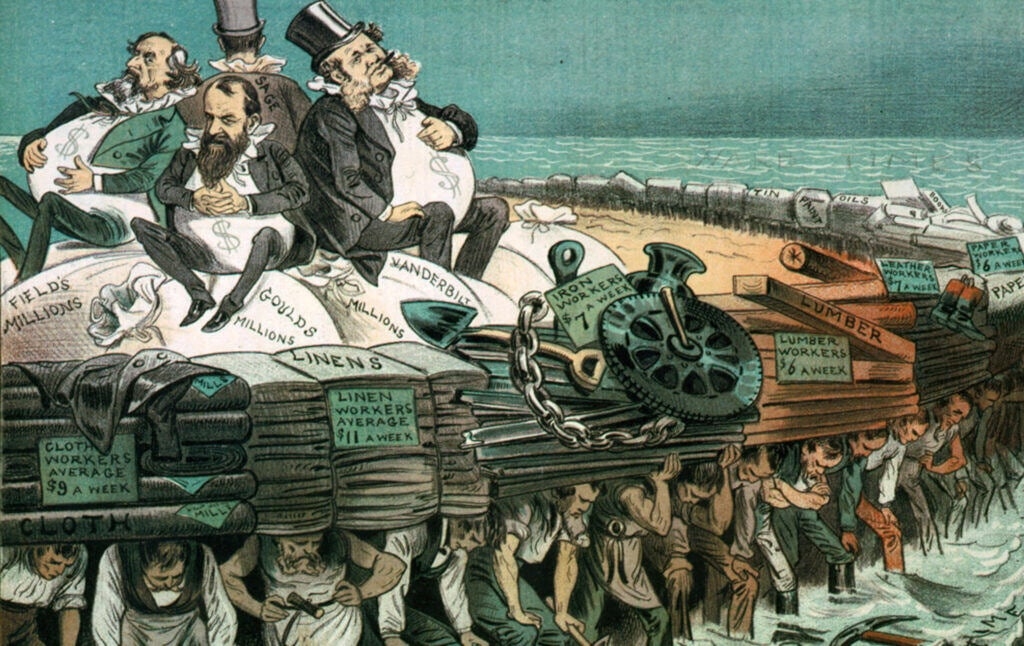
What Are the Advantages of Capitalism?
Innovation, Efficiency, and Economic Growth
Capitalism is an economic system in which individuals and businesses own property and make most production and pricing decisions through markets. Instead of the government deciding what should be produced and how much people should earn, capitalism relies mainly on voluntary exchange, competition, and private ownership. Although capitalism is often criticized for inequality and market failures, it has also played a major role in improving living standards around the world. Three of its most important advantages are innovation, efficiency, and economic growth.
1. Capitalism encourages innovation
One of the strongest advantages of capitalism is how powerfully it motivates people and firms to create new ideas, products, and technologies.
In a capitalist system, entrepreneurs are free to start new businesses and introduce new solutions to problems. If their ideas succeed, they can earn profits. That possibility of reward is a strong incentive. People are more willing to take risks, invest time, and experiment when they know they can personally benefit from success.
This system has helped drive many of the technological breakthroughs that shape modern life. New smartphones, medical technologies, online services, renewable energy tools, and transportation platforms were largely created by private companies competing to offer something better than what already existed. Firms that innovate successfully gain customers and market share, while firms that fail to keep up may disappear. This constant pressure pushes businesses to improve their products.
Capitalism also supports innovation by attracting investment. Investors look for promising ideas and new technologies that could grow in value. When they invest money into startups and research projects, they help transform creative ideas into real products and services. Without this flow of private investment, many innovations would struggle to move beyond the early concept stage.
Another important feature is consumer choice. In capitalist markets, consumers decide what succeeds. If people like a product, they buy it. If they do not, the business must change or leave the market. This direct feedback encourages companies to design products that actually solve real problems instead of simply following government targets or central plans.
While innovation can occur in any economic system, capitalism creates a strong link between creativity and reward. That connection makes innovation faster, more widespread, and more responsive to what people want.
2. Capitalism promotes efficiency
Efficiency refers to producing goods and services using the least amount of resources possible, while still meeting people’s needs. Capitalism encourages efficiency mainly through competition and profit incentives.
In competitive markets, many firms try to sell similar products. If one company can produce the same product at a lower cost, it can offer a lower price and attract more customers. Other firms must then find ways to cut costs, improve processes, or add value. Over time, inefficient firms lose customers or go out of business. This process pushes resources toward businesses that use labor, technology, and materials more effectively.
The profit motive plays a central role. Businesses earn profits when they keep costs lower than their revenues. This encourages managers to organize production carefully, reduce waste, improve supply chains, and adopt better technologies. For example, companies invest in automation, better logistics systems, and improved training for workers to become more productive.
Capitalism also allows prices to guide decision-making. Prices reflect information about supply and demand. When something becomes scarce, its price usually rises. This signals producers to make more of it and signals consumers to use less of it. When a product becomes less valuable to consumers, its price falls, and producers shift their resources elsewhere. These signals help coordinate millions of decisions without a central authority needing to plan every detail.
Another efficiency advantage is flexibility. Businesses in capitalist systems can respond quickly to changes in technology, customer preferences, and global conditions. If people suddenly prefer digital services instead of physical ones, firms can adjust their strategies, open new divisions, or develop new products. This ability to adapt reduces long-term waste and misallocation of resources.
However, efficiency under capitalism is not perfect. Markets can fail in cases such as pollution or public goods. Still, compared to systems that rely heavily on central planning, capitalism generally produces and distributes goods with greater speed and responsiveness.
3. Capitalism supports economic growth
Economic growth refers to an increase in a country’s total production of goods and services over time. Growth matters because it is closely connected to rising incomes, better public services, and improved quality of life.
Capitalism encourages growth through investment, innovation, and productivity improvements. When firms earn profits, they often reinvest part of those profits into new machines, new factories, research, and worker training. These investments increase the economy’s productive capacity. Over time, workers can produce more output in the same number of hours, which raises overall wealth.
Innovation, which is strongly encouraged by capitalism, also fuels growth. New technologies make production faster and cheaper. For example, advances in software, robotics, and communication systems allow companies to operate more efficiently and reach customers across the world. Entire new industries—such as digital media, biotechnology, and e-commerce—have emerged because firms were free to explore new markets and business models.
Capitalism also promotes specialization. Businesses and workers tend to focus on what they do best. This division of labor increases productivity. When firms specialize and trade with each other, total output rises and goods become more affordable for consumers.
Another important aspect is the openness to global trade. Many capitalist economies are closely connected to international markets. By exporting what they produce efficiently and importing what other countries produce better, nations can expand their economic opportunities and grow faster than they could alone.
As economies grow, governments can collect more tax revenue without necessarily increasing tax rates. This allows for greater public spending on education, infrastructure, healthcare, and social programs. In this way, growth generated within a capitalist framework can support broader social development.
4. How these advantages work together
Innovation, efficiency, and economic growth are not separate benefits. They reinforce one another.
Innovation introduces new products and better production methods. These improvements increase efficiency by lowering costs and improving performance. Higher efficiency raises productivity, which supports long-term economic growth. As the economy grows, more resources become available for research, new businesses, and technological development, which again strengthens innovation.
This cycle helps explain why many of the world’s richest and most technologically advanced societies developed under largely capitalist systems.
5. A balanced perspective
It is important to be honest about the limits of capitalism. Markets do not automatically guarantee fairness, environmental protection, or equal opportunity. Without appropriate rules, some firms can gain excessive power, and some people can be left behind. For these reasons, many countries combine capitalism with government regulation, public services, and social protections.
Still, when properly regulated, capitalism offers powerful tools for improving living standards. Its ability to motivate creativity, allocate resources efficiently, and support long-term growth remains one of its greatest strengths.
Conclusion
Capitalism’s main advantages lie in its capacity to promote innovation, encourage efficient use of resources, and drive economic growth. By rewarding new ideas, forcing firms to compete, and allowing markets to guide decisions through prices and consumer choice, capitalism creates a dynamic and flexible economic environment. Although it is not a perfect system and must be supported by strong institutions and fair policies, capitalism has proven to be highly effective at generating technological progress, expanding production, and improving material living conditions for large numbers of people.
- Arts
- Business
- Computers
- Jocuri
- Health
- Home
- Kids and Teens
- Money
- News
- Personal Development
- Recreation
- Regional
- Reference
- Science
- Shopping
- Society
- Sports
- Бизнес
- Деньги
- Дом
- Досуг
- Здоровье
- Игры
- Искусство
- Источники информации
- Компьютеры
- Личное развитие
- Наука
- Новости и СМИ
- Общество
- Покупки
- Спорт
- Страны и регионы
- World

 English
 Russian
 French
 Spanish
 Portuguese
 Deutsch
 Turkish
 Dutch
Dutch
 Italiano
 Arabic
 Portuguese (Brazil)
 Greek
Greek