
What Are the Disadvantages of Capitalism?
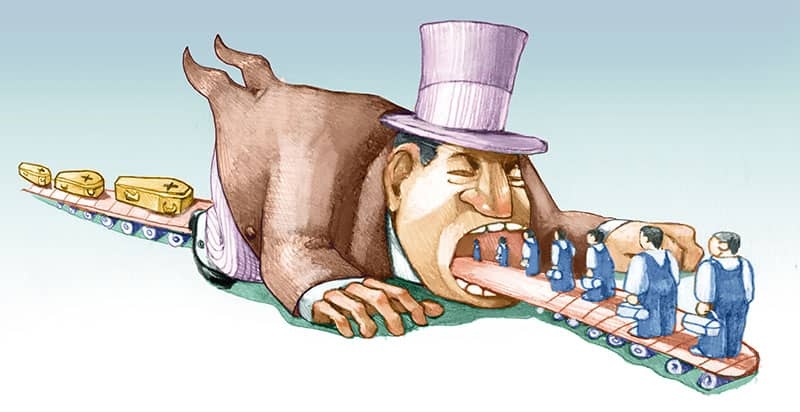
What Are the Disadvantages of Capitalism?
Capitalism is an economic system in which most businesses and resources are privately owned, and decisions about production and prices are mainly guided by the market and profit. It has helped generate innovation, economic growth, and higher living standards in many parts of the world. However, capitalism also has clear weaknesses. Understanding its disadvantages is important for anyone trying to think critically about how modern economies work.
Below are some of the most important problems commonly linked to capitalist systems.
1. Economic inequality
One of the biggest disadvantages of capitalism is the large gap it can create between rich and poor.
In a capitalist system, people who already own property, companies, or investments are able to earn money simply by owning assets. Meanwhile, most people depend mainly on wages. Over time, wealth can grow much faster for owners than for workers. As a result, income and wealth often become concentrated in the hands of a small group.
This inequality can limit social mobility. People born into poorer families may struggle to access good education, safe housing, and healthcare. Even if they work hard, they may not have the same opportunities as people who start life with financial advantages.
Extreme inequality can also create social tension and weaken trust in economic and political institutions.
2. Profit can be prioritized over human needs
Capitalism is driven by profit. While profit motivates innovation and efficiency, it can also push companies to ignore important social needs.
Businesses usually focus on activities that bring the highest return. This means essential services such as affordable housing, public transportation, or basic healthcare may be underprovided if they are not profitable enough. In some cases, companies may even avoid serving poor or remote communities because doing so does not generate sufficient revenue.
When profit becomes the main goal, decisions that affect people’s well-being—such as workplace safety, product quality, or customer protection—can be treated as costs rather than responsibilities.
3. Exploitation of workers
Another common criticism of capitalism is the risk of worker exploitation.
Employers generally aim to minimize labor costs in order to increase profits. This can lead to low wages, unstable employment, long working hours, and limited job security, especially in industries with weak labor protections.
In theory, workers are free to choose where they work. In practice, many people have very few realistic options. When unemployment is high or when certain skills are in oversupply, workers may feel forced to accept poor conditions simply to survive.
Without strong labor laws and unions, the balance of power between employers and workers can become heavily unequal.
4. Environmental damage
Capitalism often encourages overproduction and overconsumption.
Companies compete to sell more goods and services in order to grow and increase profits. This can lead to excessive use of natural resources, deforestation, pollution, and high levels of waste. Environmental harm is frequently treated as an “external cost”—a problem that affects society but does not appear directly in a company’s financial accounts.
For example, a factory may profit from cheap production methods while releasing pollution into the air or water. The company benefits, but the public pays the price through health problems and environmental degradation.
Although green technologies and environmental regulations can reduce this problem, capitalism on its own does not naturally protect the environment.
5. Market instability and economic crises
Capitalist economies tend to go through cycles of growth and recession.
Because investment decisions are driven by expectations and competition, markets can become overly optimistic. Businesses may expand too quickly, take on too much debt, or invest in risky projects. When confidence suddenly drops, spending and investment can fall sharply, leading to recessions and job losses.
Financial crises, such as stock market crashes or banking failures, are not rare in capitalist systems. These crises can severely affect ordinary people who had little role in causing them. Workers may lose jobs, savings, or homes while large companies sometimes receive government support to avoid collapse.
This instability can create long-term uncertainty for families and communities.
6. Consumerism and social pressure
Capitalism depends on continuous consumption. To maintain growth, businesses must persuade people to keep buying new products.
Advertising and marketing often encourage the idea that happiness, success, and social status depend on what people own. This can create strong pressure to spend money, even when individuals cannot afford it. It may also promote short-term satisfaction rather than long-term well-being.
Over time, consumer culture can weaken other values such as community, creativity, and personal development. People may begin to judge themselves and others mainly by income, brand choices, or lifestyle instead of character or contribution to society.
7. Monopoly power and reduced competition
Although capitalism is often associated with free competition, real markets do not always remain competitive.
Successful companies can grow so large that they dominate entire industries. When a small number of firms control the market, they may influence prices, reduce product quality, and block new competitors from entering. This can limit consumer choice and slow innovation.
Large corporations also have significant political and economic influence. They may shape regulations in ways that protect their own interests rather than the public good. In such cases, capitalism can drift away from fair competition and toward corporate concentration of power.
8. Short-term thinking
Capitalist businesses are often under pressure to show quick financial results.
Shareholders and investors usually expect steady and rapid returns. This can encourage managers to focus on short-term profits instead of long-term stability, research, employee development, or environmental responsibility.
For example, a company might reduce training programs, cut maintenance budgets, or outsource jobs to save money immediately, even if these decisions weaken the company and the economy in the long run.
Short-term thinking can reduce innovation that requires patience and sustained investment, such as scientific research or infrastructure development.
9. Unequal access to essential services
In systems where education, healthcare, and housing are heavily influenced by the market, access often depends on income.
High-quality services may be available primarily to those who can pay more. This can reinforce existing social and economic inequalities. People with fewer resources may receive lower-quality education and healthcare, limiting their future opportunities and life outcomes.
When basic needs become commercial products, the idea of equal opportunity becomes harder to achieve.
Conclusion
Capitalism has helped drive technological progress and economic growth across the world. However, it also creates serious challenges. Among its main disadvantages are economic inequality, worker exploitation, environmental damage, market instability, excessive consumerism, and the concentration of corporate power.
The central weakness of capitalism is not simply that it allows people to make profits, but that it often places profit above social, environmental, and long-term human needs. For this reason, many countries try to combine capitalist markets with government regulation, public services, and social protections.
A realistic understanding of capitalism requires recognizing both its strengths and its limits. Only by acknowledging its disadvantages can societies design systems that aim for economic success while also protecting fairness, stability, and human well-being.
- Arts
- Business
- Computers
- Jeux
- Health
- Domicile
- Kids and Teens
- Argent
- News
- Personal Development
- Recreation
- Regional
- Reference
- Science
- Shopping
- Society
- Sports
- Бизнес
- Деньги
- Дом
- Досуг
- Здоровье
- Игры
- Искусство
- Источники информации
- Компьютеры
- Личное развитие
- Наука
- Новости и СМИ
- Общество
- Покупки
- Спорт
- Страны и регионы
- World

 English
 Russian
 Spanish
 Portuguese
 Deutsch
 Turkish
 Dutch
Dutch
 Italiano
 Arabic
 Romaian
 Portuguese (Brazil)
 Greek
Greek
