
When Did Capitalism Begin?
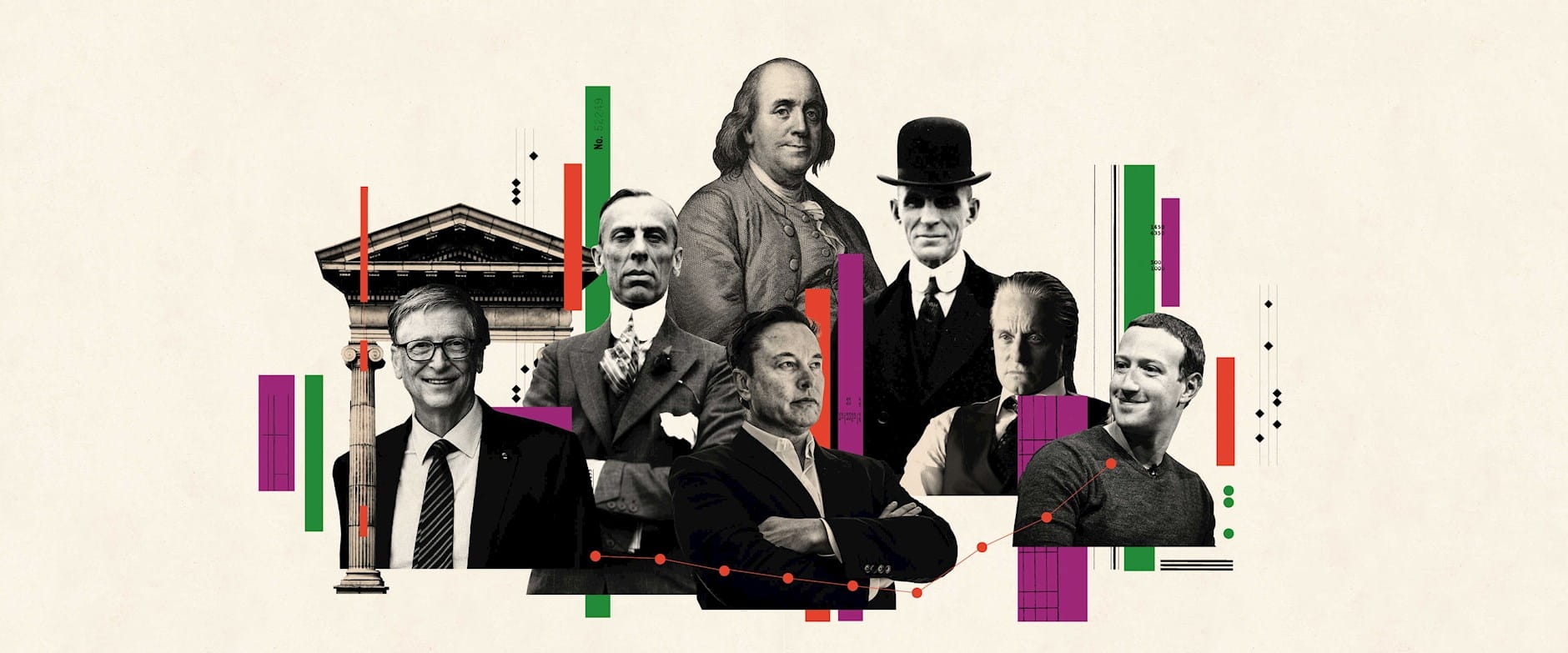
When Did Capitalism Begin?
The question “When did capitalism begin?” seems simple, but historians and economists have argued about it for more than a century. The difficulty is not a lack of evidence, but a lack of agreement on what capitalism actually means. Is it a system based on markets? On private property? On wage labor? On profit-driven investment? Depending on which features we treat as essential, capitalism can be dated to very different periods in history.
Rather than offering a single starting point, it is more accurate to understand capitalism as a system that emerged gradually, through several historical stages.
What do we mean by capitalism?
Most scholars agree that capitalism involves at least four core elements:
-
Private ownership of the means of production (such as land, factories, and tools),
-
Production for profit, rather than mainly for direct use,
-
Markets that play a central role in distributing goods and services,
-
Wage labor, where most people work for employers in exchange for pay.
All four of these have existed separately at various times in history. What makes capitalism distinctive is that they become dominant and organized into a single, self-reinforcing system.
This distinction matters, because markets and private property are far older than capitalism itself.
Ancient and medieval economies were not capitalist
Long-distance trade existed in ancient Mesopotamia, Greece, Rome, China, and the Islamic world. Merchants sought profit, used credit, and formed trading networks across continents. Some historians have even described these societies as having “commercial” or “proto-capitalist” features.
However, most researchers argue that these societies were not capitalist. The reason is structural. Their economies were still mainly based on:
-
agriculture,
-
political control over land and labor,
-
slavery, serfdom, or household production,
-
and social status rather than market competition.
In medieval Europe, for example, most people were peasants working land owned by lords. Production was largely for subsistence. Markets existed, but they were limited in scale and importance. Wealth and power were primarily tied to land and political authority, not to continuous investment for profit.
In other words, markets existed within non-capitalist societies.
The late medieval roots: commercial expansion
Many historians begin the story of capitalism’s emergence between the 13th and 16th centuries, especially in parts of Western Europe.
Italian city-states such as Venice, Genoa, and Florence developed advanced commercial institutions. They had:
-
banking systems,
-
accounting techniques like double-entry bookkeeping,
-
joint ventures and early forms of financial contracts,
-
and large-scale international trade.
These developments created a class of professional merchants and financiers who reinvested profits and accumulated capital. Yet even here, most production still occurred in small workshops or households, and most people were not wage workers.
This period is often described as commercial capitalism—a system centered on trade rather than industrial production.
It laid important foundations, but it still did not resemble modern capitalism.
The early modern transformation (1500–1800)
A stronger case for the birth of capitalism can be made between the 16th and 18th centuries.
Several major changes came together during this period:
-
European overseas expansion created global trading networks.
-
Colonization brought massive flows of silver, sugar, cotton, and other commodities.
-
States supported merchants and chartered trading companies.
-
Land ownership and farming practices were reorganized, especially in England.
One especially important change occurred in rural England: the gradual breakdown of traditional village farming and common land systems. Land was consolidated, rented for profit, and increasingly operated according to market logic. Many rural workers lost access to land and became dependent on paid work.
This process helped create two central social groups:
-
people who owned productive assets,
-
and people who had little choice but to sell their labor.
For many historians, this social transformation is a key step toward capitalism.
Why England matters
England is often highlighted because it combined several crucial features earlier and more fully than most other regions.
By the 17th and 18th centuries, England had:
-
a large and relatively free labor market,
-
widespread tenant farming driven by profit,
-
expanding domestic markets,
-
and strong legal protections for private property and contracts.
Economic historians such as Robert Brenner have argued that what made England special was not trade alone, but the way social relations of production changed. Landlords, tenants, and workers were increasingly bound by market pressures. Survival depended on competitiveness and productivity, not just tradition or political status.
In this view, capitalism began not primarily in cities and trade, but in the countryside.
The Industrial Revolution and the strongest definition
For many people, capitalism truly begins with the Industrial Revolution, roughly from the late 18th century onward.
This is the moment when all the defining features of capitalism become dominant:
-
large-scale private investment in machinery and factories,
-
systematic production for profit,
-
continuous technological innovation,
-
a workforce mainly made up of wage laborers,
-
and competitive firms operating in expanding markets.
Industrial capitalism transformed everyday life. Work moved from households and small workshops into factories. Time discipline, productivity targets, and managerial control became central to economic organization.
If one defines capitalism as an economy centered on industrial production and capital accumulation, then its beginning clearly lies in the late 1700s and early 1800s.
Was capitalism created suddenly?
A common mistake is to search for a single year or event when capitalism “started.” No law, revolution, or invention created it overnight.
Instead, capitalism emerged through overlapping processes:
-
commercial expansion,
-
legal and institutional change,
-
transformation of land ownership,
-
growth of wage labor,
-
and increasing dependence on markets for survival.
These changes unfolded at different speeds in different places. In parts of Western Europe they came earlier; in other regions they were delayed or imposed through colonial rule.
Capitalism was therefore not just an economic shift. It was also a deep social reorganization.
A debate among historians
There is no consensus on a precise starting date.
Broadly speaking, historians fall into three main positions:
-
Early origins view
Capitalism began with medieval or Renaissance trade and finance (roughly 1200–1500). -
Early modern origins view
Capitalism emerged with agrarian and social changes in early modern Europe, especially England (roughly 1500–1700). -
Industrial origins view
Capitalism truly began only with industrialization (after about 1750).
Each view emphasizes a different defining feature of capitalism: trade, social relations, or industrial production.
A practical answer
If you want a careful and defensible answer, the most balanced conclusion is this:
Capitalism did not begin at a single moment. It emerged gradually in Europe between the late medieval period and the Industrial Revolution, and became a fully developed system only in the late eighteenth and nineteenth centuries.
Earlier societies had markets and merchants, but they were not organized around permanent capital accumulation and wage labor. What changed in early modern Europe was that market competition and profit became the main forces shaping how people worked, produced, and survived.
In short, capitalism was not invented. It grew—slowly, unevenly, and through profound social change.
- Arts
- Business
- Computers
- Jogos
- Health
- Início
- Kids and Teens
- Money
- News
- Personal Development
- Recreation
- Regional
- Reference
- Science
- Shopping
- Society
- Sports
- Бизнес
- Деньги
- Дом
- Досуг
- Здоровье
- Игры
- Искусство
- Источники информации
- Компьютеры
- Личное развитие
- Наука
- Новости и СМИ
- Общество
- Покупки
- Спорт
- Страны и регионы
- World

 English
 Russian
 French
 Spanish
 Deutsch
 Turkish
 Dutch
Dutch
 Italiano
 Arabic
 Romaian
 Portuguese (Brazil)
 Greek
Greek