
Who Invented Capitalism?
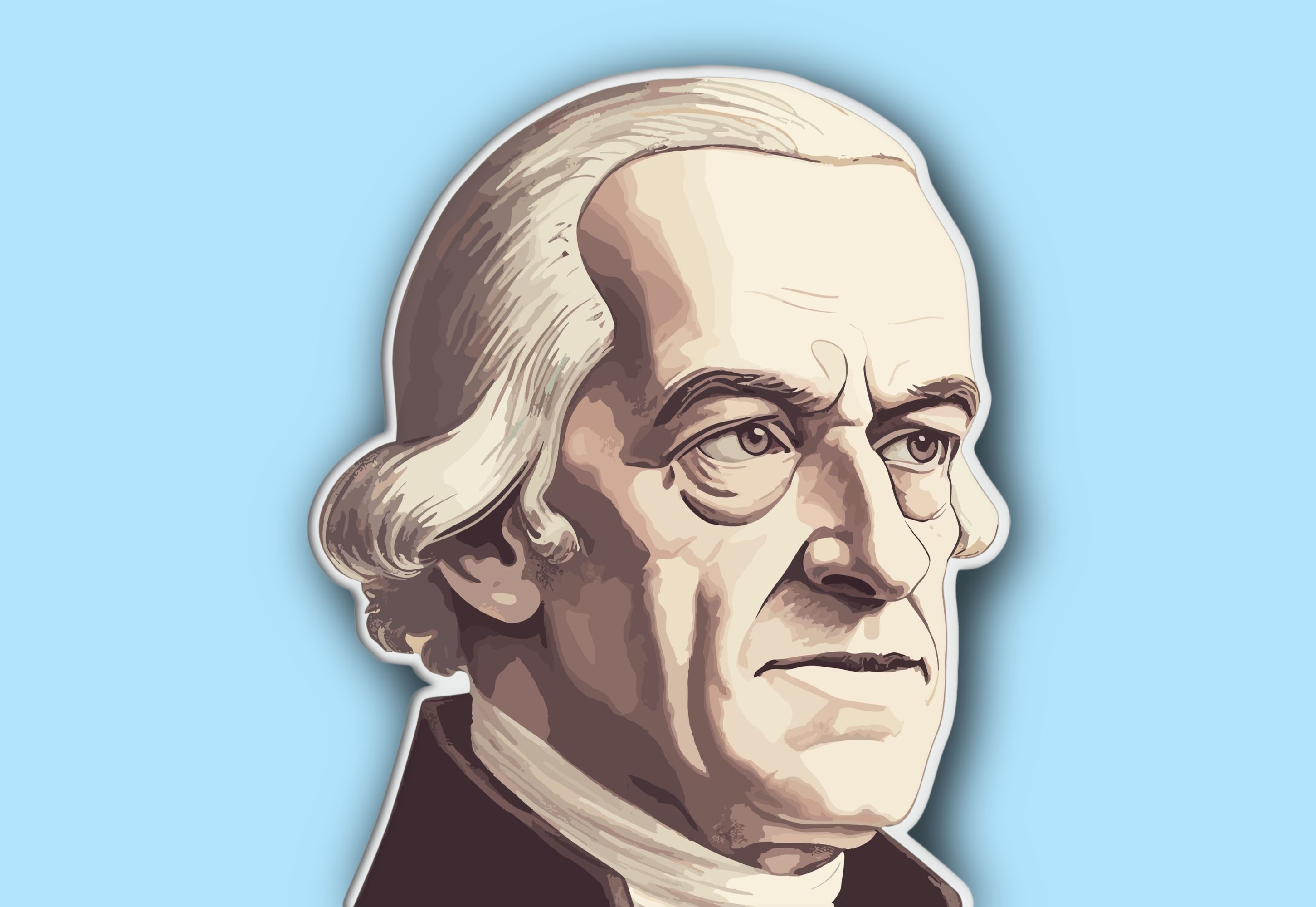
Who Invented Capitalism?
When people ask, “Who invented capitalism?”, they are usually hoping for a simple answer—one person, one place, one moment in history. The honest answer is more complicated and much more interesting: capitalism was not invented by a single person. It developed gradually over centuries, shaped by changing technology, politics, culture, and economic needs.
However, one thinker—Adam Smith—is often called the “father of capitalism.” To understand why, and why that title is only partly correct, we need to look at both the ideas behind capitalism and the real-world systems that slowly turned those ideas into everyday life.
What is capitalism, in simple terms?
Capitalism is an economic system in which:
-
most businesses and property are privately owned,
-
people produce goods and services to make a profit,
-
prices and production are mainly guided by markets and competition, not by the government.
That definition may sound modern, but some of its features existed long before the word “capitalism” was even used.
There was no single inventor
Unlike something like the telephone or the light bulb, capitalism is not a machine. It is a social and economic system. Systems like this usually evolve slowly as societies change.
Trade, money, private property, and profit-seeking behavior existed thousands of years ago in places such as:
-
ancient Mesopotamia,
-
ancient Greece and Rome,
-
medieval Europe,
-
the Islamic world,
-
China and India.
Merchants, bankers, landowners, and investors were already doing things that look very “capitalist” long before modern capitalism existed. But these societies were not fully capitalist, because markets did not dominate the whole economy. Most people were farmers working mainly to survive, not to compete in open markets.
So the real question is not “Who invented capitalism?” but rather:
When and how did capitalism become a dominant economic system?
The long road toward capitalism
Most historians point to late medieval and early modern Europe as the place where capitalism slowly began to take shape.
Between roughly the 1300s and the 1700s, several important changes happened.
1. Growth of long-distance trade
European merchants started trading on a much larger scale with Africa, Asia, and the Americas. This required:
-
large amounts of money,
-
organized companies,
-
reliable banking and credit systems.
New financial tools such as insurance, joint-stock companies, and stock exchanges appeared. The Dutch Republic and later England became major centers of global trade.
2. The rise of banking and finance
Italian city-states such as Florence, Venice, and Genoa developed sophisticated banking systems. Families such as the Medici helped create networks of credit and finance that allowed businesses to expand.
This mattered because capitalism depends heavily on investment—using money today to make more money tomorrow.
3. Changes in land and labor
In England especially, land that had once been used collectively by villagers was increasingly turned into private property. Farmers were pushed off the land and had to find paid work elsewhere.
This created two key groups that capitalism depends on:
-
people who own capital (land, factories, money),
-
people who sell their labor for wages.
Without a large wage-working population, industrial capitalism would not have been possible.
Mercantilism: a step toward capitalism
Before capitalism fully developed, European governments followed an economic approach called mercantilism.
Mercantilist states tried to:
-
control trade,
-
protect domestic industries,
-
build national wealth through colonies and exports.
This system was not capitalism as we know it, because governments played a very strong role in managing the economy. But mercantilism helped build the commercial networks, industries, and financial systems that later supported capitalism.
Adam Smith: the most famous name
If there is one person most often linked to the “invention” of capitalism, it is Adam Smith, a Scottish philosopher and economist.
In 1776, he published The Wealth of Nations, one of the most influential books in economic history.
Adam Smith did not create capitalism in practice. Instead, he did something just as important:
He explained and defended how a market-based economy could work.
Smith argued that:
-
individuals pursuing their own interests could unintentionally benefit society,
-
competition encourages efficiency and innovation,
-
governments should generally avoid heavy interference in markets.
He famously used the idea of an “invisible hand” to describe how markets can coordinate people’s actions without central control.
This is why Adam Smith is often called the “father of capitalism.” He provided the clearest and most powerful early explanation of how a capitalist economy might function well.
But it is important to be accurate:
Smith described capitalism—he did not invent it.
The Industrial Revolution made capitalism dominant
The real turning point came with the Industrial Revolution, beginning in Britain in the late 1700s.
New technologies such as:
-
steam engines,
-
mechanized textile production,
-
factory systems,
dramatically increased production. Large factories required large investments and large workforces. This pushed societies even further toward a system in which:
-
business owners invested capital,
-
workers earned wages,
-
markets determined prices and profits.
At this point, capitalism became more than a commercial system for merchants. It became the main way entire societies organized work, production, and wealth.
Who named capitalism?
Interestingly, the word “capitalism” itself became popular much later, especially in the 1800s.
One of the most influential writers to use and shape the term was Karl Marx. Marx was a sharp critic of capitalism, not a supporter. He analyzed how capitalist societies worked and focused on issues such as inequality, exploitation, and class conflict.
So even the language we use to talk about capitalism was partly shaped by people who opposed it.
So, who really “invented” capitalism?
The most accurate answer is:
No one invented capitalism.
Instead, capitalism emerged from:
-
centuries of expanding trade,
-
new financial institutions,
-
political and legal changes,
-
technological development,
-
shifts in land ownership and labor.
Many different people—merchants, bankers, factory owners, lawmakers, engineers, and workers—contributed to the system without ever planning to create something called “capitalism.”
Adam Smith stands out because he gave the system a powerful intellectual foundation. But without the historical changes already underway in Europe, his ideas would not have had the same impact.
A simple way to remember it
If you want a clear and honest way to answer the question in school or in an essay, you can say:
-
Capitalism was not invented by a single person.
-
It developed gradually in Europe between the late Middle Ages and the Industrial Revolution.
-
Adam Smith is called the “father of capitalism” because he explained and defended the system, not because he created it.
Why this matters
Understanding that capitalism evolved over time helps us see that it is not a natural or permanent feature of human society. It is one way—among many—that people have organized economic life.
Just as feudalism replaced older systems, and capitalism replaced feudal economies in much of the world, future societies may organize production and wealth in different ways.
In other words, capitalism is not the result of one great invention. It is the result of history.
- Arts
- Business
- Computers
- Spiele
- Health
- Startseite
- Kids and Teens
- Geld
- News
- Personal Development
- Recreation
- Regional
- Reference
- Science
- Shopping
- Society
- Sports
- Бизнес
- Деньги
- Дом
- Досуг
- Здоровье
- Игры
- Искусство
- Источники информации
- Компьютеры
- Личное развитие
- Наука
- Новости и СМИ
- Общество
- Покупки
- Спорт
- Страны и регионы
- World

 English
 Russian
 French
 Spanish
 Portuguese
 Turkish
 Dutch
Dutch
 Italiano
 Arabic
 Romaian
 Portuguese (Brazil)
 Greek
Greek