
Is Remarketing Effective? A Data-Driven Guide to Performance, Benefits, and Real Results
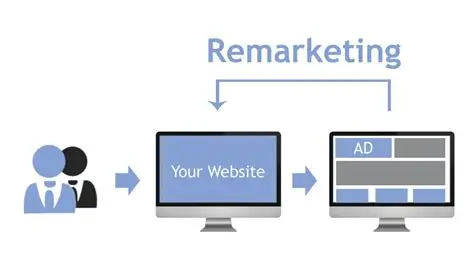
Many businesses invest in remarketing because they have heard it “works.” But an important question remains: Is remarketing actually effective?
With rising advertising costs, stricter privacy regulations, and more competition for attention, marketers must justify every dollar spent. Simply running remarketing ads is no longer enough. Campaigns must deliver measurable value.
In 2026, remarketing continues to be one of the highest-performing digital marketing strategies when implemented correctly. However, its effectiveness depends on data quality, strategy, creative execution, and customer experience.
This article examines how effective remarketing really is, using performance metrics, industry benchmarks, psychological principles, case examples, and best practices.
Understanding Remarketing Effectiveness
Remarketing is effective because it targets people who already know your brand.
These users have:
-
Visited your website
-
Viewed products
-
Read content
-
Watched videos
-
Interacted with ads
They are “warm” prospects.
Warm audiences convert more easily than cold ones.
Why Remarketing Works: The Psychology
Familiarity Effect
People trust brands they recognize.
Repeated exposure increases comfort.
Decision Reinforcement
Users often need reassurance before buying.
Remarketing reinforces earlier interest.
Memory Triggering
Ads remind users of forgotten intentions.
Risk Reduction
Seeing a brand multiple times reduces perceived risk.
Social Proof
Remarketing ads often include reviews and testimonials.
This builds confidence.
Key Performance Metrics for Remarketing
Effectiveness is measured through data.
Conversion Rate
Remarketing typically delivers:
2x–5x higher conversion rates than cold traffic.
Cost Per Acquisition (CPA)
Remarketing CPAs are often:
30%–60% lower than prospecting campaigns.
Return on Ad Spend (ROAS)
Strong remarketing campaigns achieve:
3x–8x ROAS in many industries.
Click-Through Rate (CTR)
Remarketing CTRs are:
2x–4x higher than generic ads.
Customer Lifetime Value (CLV)
Remarketing increases repeat purchases.
This boosts lifetime value.
Industry Performance Benchmarks
E-Commerce
-
Conversion rate: 4%–10%
-
ROAS: 3x–8x
SaaS
-
Lead conversion: 6%–15%
-
CPA reduction: 25%–50%
Local Services
-
Booking rate: 8%–20%
Education
-
Enrollment lift: 20%–45%
Travel
-
Rebooking increase: 15%–35%
Results vary by strategy.
When Remarketing Is Most Effective
High-Traffic Websites
More visitors = better audiences.
Strong Brand Identity
Recognizable brands convert better.
Clear Purchase Paths
Simple funnels improve results.
Quality Landing Pages
Good UX boosts performance.
Valuable Offers
Strong incentives improve conversions.
When Remarketing Is Less Effective
Low Website Traffic
Small audiences limit impact.
Poor Product-Market Fit
No ad can fix bad offerings.
Weak Tracking
Bad data ruins targeting.
Generic Messaging
Irrelevant ads reduce engagement.
Overexposure
Too many ads annoy users.
Comparing Remarketing to Other Channels
| Channel | Conversion Rate | Cost | Scalability | Trust |
|---|---|---|---|---|
| Remarketing | High | Low | Medium | High |
| Search Ads | Medium | Medium | High | Medium |
| Social Prospecting | Low | Medium | High | Low |
| Influencer | Medium | High | Low | Medium |
| Display Ads | Low | Low | High | Low |
Remarketing ranks among the best.
Types of Remarketing and Their Effectiveness
Dynamic Remarketing
Highest performer for e-commerce.
Delivers strong personalization.
Customer List Remarketing
Very high ROI.
Strong loyalty impact.
Cart Abandonment Remarketing
Top conversion driver.
Often converts at 10%+.
Video Remarketing
Best for brand recall.
Moderate direct conversions.
App Remarketing
Strong for retention.
Improves lifetime value.
Case Study: Online Subscription Business
A meal kit service used remarketing.
Strategy:
-
Website visitors → Display ads
-
Abandoners → Discount ads
-
Customers → Loyalty ads
Results:
-
41% conversion increase
-
35% lower CPA
-
28% higher retention
Integrated remarketing drove growth.
Role of AI in Remarketing Effectiveness
In 2026, AI plays a major role.
AI improves:
-
Audience prediction
-
Creative optimization
-
Bid management
-
Timing delivery
-
Channel selection
This increases efficiency.
How Privacy Changes Affect Effectiveness
Privacy rules have reduced tracking.
Impact includes:
-
Smaller audiences
-
More modeling
-
First-party focus
Brands with strong data remain effective.
Those without struggle.
Measuring True Effectiveness
Avoid relying only on last-click data.
Use:
-
Multi-touch attribution
-
Assisted conversion tracking
-
Lift studies
-
Incrementality testing
These reveal real impact.
How to Improve Remarketing Effectiveness
Segment by Intent
Prioritize high-interest users.
Personalize Messaging
Match ads to behavior.
Use Sequential Messaging
Tell a story over time.
Refresh Creatives
Prevent ad fatigue.
Optimize Landing Pages
Improve user experience.
Combine Channels
Integrate email and ads.
Common Myths About Remarketing
“It’s Just Annoying Ads”
Good remarketing is helpful.
“It Only Works for E-Commerce”
Works for services, B2B, and SaaS.
“It’s Expensive”
Usually more cost-effective.
“It’s Outdated”
Still evolving.
Long-Term Impact of Remarketing
Beyond conversions, remarketing improves:
-
Brand equity
-
Customer loyalty
-
Retention rates
-
Advocacy
-
Market share
These benefits compound over time.
Example: Local Service Business
A plumbing company used remarketing.
Targeted:
-
Quote page visitors
-
Emergency service viewers
Results:
-
22% booking increase
-
Lower lead costs
-
Higher repeat business
Remarketing worked locally.
Future of Remarketing Effectiveness
Trends include:
-
Predictive targeting
-
Privacy-safe modeling
-
Cross-device identity
-
AI personalization
-
Real-time optimization
Effectiveness will continue improving.
Is Remarketing Worth It in 2026?
For most businesses, yes.
Conditions for success:
-
Quality traffic
-
Proper tracking
-
Smart segmentation
-
Strong creatives
-
Ethical data practices
Without these, results suffer.
Conclusion
Remarketing is one of the most effective digital marketing strategies available. By targeting users who already know your brand, it delivers higher conversion rates, lower acquisition costs, stronger loyalty, and better long-term value.
However, its effectiveness is not automatic. Success depends on data quality, segmentation, creative relevance, privacy compliance, and continuous optimization.
In 2026, businesses that treat remarketing as a strategic system rather than a simple ad tactic achieve consistent, scalable growth.
When done right, remarketing does not just generate sales. It builds lasting customer relationships.
- Arts
- Business
- Computers
- Jogos
- Health
- Início
- Kids and Teens
- Money
- News
- Personal Development
- Recreation
- Regional
- Reference
- Science
- Shopping
- Society
- Sports
- Бизнес
- Деньги
- Дом
- Досуг
- Здоровье
- Игры
- Искусство
- Источники информации
- Компьютеры
- Личное развитие
- Наука
- Новости и СМИ
- Общество
- Покупки
- Спорт
- Страны и регионы
- World

 English
 Russian
 French
 Spanish
 Deutsch
 Turkish
 Dutch
Dutch
 Italiano
 Arabic
 Romaian
 Portuguese (Brazil)
 Greek
Greek