
What is Monopoly Capitalism? Large Corporations and Market Power
What is Monopoly Capitalism? Large Corporations and Market Power
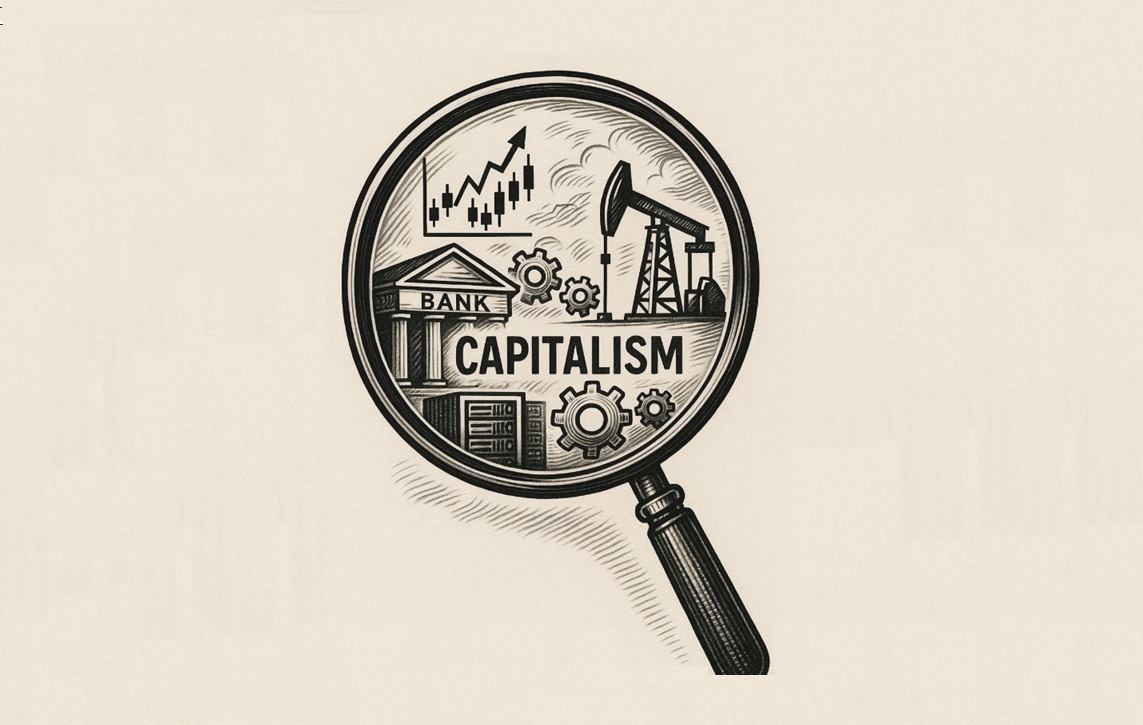
Monopoly capitalism is an economic concept that refers to a stage of capitalism where a few large corporations dominate entire industries, controlling markets, prices, and resources. Unlike the classical model of capitalism, which emphasizes competition among many small producers, monopoly capitalism is characterized by concentration of economic power in the hands of a small number of firms. This concentration affects not only the economy but also society, politics, and global trade.
Origins of Monopoly Capitalism
The idea of monopoly capitalism emerged in the early 20th century. Economists like Vladimir Lenin and John A. Hobson observed that as industries matured, competition naturally declined, giving rise to monopolies and oligopolies. In simple terms, as businesses grow, larger firms can buy out competitors, control supply chains, and dominate markets. This leads to a system where market power is concentrated rather than distributed among many small producers.
Industrialization and technological innovation accelerated this trend. In sectors such as steel, oil, telecommunications, and automobiles, a handful of corporations were able to control significant portions of production and distribution. By limiting competition, these firms could set prices, dictate wages, and influence consumer choice.
Characteristics of Monopoly Capitalism
Several features define monopoly capitalism:
-
Concentration of Capital: A few corporations hold a large share of industry capital. For example, in tech, companies like Apple, Microsoft, and Amazon dominate their sectors. Their size allows them to outspend smaller competitors in research, marketing, and infrastructure.
-
Market Power: Large corporations can influence prices and supply. Unlike in competitive markets, where prices fluctuate according to supply and demand, monopolies can maintain higher prices because consumers have limited alternatives.
-
Barriers to Entry: New firms find it difficult to enter markets dominated by monopolies. High startup costs, exclusive control over resources, and brand loyalty create obstacles for potential competitors.
-
Integration and Mergers: Monopoly capitalism often grows through horizontal and vertical integration. Horizontal integration occurs when companies merge with competitors in the same industry. Vertical integration happens when a company controls multiple stages of production, from raw materials to retail.
-
Influence Beyond Economics: Large corporations often influence politics and regulation. By lobbying governments, funding campaigns, or participating in policymaking, they can shape laws in ways that reinforce their market power.
Large Corporations and Their Impact
Large corporations are the primary agents of monopoly capitalism. Their influence extends beyond business, affecting society, labor, and the environment.
-
Economic Influence: Large firms can dictate prices and wages, affecting both consumers and workers. For example, when a single company dominates an industry, it may suppress wages for workers because alternative employment options are limited. Similarly, high prices for essential goods or services can strain consumers.
-
Innovation vs. Control: Critics argue that monopolies can stifle innovation. When a company controls a market, it may have less incentive to improve products or services because competition is limited. However, supporters note that large corporations have the resources to invest in research and development, sometimes producing breakthroughs that smaller firms could not afford.
-
Global Trade: Multinational corporations extend monopoly capitalism worldwide. By controlling production, distribution, and intellectual property across borders, these firms can dominate global markets. Companies like Amazon and Google influence international trade patterns, affecting local economies and small businesses.
-
Political Influence: Large corporations often shape government policies to protect their interests. This can include lobbying for tax breaks, subsidies, or regulations that make it harder for smaller competitors to operate. Such influence can undermine democratic processes and widen economic inequality.
Examples of Monopoly Capitalism
Several real-world examples illustrate the principles of monopoly capitalism:
-
Tech Industry: Companies like Apple, Microsoft, and Google dominate global technology markets. Their control over software, hardware, and online services allows them to influence prices, dictate standards, and limit competition.
-
Pharmaceuticals: Large pharmaceutical firms often hold patents on essential drugs. This monopolistic control can lead to high prices for life-saving medications, sparking debates about ethics and access to healthcare.
-
Retail and E-commerce: Amazon’s dominance in online retail illustrates how monopoly capitalism affects consumers and competitors. Its vast distribution network, pricing strategies, and market influence make it extremely difficult for smaller retailers to compete.
-
Energy Sector: Oil and gas giants like ExxonMobil and Shell control large portions of global energy supply. Their market power allows them to influence oil prices, international trade, and environmental policies.
Criticisms of Monopoly Capitalism
Monopoly capitalism faces significant criticism from economists, social theorists, and activists.
-
Economic Inequality: Concentration of wealth and power in a few corporations contributes to broader societal inequality. Workers may face stagnant wages while executives earn disproportionately high salaries. Consumers may have fewer choices and higher prices.
-
Reduced Competition: Monopoly capitalism undermines the free-market principle that competition drives efficiency and innovation. By limiting rivals, large firms can become complacent, reducing overall market dynamism.
-
Political Corruption: The influence of large corporations over government policies can weaken democratic accountability. When economic power translates into political power, policies may favor corporate interests over public welfare.
-
Environmental Impact: Monopoly firms, especially in energy and manufacturing, may prioritize profits over sustainability. Without competitive pressure, they may neglect environmental responsibilities, contributing to pollution and climate change.
Responses to Monopoly Capitalism
Governments and societies have developed strategies to address the challenges posed by monopoly capitalism. Antitrust laws, regulatory agencies, and consumer protection policies aim to limit the market power of large corporations. For instance, the United States’ Sherman Antitrust Act and the European Union’s competition laws seek to prevent monopolistic practices and promote fair competition.
Additionally, public awareness and social movements pressure corporations to adopt ethical practices. Environmental, social, and governance (ESG) criteria are increasingly used to evaluate corporate behavior, encouraging large firms to balance profits with social responsibility.
Conclusion
Monopoly capitalism represents a significant evolution in economic systems, where large corporations dominate markets and wield substantial influence over society. While these firms can drive innovation and economic growth, their concentration of power also poses challenges, including reduced competition, inequality, and political influence. Understanding monopoly capitalism is essential for policymakers, consumers, and citizens who wish to navigate the complexities of modern economic life. By balancing corporate growth with regulation and social responsibility, societies can harness the benefits of large firms while mitigating the risks associated with concentrated market power.
- Arts
- Business
- Computers
- Giochi
- Health
- Home
- Kids and Teens
- Money
- News
- Personal Development
- Recreation
- Regional
- Reference
- Science
- Shopping
- Society
- Sports
- Бизнес
- Деньги
- Дом
- Досуг
- Здоровье
- Игры
- Искусство
- Источники информации
- Компьютеры
- Личное развитие
- Наука
- Новости и СМИ
- Общество
- Покупки
- Спорт
- Страны и регионы
- World

 English
 Russian
 French
 Spanish
 Portuguese
 Deutsch
 Turkish
 Dutch
Dutch
 Arabic
 Romaian
 Portuguese (Brazil)
 Greek
Greek