
How do I measure productivity?
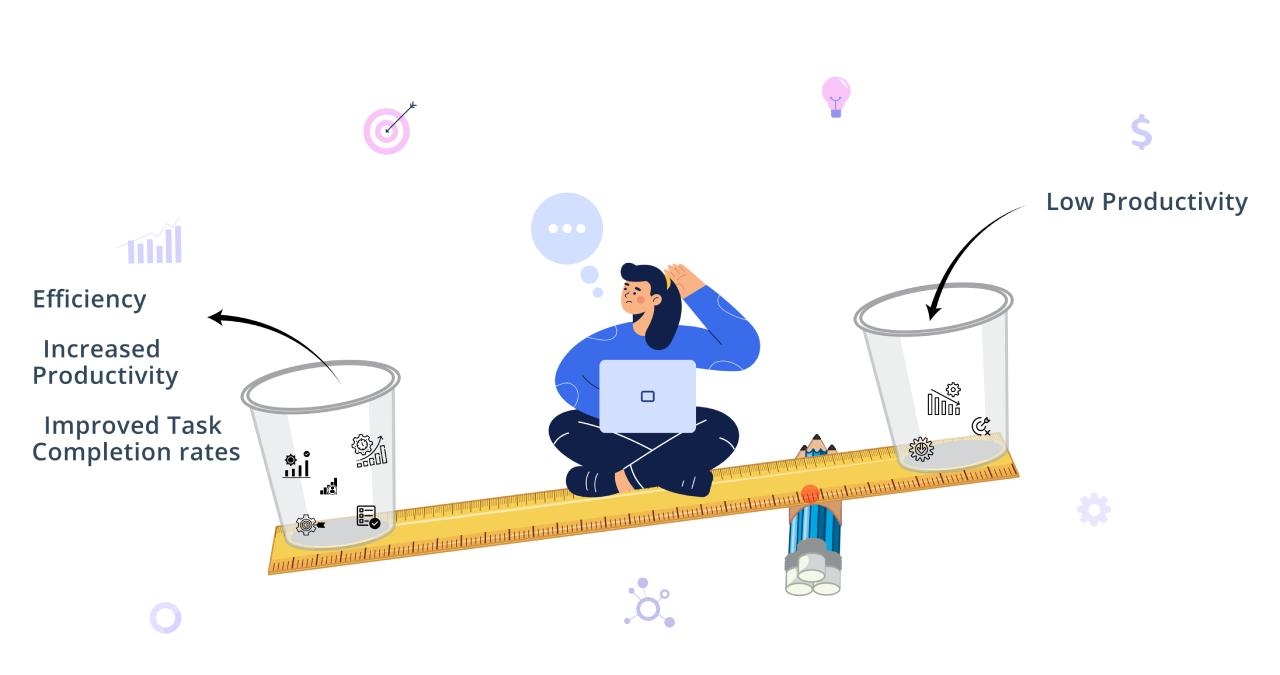
How Do I Measure Productivity?
Productivity is often misunderstood as “how busy you are” or “how many hours you worked.” In reality, productivity is the ratio of meaningful output to input (time, energy, resources). Measuring it effectively requires clarity about outcomes—not just activity.
Below is a structured framework for measuring productivity in a practical, evidence-based way.
1. Define What Output Means for You
Before measuring productivity, define what “productive” actually means in your context.
Examples:
-
Students → Completed assignments, grades, comprehension depth
-
Knowledge workers → Projects completed, strategic milestones reached
-
Creatives → Published content, finished drafts
-
Managers → Team results, objectives achieved
If output is undefined, measurement becomes arbitrary.
2. Track Results, Not Just Time
Time spent working is an input, not an output.
Instead of measuring:
-
“I worked 8 hours”
Measure:
-
“I completed 3 priority tasks”
-
“I drafted 1,500 words”
-
“I finished the client proposal”
Output-based tracking reflects real progress.
3. Use the Output-to-Time Ratio
A simple productivity formula:
Productivity = Meaningful Output ÷ Time Invested
Example:
-
4 hours → 1 completed report
-
4 hours → 2 completed reports
The second instance demonstrates higher productivity, assuming equal quality.
4. Measure Deep Work Hours
High-value cognitive work (writing, coding, strategic planning) is more impactful than shallow tasks.
Track:
-
Number of uninterrupted focus hours
-
Number of completed deep-work sessions
Methods like the Pomodoro Technique can help quantify structured focus blocks.
5. Evaluate Goal Progress
Short-term productivity must align with long-term outcomes.
Ask weekly:
-
Did my work move me closer to my major goals?
-
Are my daily tasks aligned with strategic priorities?
If not, you may be active but not productive.
6. Track Completion Rate
Completion rate = Tasks completed ÷ Tasks planned
A consistently low completion rate indicates:
-
Overplanning
-
Poor prioritization
-
Distractions
-
Unrealistic time estimation
Improving planning accuracy improves measurable productivity.
7. Monitor Quality, Not Just Quantity
Higher output is not productive if quality declines.
Evaluate:
-
Error rates
-
Feedback quality
-
Rework required
-
Client or stakeholder satisfaction
Productivity includes sustainability and standards.
8. Assess Energy and Sustainability
True productivity is sustainable over weeks and months.
Signs of sustainable productivity:
-
Stable energy
-
Consistent focus
-
Minimal burnout symptoms
-
Reliable output quality
If output increases but exhaustion accumulates, the system is flawed.
9. Use Simple Tracking Systems
Avoid overcomplicated metrics. Effective tools include:
-
Daily priority checklists
-
Time-blocked calendars
-
Weekly review notes
-
Habit trackers
-
Deep work logs
Measurement should support action, not become another task.
10. Review and Adjust Regularly
Productivity measurement is iterative. Conduct weekly reviews:
-
What produced the most meaningful results?
-
Where did time leak?
-
Which tasks created disproportionate impact?
Refine based on evidence.
Common Mistakes When Measuring Productivity
-
Equating long hours with effectiveness
-
Tracking activity instead of outcomes
-
Ignoring quality
-
Failing to align daily tasks with long-term goals
-
Not reviewing metrics regularly
Measurement without interpretation has limited value.
Final Thoughts
Measuring productivity requires clarity about outcomes, disciplined tracking of meaningful output, and alignment with long-term goals. Focus on results, deep work hours, completion rates, and sustainability—not just time spent.
Productivity is not about how busy you look. It is about how effectively your effort translates into meaningful progress.
- Arts
- Business
- Computers
- Jogos
- Health
- Início
- Kids and Teens
- Money
- News
- Personal Development
- Recreation
- Regional
- Reference
- Science
- Shopping
- Society
- Sports
- Бизнес
- Деньги
- Дом
- Досуг
- Здоровье
- Игры
- Искусство
- Источники информации
- Компьютеры
- Личное развитие
- Наука
- Новости и СМИ
- Общество
- Покупки
- Спорт
- Страны и регионы
- World

 English
 Russian
 French
 Spanish
 Deutsch
 Turkish
 Dutch
Dutch
 Italiano
 Arabic
 Romaian
 Portuguese (Brazil)
 Greek
Greek