
What Is App Store Optimization (ASO) in User Acquisition?
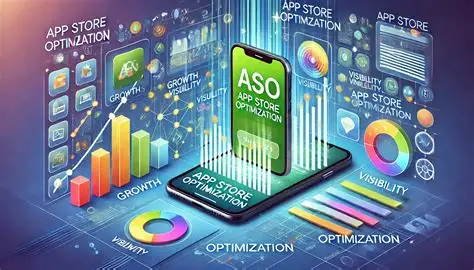
App Store Optimization (ASO) is one of the most powerful — and most misunderstood — components of user acquisition for mobile apps. While many companies focus heavily on paid advertising, ASO builds a sustainable engine for organic growth directly inside app marketplaces like the Apple App Store and the Google Play Store.
In simple terms:
App Store Optimization (ASO) is the process of improving an app’s visibility and conversion rate within app stores to increase organic downloads.
But in practice, ASO is much more than keyword stuffing. It is a strategic discipline that combines search optimization, conversion rate optimization, branding, psychology, and analytics — all within the app store ecosystem.
This article will explore ASO in depth, including how it works, why it matters for user acquisition, ranking factors, optimization strategies, testing methods, and how it connects to broader growth efforts.
1. Why ASO Matters in User Acquisition
User acquisition (UA) typically relies on three main channels:
-
Paid acquisition (ads)
-
Organic acquisition
-
Referral/viral acquisition
ASO directly fuels organic acquisition, which is:
-
Lower cost
-
More sustainable
-
Higher intent
-
Often higher retention
The Reality of App Discovery
More than 60% of app downloads start with a search inside the app store. Users open the store with intent:
-
“budget tracker”
-
“photo editor”
-
“fitness workout app”
-
“meditation for sleep”
If your app does not rank for relevant keywords, you are invisible.
ASO determines:
-
Whether users find your app
-
Whether they click your app
-
Whether they install your app
That makes it both a visibility and conversion discipline.
2. The Two Pillars of ASO
ASO has two core components:
1. Visibility Optimization (Ranking)
This determines whether your app appears in search results and category rankings.
2. Conversion Rate Optimization (CRO)
This determines whether users install your app after viewing its product page.
Many teams focus only on keywords. But ranking without conversion means wasted traffic. True ASO optimizes both.
3. How App Store Search Algorithms Work
Although Apple and Google do not publicly disclose full ranking formulas, we know the primary ranking factors.
Ranking Factors in the Apple App Store
-
App title keywords
-
Subtitle keywords
-
Keyword field (100-character hidden field)
-
In-app purchases (sometimes indexed)
-
Ratings and reviews
-
Download velocity
-
Retention and engagement signals
Apple has a more keyword-centric algorithm.
Ranking Factors in Google Play Store
-
App title
-
Short description
-
Long description
-
User reviews (text is indexed)
-
Backlinks to the app page
-
Engagement metrics
-
Retention
-
Crash rates
Google Play behaves more like a traditional SEO search engine.
4. Keyword Research for ASO
Keyword optimization is the foundation of visibility.
Step 1: Identify Core Intent
Ask:
-
What problem does the app solve?
-
What words would users type?
-
What alternatives exist?
For example:
A budgeting app might target:
-
budget planner
-
expense tracker
-
money manager
-
personal finance app
Step 2: Analyze Competitors
Look at:
-
Top-ranking apps in your niche
-
Their titles and subtitles
-
Review language patterns
-
Category leaders
Step 3: Evaluate Keywords by:
-
Search volume
-
Competition level
-
Relevance
-
Conversion potential
The goal is to balance:
-
High volume
-
Achievable ranking
-
Strong commercial intent
5. Optimizing App Metadata
App Title
Your title has the strongest ranking weight.
Example structure:
Brand Name – Primary Keyword
Example:
“SpendWise – Budget Tracker”
Best practices:
-
Include primary keyword
-
Avoid keyword stuffing
-
Maintain readability
-
Use full character limit
Subtitle (Apple) / Short Description (Google)
This reinforces secondary keywords.
Focus on:
-
Benefits
-
Differentiation
-
Supporting search terms
Keyword Field (Apple Only)
100-character hidden field:
-
No spaces after commas
-
No repetition of title words
-
No brand names of competitors
-
No filler words
This field is pure search optimization real estate.
Long Description (Google Play)
-
Keyword density matters (but naturally)
-
First 3 lines are critical
-
Use bullet points for readability
-
Focus on benefits, not just features
6. Visual Conversion Optimization
Once users land on your app page, visuals drive installation.
1. App Icon
Your icon must:
-
Be simple
-
Be recognizable
-
Stand out in search results
-
Reflect brand personality
Small design changes can increase conversion rates by 10–30%.
2. Screenshots
Screenshots should:
-
Communicate value immediately
-
Highlight benefits in text overlays
-
Show real in-app UI
-
Follow a visual narrative
Structure example:
-
Main value proposition
-
Core feature
-
Unique differentiator
-
Social proof
-
Call to action
3. App Preview Video
Especially important for games and complex apps.
Videos:
-
Increase trust
-
Demonstrate usability
-
Improve conversion rates
But they must be short and impactful.
7. Ratings and Reviews Strategy
Ratings are both:
-
Ranking factor
-
Conversion factor
Apps below 4.0 stars struggle to convert efficiently.
Improve Ratings By:
-
Triggering review prompts after positive experiences
-
Fixing crashes quickly
-
Responding to negative reviews
-
Releasing frequent updates
Positive reviews also contain keywords that improve ranking (especially on Google Play).
8. The Role of Retention in ASO
Modern app store algorithms measure quality signals:
-
Day 1 retention
-
Day 7 retention
-
Session frequency
-
Crash rate
If users install and quickly uninstall, rankings decline.
ASO is no longer just about metadata. It is deeply connected to product quality.
9. ASO and Paid User Acquisition Work Together
ASO does not replace paid acquisition. It enhances it.
Why Paid Ads Improve ASO
When you run ads:
-
Download velocity increases
-
Ranking improves
-
Organic installs rise
This is called the “organic uplift effect.”
Paid channels drive traffic.
ASO ensures maximum visibility and conversion.
Together, they compound growth.
10. Localization and International ASO
Many apps miss massive opportunities by optimizing only in English.
Localization includes:
-
Translating metadata
-
Cultural adaptation
-
Keyword research per country
-
Local screenshots
Different countries have different search behaviors.
For example:
Users in Germany may search differently than users in the US.
Localized ASO can double or triple organic downloads in new markets.
11. A/B Testing in ASO
Optimization without testing is guessing.
Apple Product Page Optimization (PPO)
Apple allows testing:
-
Icons
-
Screenshots
-
App previews
Google Play Experiments
Google allows:
-
Icon tests
-
Screenshot tests
-
Description tests
Continuous experimentation improves conversion rates over time.
12. Measuring ASO Performance
Key metrics:
-
Keyword rankings
-
Organic downloads
-
Conversion rate (page view → install)
-
Impressions
-
Tap-through rate
-
Retention rate
Track:
-
Before optimization
-
After optimization
-
Monthly growth trends
ASO is iterative, not one-time.
13. Common ASO Mistakes
-
Keyword stuffing
-
Ignoring conversion optimization
-
Not testing visuals
-
Neglecting reviews
-
Forgetting localization
-
Copying competitors blindly
-
Focusing only on high-volume keywords
-
Ignoring retention impact
ASO requires balance between search, branding, and user psychology.
14. Advanced ASO Strategies
1. Seasonal Optimization
Update metadata during:
-
Holidays
-
Major events
-
Back-to-school
-
New Year resolutions
2. Event-Based Keywords
Apps can rank for trending terms temporarily.
3. Leveraging In-App Events (Apple)
Apple allows event cards that improve discoverability.
4. Deep Linking Strategy
Connecting ads and web traffic directly to relevant app store experiences improves install rates.
15. ASO vs Traditional SEO
Similarities:
-
Keywords
-
Search ranking
-
Conversion optimization
-
Back-end optimization
Differences:
-
App store algorithms
-
Limited metadata space
-
Heavy reliance on visuals
-
Download velocity impact
ASO is essentially “SEO for app stores.”
16. The Long-Term Value of ASO
Unlike paid ads, ASO builds compounding returns.
Benefits:
-
Sustainable traffic
-
Lower acquisition cost
-
Higher trust
-
Brand authority
-
Improved LTV/CAC ratio
Once strong rankings are achieved, maintenance requires less investment than paid acquisition.
17. ASO in the Growth Funnel
ASO affects the top and middle of the funnel:
Top:
-
Visibility
-
Discovery
Middle:
-
Conversion
Bottom:
-
Influenced indirectly via retention signals
It is not just a marketing tactic — it is a growth lever.
18. The Future of ASO
Trends shaping ASO:
-
AI-driven personalization
-
Behavioral ranking signals
-
Subscription model optimization
-
In-app event visibility
-
Increased importance of retention metrics
App stores are evolving from marketplaces to recommendation engines.
ASO strategies must evolve accordingly.
Conclusion
App Store Optimization (ASO) is a foundational component of mobile user acquisition. It determines whether users can discover your app and whether they install it after discovering it.
True ASO success requires:
-
Strategic keyword research
-
Metadata optimization
-
Visual conversion testing
-
Ratings management
-
Retention alignment
-
Continuous experimentation
Apps that treat ASO as an ongoing growth discipline — not a one-time checklist — build sustainable organic acquisition engines that reduce paid dependency and improve long-term profitability.
In today’s competitive mobile ecosystem, ASO is not optional.
It is essential.
- Arts
- Business
- Computers
- Juegos
- Health
- Home
- Kids and Teens
- Money
- News
- Personal Development
- Recreation
- Regional
- Reference
- Science
- Shopping
- Society
- Sports
- Бизнес
- Деньги
- Дом
- Досуг
- Здоровье
- Игры
- Искусство
- Источники информации
- Компьютеры
- Личное развитие
- Наука
- Новости и СМИ
- Общество
- Покупки
- Спорт
- Страны и регионы
- World

 English
 Russian
 French
 Portuguese
 Deutsch
 Turkish
 Dutch
Dutch
 Italiano
 Arabic
 Romaian
 Portuguese (Brazil)
 Greek
Greek
