
How Do I Target the Right Audience on YouTube?
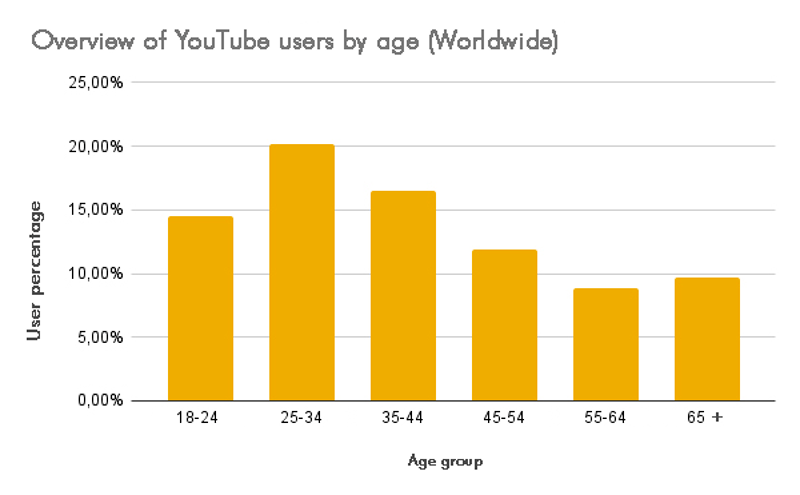
One of the biggest advantages of advertising on YouTube is its advanced targeting capabilities. Unlike traditional advertising, where you broadcast your message broadly and hope it reaches the right people, YouTube allows you to precisely define who sees your ads.
Effective targeting can dramatically improve:
-
View rates
-
Engagement
-
Conversion rates
-
Cost per acquisition (CPA)
-
Overall return on ad spend
Because YouTube advertising runs through Google Ads, advertisers gain access to one of the most powerful data ecosystems in digital marketing.
In this article, we’ll break down how to target the right audience on YouTube using:
-
Interests
-
Demographics
-
Placements
-
Remarketing audiences
-
And advanced targeting combinations
1. Start With a Clear Audience Profile
Before selecting targeting options inside Google Ads, you need clarity on your ideal customer.
Ask yourself:
-
Who is most likely to benefit from your product?
-
What problems are they trying to solve?
-
How old are they?
-
Where do they live?
-
What are their interests?
-
What content do they consume?
-
What stage of the buying journey are they in?
Without this foundation, even the most advanced targeting tools won’t deliver optimal results.
Effective targeting starts with strategy, not settings.
2. Demographic Targeting
Demographics are the most basic but essential layer of YouTube targeting.
You can target users by:
-
Age
-
Gender
-
Parental status
-
Household income (in select countries)
Why demographics matter
If you’re selling:
-
Luxury skincare → likely target higher income brackets
-
Parenting products → target parents
-
Retirement services → target older age groups
-
College prep courses → target teens or parents
However, demographic targeting alone is rarely enough.
It narrows the audience, but it doesn’t tell you what users are actively interested in.
That’s where interest-based targeting becomes powerful.
3. Interest-Based Targeting
Interest targeting allows you to reach users based on their long-term behavior and preferences.
There are two primary types:
Affinity Audiences
Affinity audiences represent users with consistent, long-term interests.
Examples:
-
Fitness enthusiasts
-
Travel lovers
-
Tech enthusiasts
-
Foodies
-
Business professionals
These audiences are ideal for:
-
Brand awareness campaigns
-
Top-of-funnel marketing
-
Broad product exposure
They work well when your goal is visibility rather than immediate conversion.
In-Market Audiences
In-market audiences are much more powerful for performance campaigns.
These users are actively researching or comparing products in a specific category.
For example:
-
Users researching CRM software
-
People comparing car insurance
-
Shoppers browsing running shoes
-
Consumers researching laptops
This targeting reaches users closer to a purchase decision.
If you want conversions, in-market audiences often outperform broad affinity segments.
4. Custom Audiences (Intent-Based Targeting)
One of the most powerful features in YouTube advertising is custom audience creation.
You can build audiences based on:
-
Keywords users searched on Google
-
URLs similar to your competitors
-
Apps used
-
Specific behaviors
For example:
If you sell project management software, you could target users who searched:
-
“Best project management tools”
-
“Asana alternative”
-
“Trello vs Monday”
This strategy captures high-intent users actively researching solutions.
Custom audiences allow you to align YouTube ads with search intent—something that gives YouTube a major strategic advantage over many other video platforms.
5. Placement Targeting
Placement targeting allows you to choose specific YouTube channels, videos, or websites where your ads will appear.
This is especially powerful when:
-
You know exactly where your audience spends time
-
You want to appear next to relevant content
-
You want tighter contextual control
For example:
-
A fitness brand could target workout channels
-
A finance company could target investing education channels
-
A gaming brand could target esports-related content
Placement targeting gives you contextual alignment.
However, it can limit scale if used too narrowly.
It’s best used in combination with other targeting layers rather than as a standalone strategy.
6. Topic Targeting
Topic targeting places your ads on videos related to specific categories.
For example:
-
Health & Fitness
-
Business & Finance
-
Technology
-
Beauty & Fashion
-
Automotive
This approach focuses on content themes rather than specific channels.
It offers broader reach than placement targeting while still maintaining contextual relevance.
Topic targeting works well for mid-funnel campaigns where relevance matters but you still want scale.
7. Remarketing Audiences
Remarketing is one of the highest-performing YouTube targeting strategies.
Remarketing allows you to show ads to users who have already interacted with your business.
You can retarget:
-
Website visitors
-
Product page viewers
-
Cart abandoners
-
Past purchasers
-
YouTube channel viewers
-
Video viewers
-
App users
Why remarketing works:
These users already know your brand.
They require less persuasion and are more likely to convert.
Remarketing campaigns often produce:
-
Higher conversion rates
-
Lower CPAs
-
Better ROAS
For example:
Someone visits your product page but doesn’t buy. You can show them:
-
A testimonial ad
-
A limited-time discount
-
A product demonstration
This keeps your brand top-of-mind and encourages completion of the purchase journey.
8. Customer Match
Customer Match allows you to upload a list of existing customers or leads.
You can then:
-
Exclude current customers from acquisition campaigns
-
Upsell related products
-
Cross-sell complementary offers
-
Reactivate inactive buyers
This targeting is particularly valuable for:
-
E-commerce brands
-
SaaS companies
-
Subscription businesses
Customer Match strengthens lifecycle marketing strategies.
9. Combining Targeting Layers
The most effective YouTube campaigns rarely rely on a single targeting method.
Smart advertisers layer targeting strategically.
Examples:
-
Demographics + In-Market audiences
-
Custom intent + Remarketing
-
Placement targeting + Affinity audiences
-
In-Market + Household income
Layering increases relevance while maintaining scale.
However, avoid over-narrowing your audience.
If targeting becomes too restrictive, delivery may suffer and costs may rise.
Testing is essential.
10. Align Targeting With Funnel Stages
Different targeting methods work best at different stages of the marketing funnel.
Top of Funnel (Awareness)
-
Affinity audiences
-
Topic targeting
-
Broad demographics
Goal: Introduce your brand.
Middle of Funnel (Consideration)
-
In-market audiences
-
Custom intent audiences
-
Placement targeting
Goal: Educate and differentiate.
Bottom of Funnel (Conversion)
-
Remarketing
-
Customer Match
-
High-intent custom segments
Goal: Drive action.
Mapping targeting strategy to funnel stages increases campaign efficiency.
11. Geographic Targeting
You can also narrow your audience by:
-
Country
-
State
-
City
-
Zip code
-
Radius targeting
This is especially useful for:
-
Local businesses
-
Regional campaigns
-
Franchise operations
Location targeting ensures budget is not wasted on irrelevant viewers.
12. Device Targeting
YouTube ads can appear on:
-
Mobile devices
-
Desktop computers
-
Tablets
-
Connected TV
If your product converts best on desktop, you may adjust bids accordingly.
If your audience consumes mostly mobile content, optimize creative for vertical viewing.
Understanding device behavior improves results.
13. Exclusions: The Hidden Power
Targeting is not just about who you include—it’s also about who you exclude.
You can exclude:
-
Existing customers
-
Specific placements
-
Certain demographics
-
Irrelevant content categories
Exclusions improve efficiency by removing low-value impressions.
14. Data-Driven Optimization
After launching campaigns, use performance data to refine targeting.
Monitor:
-
View rate
-
Click-through rate
-
Conversion rate
-
CPA
-
Audience performance breakdowns
Pause underperforming segments.
Increase budget toward high-performing audiences.
YouTube targeting is not “set it and forget it.”
It’s a continuous refinement process.
15. Common Targeting Mistakes to Avoid
-
Targeting too broadly without strategy
-
Over-narrowing and restricting scale
-
Ignoring remarketing opportunities
-
Failing to align targeting with creative messaging
-
Not excluding irrelevant audiences
-
Running only one audience type
Strategic experimentation leads to sustainable performance.
Final Thoughts
Targeting the right audience on YouTube is both art and science.
The platform offers multiple targeting options:
-
Demographics
-
Interests
-
In-market segments
-
Custom intent
-
Placements
-
Topics
-
Remarketing
-
Customer Match
The key is alignment between:
-
Audience
-
Creative
-
Campaign objective
-
Funnel stage
When these elements work together, YouTube advertising becomes significantly more powerful.
Rather than broadcasting to everyone, you deliver your message precisely to the people most likely to care—and act.
- Arts
- Business
- Computers
- Jogos
- Health
- Início
- Kids and Teens
- Money
- News
- Personal Development
- Recreation
- Regional
- Reference
- Science
- Shopping
- Society
- Sports
- Бизнес
- Деньги
- Дом
- Досуг
- Здоровье
- Игры
- Искусство
- Источники информации
- Компьютеры
- Личное развитие
- Наука
- Новости и СМИ
- Общество
- Покупки
- Спорт
- Страны и регионы
- World

 English
 Russian
 French
 Spanish
 Portuguese
 Deutsch
 Turkish
 Dutch
Dutch
 Italiano
 Arabic
 Romaian
 Greek
Greek