
What Is Active Listening in Customer Service?
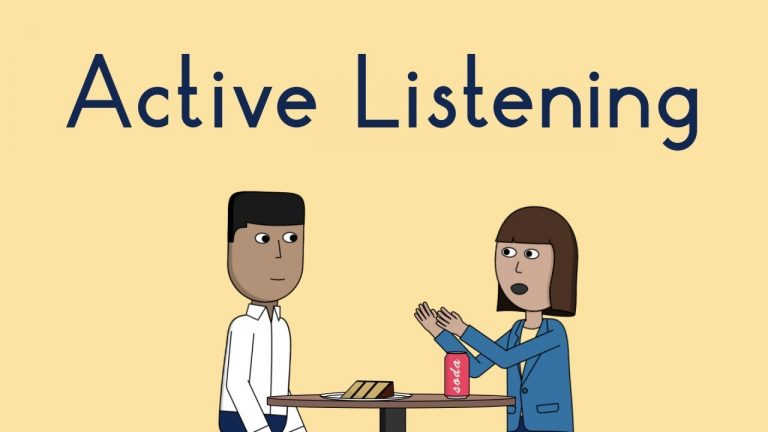
Active listening is one of the most important communication skills in customer service. It refers to the practice of fully concentrating on what a customer is saying, understanding their message, and responding thoughtfully. Instead of simply hearing the customer’s words, active listening requires customer service representatives to focus on the meaning behind the message and acknowledge the customer’s concerns.
In customer service interactions, customers often contact a business because they need help, clarification, or problem resolution. If they feel ignored or misunderstood, their frustration can quickly increase. Active listening helps prevent misunderstandings, improves communication, and ensures that customers feel heard and respected.
This article explores what active listening means in customer service, why it is important, and how professionals can practice it effectively during customer interactions.
Understanding Active Listening
Active listening is more than just hearing the words spoken by a customer. It involves several important actions that demonstrate attention and understanding.
Active listening typically includes:
-
Paying full attention to the customer
-
Understanding the message being communicated
-
Responding appropriately
-
Remembering important details
When representatives practice active listening, they engage with the customer in a way that encourages open communication and builds trust.
For example, a customer explaining an issue with a product wants to feel confident that the representative understands the problem. By actively listening and responding thoughtfully, the representative shows that the issue is being taken seriously.
Why Active Listening Is Important in Customer Service
Active listening plays a critical role in creating positive customer experiences. Customers want to feel valued and respected, and listening carefully is one of the most effective ways to demonstrate that respect.
There are several key benefits of active listening in customer service.
Builds Customer Trust
Customers trust companies that take the time to listen to their concerns. When representatives listen carefully, customers feel confident that their issues will be handled properly.
Trust encourages long-term relationships between businesses and customers.
Reduces Misunderstandings
Miscommunication can lead to incorrect solutions or unresolved issues. Active listening helps representatives gather accurate information about the customer’s problem.
When the problem is fully understood, it becomes easier to provide the correct solution.
Improves Problem Resolution
Active listening allows representatives to identify the root cause of an issue rather than only addressing surface-level symptoms.
By understanding the full situation, representatives can resolve problems more efficiently and prevent similar issues from occurring again.
Increases Customer Satisfaction
Customers appreciate when their voices are heard. When representatives listen attentively and respond thoughtfully, customers are more likely to feel satisfied with the service experience.
Even when a problem cannot be solved immediately, customers often respond positively if they feel understood.
Key Elements of Active Listening
To practice active listening effectively, customer service professionals must develop several important behaviors.
Paying Full Attention
The first step in active listening is giving the customer your full attention. Representatives should avoid distractions and focus entirely on the conversation.
This means:
-
Avoiding interruptions
-
Not multitasking during the conversation
-
Listening carefully to every detail
Customers can often sense when a representative is distracted, which can damage the quality of the interaction.
Allowing Customers to Speak Without Interruption
Customers need the opportunity to explain their concerns fully. Interrupting them too early can create frustration and may cause important information to be missed.
Allowing customers to complete their explanation demonstrates patience and respect.
Once the customer has finished speaking, representatives can ask clarifying questions or offer solutions.
Asking Clarifying Questions
Clarifying questions help representatives gather additional information and ensure that they fully understand the issue.
Examples of clarifying questions include:
-
“Could you explain when the problem started?”
-
“What error message are you seeing?”
-
“Have you experienced this issue before?”
These questions help representatives identify the exact cause of the problem.
Paraphrasing and Summarizing
One of the most effective active listening techniques is paraphrasing what the customer has said. This involves repeating the main points of the customer’s explanation in your own words.
For example:
“Just to confirm, you placed an order last week but haven’t received a confirmation email yet. Is that correct?”
This approach demonstrates understanding and allows the customer to correct any misunderstandings.
Acknowledging the Customer’s Feelings
Customers often contact support when they feel frustrated or disappointed. Active listening includes acknowledging these emotions and responding with empathy.
Examples include:
-
“I understand why this situation would be frustrating.”
-
“Thank you for explaining the issue. I can see why you’re concerned.”
Acknowledging emotions helps customers feel respected and supported.
Examples of Active Listening in Customer Service
Active listening can appear in many forms during customer interactions.
For example, consider a customer who calls support because their order has not arrived.
A representative practicing active listening might respond like this:
“Thank you for letting me know about this issue. Just to make sure I understand correctly, you placed the order five days ago and haven’t received any shipping updates yet. I understand how concerning that must be. Let me check the order status for you right now.”
This response shows that the representative listened carefully, acknowledged the concern, and took action to resolve the issue.
Common Mistakes to Avoid
Even experienced customer service professionals sometimes struggle with active listening. Avoiding common mistakes can help improve listening skills.
Common mistakes include:
-
Interrupting the customer too quickly
-
Assuming the problem before hearing the full explanation
-
Focusing only on responding rather than understanding
-
Ignoring the customer’s emotional state
Avoiding these behaviors helps ensure that customers feel heard and respected.
How to Develop Active Listening Skills
Active listening is a skill that improves with practice and training. Customer service professionals can strengthen this ability through several strategies.
Practice Focused Listening
Representatives should practice focusing completely on the speaker during conversations. This helps train the mind to remain attentive during customer interactions.
Take Notes During Conversations
Taking notes can help representatives remember important details and stay focused on the conversation.
Notes are especially helpful when dealing with complex customer issues.
Participate in Communication Training
Many organizations offer communication and listening training programs. These programs help employees practice active listening techniques through role-playing exercises and real-world scenarios.
Reflect on Past Interactions
Reviewing previous customer conversations can help identify areas for improvement.
Representatives can ask themselves questions such as:
-
Did I allow the customer to fully explain the issue?
-
Did I confirm my understanding of the problem?
-
Did the customer feel satisfied with the interaction?
This reflection helps improve future interactions.
The Role of Active Listening in Customer Experience
Active listening is not just a communication technique—it is a fundamental part of delivering excellent customer experiences.
When businesses encourage employees to listen carefully to customers, they create an environment where customers feel valued and respected.
Organizations that emphasize active listening often see improvements in:
-
customer satisfaction scores
-
customer loyalty
-
problem resolution efficiency
-
overall service quality
By making active listening a core part of customer service training, companies can significantly improve their relationships with customers.
Conclusion
Active listening is a critical skill in customer service that involves fully focusing on customers, understanding their concerns, and responding thoughtfully. By paying attention, asking clarifying questions, summarizing key points, and acknowledging customer emotions, representatives can create meaningful and productive conversations.
Practicing active listening helps reduce misunderstandings, improve problem resolution, and increase customer satisfaction. When customers feel heard and respected, they are more likely to trust the business and continue their relationship with the brand.
For organizations seeking to deliver exceptional customer experiences, developing strong active listening skills within customer service teams is an essential step toward success.
- Arts
- Business
- Computers
- الألعاب
- Health
- الرئيسية
- Kids and Teens
- مال
- News
- Personal Development
- Recreation
- Regional
- Reference
- Science
- Shopping
- Society
- Sports
- Бизнес
- Деньги
- Дом
- Досуг
- Здоровье
- Игры
- Искусство
- Источники информации
- Компьютеры
- Личное развитие
- Наука
- Новости и СМИ
- Общество
- Покупки
- Спорт
- Страны и регионы
- World

 English
 Russian
 French
 Spanish
 Portuguese
 Deutsch
 Turkish
 Dutch
Dutch
 Italiano
 Romaian
 Portuguese (Brazil)
 Greek
Greek
