
What Is Net Promoter Score (NPS)?
In modern business environments, understanding customer perceptions and experiences has become a critical factor for achieving sustainable growth and competitive advantage. Organizations increasingly rely on quantitative metrics to evaluate how customers perceive their products, services, and overall brand experience. Among these metrics, the Net Promoter Score (NPS) has emerged as one of the most widely used tools for measuring customer loyalty and predicting future business growth.
Net Promoter Score was introduced as a customer experience metric designed to evaluate the likelihood that customers will recommend a company, product, or service to others. Unlike traditional satisfaction metrics that focus primarily on immediate experiences, NPS attempts to capture long-term customer loyalty and advocacy. The metric is based on the assumption that customers who are willing to recommend a company are more likely to remain loyal, increase their purchases, and contribute positively to the company’s reputation through word-of-mouth communication.
From an academic and managerial perspective, NPS is considered both a measurement tool and a strategic management concept. Organizations use it not only to assess customer sentiment but also to guide improvements in customer experience and service quality. By analyzing customer responses to the NPS survey question, businesses can identify loyal customers, understand the sources of dissatisfaction, and develop strategies to strengthen customer relationships.
This article examines the concept of Net Promoter Score in detail. It discusses its theoretical background, measurement methodology, classification of customer groups, advantages and limitations, and its role in improving customer service and organizational performance.
The Concept of Customer Loyalty
To fully understand the importance of Net Promoter Score, it is necessary to examine the concept of customer loyalty. Customer loyalty refers to the commitment of customers to continue purchasing products or services from a particular company over time. Loyal customers tend to develop strong emotional and behavioral connections with brands, leading to repeated purchases and long-term relationships.
Customer loyalty is widely regarded as a key driver of business success because loyal customers often generate higher lifetime value compared to occasional buyers. They are also more likely to recommend a company to friends, family members, and colleagues, thereby contributing to organic growth through positive word-of-mouth.
Traditional methods for measuring customer loyalty have included metrics such as repeat purchase rates, retention rates, and customer satisfaction scores. However, researchers and practitioners recognized the need for a simpler and more predictive metric that could capture the likelihood of customers recommending a company to others. This need led to the development of the Net Promoter Score.
Definition of Net Promoter Score (NPS)
Net Promoter Score is a customer loyalty metric that measures the likelihood that customers will recommend a company, product, or service to others. The metric is based on a single survey question that asks customers to rate their likelihood of recommending the organization on a numerical scale.
The typical NPS survey question is formulated as follows:
"How likely are you to recommend our company, product, or service to a friend or colleague?"
Customers respond using a scale from 0 to 10, where:
0 represents "Not at all likely to recommend"
10 represents "Extremely likely to recommend"
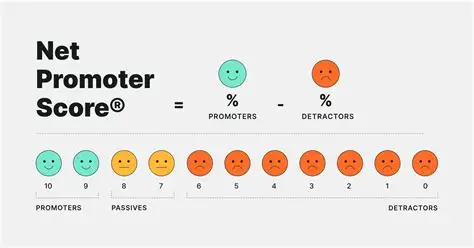
Based on their responses, customers are classified into three categories: promoters, passives, and detractors. These categories reflect different levels of customer loyalty and advocacy.
Classification of NPS Respondents
Promoters
Promoters are customers who provide ratings of 9 or 10 on the recommendation scale. These customers are considered highly satisfied and loyal to the organization. Promoters are more likely to make repeat purchases and actively recommend the company to others.
From a business perspective, promoters are extremely valuable because they contribute to positive word-of-mouth marketing and help attract new customers. Organizations often focus on maintaining strong relationships with promoters and ensuring that their positive experiences continue.
Passives
Passives are customers who provide ratings of 7 or 8. These customers are generally satisfied with the company but are not enthusiastic enough to actively promote it. While they are unlikely to spread negative opinions, they may easily switch to competitors if better alternatives become available.
Passives represent a group of customers whose experiences are acceptable but not exceptional. Businesses often aim to convert passives into promoters by improving service quality, communication, and overall customer experience.
Detractors
Detractors are customers who provide ratings between 0 and 6. These customers are dissatisfied with their experiences and may share negative feedback with others. Detractors can damage a company’s reputation through negative word-of-mouth and online reviews.
Organizations should pay particular attention to detractors because their feedback often reveals significant problems in products, services, or customer interactions. Addressing the concerns of detractors can help prevent customer churn and improve overall service quality.
Calculating the Net Promoter Score
The Net Promoter Score is calculated by subtracting the percentage of detractors from the percentage of promoters. Passives are not included in the calculation but are still considered when analyzing overall customer sentiment.
The formula for calculating NPS is:
NPS = Percentage of Promoters − Percentage of Detractors
The resulting score ranges from -100 to +100.
For example, consider a survey with the following results:
-
60 percent promoters
-
25 percent passives
-
15 percent detractors
Using the formula:
NPS = 60 − 15 = 45
An NPS of 45 indicates a relatively strong level of customer loyalty, as the number of promoters significantly exceeds the number of detractors.
Interpretation of NPS Scores
Interpreting Net Promoter Scores requires understanding the context of the industry and the competitive environment. In general, NPS scores can be categorized as follows:
-
Negative scores (below 0) indicate that detractors outnumber promoters and that customer dissatisfaction may be widespread.
-
Scores between 0 and 30 are considered acceptable but suggest that there is room for improvement in customer experience.
-
Scores between 30 and 70 are generally viewed as strong and indicate a high level of customer loyalty.
-
Scores above 70 are considered exceptional and typically reflect outstanding customer experiences.
However, it is important to note that NPS benchmarks vary across industries. Some industries naturally generate lower NPS scores due to the nature of their services or competitive dynamics.
Advantages of Net Promoter Score
The popularity of Net Promoter Score can be attributed to several advantages that make it attractive for organizations seeking to measure customer loyalty.
Simplicity
One of the most significant advantages of NPS is its simplicity. The survey consists of a single question that customers can answer quickly and easily. This simplicity encourages higher response rates compared to longer surveys.
Focus on Customer Advocacy
Unlike traditional satisfaction metrics, NPS focuses on the likelihood of recommendation, which reflects customer advocacy and loyalty. Customers who actively recommend a company contribute to its growth through positive word-of-mouth communication.
Benchmarking and Comparisons
NPS allows organizations to benchmark their performance against competitors or industry standards. Many companies track their NPS scores over time to monitor improvements in customer loyalty and service quality.
Strategic Insights
By analyzing responses from promoters, passives, and detractors, organizations can gain valuable insights into customer perceptions and identify areas where improvements are needed.
Limitations of Net Promoter Score
Despite its widespread use, Net Promoter Score has several limitations that organizations should consider when interpreting results.
Limited Scope
NPS focuses primarily on recommendation likelihood and may not capture all aspects of the customer experience. Factors such as product quality, pricing, and service interactions may influence customer loyalty but are not directly measured by the NPS question.
Cultural Differences
Customer responses to recommendation questions may vary across cultures and regions. In some cultures, customers may be less likely to provide extremely high ratings, which can influence NPS results.
Lack of Diagnostic Detail
Because NPS relies on a single question, it may not provide detailed insights into the specific reasons behind customer satisfaction or dissatisfaction. Organizations often supplement NPS surveys with follow-up questions to gather additional feedback.
Risk of Oversimplification
Some critics argue that relying solely on NPS can oversimplify complex customer relationships. Businesses should therefore use NPS alongside other metrics such as customer satisfaction scores and customer effort scores.
Using NPS to Improve Customer Experience
Organizations can use Net Promoter Score as a tool for improving customer experience and service quality. One effective approach is to analyze feedback provided by detractors and identify recurring issues that contribute to dissatisfaction.
For example, detractors may report problems such as long response times, product defects, or poor communication. Addressing these issues can help reduce the number of dissatisfied customers and improve overall service performance.
Similarly, analyzing feedback from promoters can help organizations identify strengths in their products or services. By understanding what customers appreciate most, businesses can reinforce these positive aspects and further enhance customer loyalty.
Another common strategy involves implementing a "closed-loop feedback system." In this approach, companies follow up directly with customers who provided low NPS ratings to understand their concerns and attempt to resolve problems.
Strategic Importance of NPS in Modern Business
Net Promoter Score has become an important strategic metric for many organizations because it provides a clear and actionable indicator of customer loyalty. Companies that consistently achieve high NPS scores often benefit from stronger customer retention, increased referrals, and improved brand reputation.
Additionally, NPS can serve as a performance indicator for different departments within an organization. Customer service teams, product development teams, and marketing departments can all use NPS data to evaluate how their activities influence customer perceptions.
Many organizations integrate NPS measurement into their customer experience management strategies. By regularly monitoring NPS trends and responding to customer feedback, businesses can continuously refine their products, services, and communication practices.
Conclusion
Net Promoter Score is a widely used customer loyalty metric that measures the likelihood that customers will recommend a company, product, or service to others. By categorizing respondents as promoters, passives, or detractors, organizations can assess the overall strength of their customer relationships and identify opportunities for improvement.
The simplicity and strategic focus of NPS make it a valuable tool for evaluating customer advocacy and predicting business growth. However, the metric should not be used in isolation. Organizations benefit most when they combine NPS with other customer experience measurements and qualitative feedback.
Ultimately, businesses that actively analyze and respond to NPS data can strengthen customer relationships, improve service quality, and build long-term competitive advantages in increasingly customer-driven markets.
- Arts
- Business
- Computers
- Игры
- Health
- Главная
- Kids and Teens
- Деньги
- News
- Personal Development
- Recreation
- Regional
- Reference
- Science
- Shopping
- Society
- Sports
- Бизнес
- Деньги
- Дом
- Досуг
- Здоровье
- Игры
- Искусство
- Источники информации
- Компьютеры
- Личное развитие
- Наука
- Новости и СМИ
- Общество
- Покупки
- Спорт
- Страны и регионы
- World

 English
 French
 Spanish
 Portuguese
 Deutsch
 Turkish
 Dutch
Dutch
 Italiano
 Arabic
 Romaian
 Portuguese (Brazil)
 Greek
Greek