
What is the Eisenhower Matrix for task management?
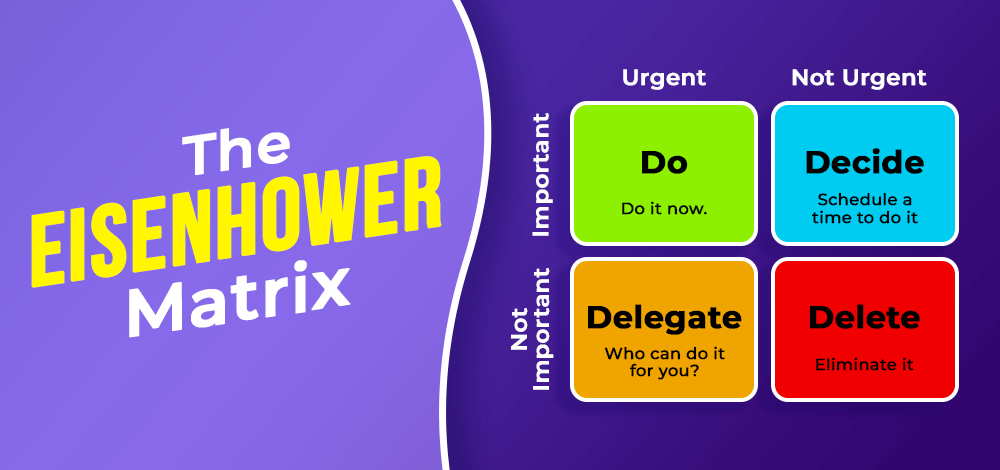
What Is the Eisenhower Matrix for Task Management?
In a world full of responsibilities, emails, deadlines, and unexpected interruptions, deciding what to work on first can be difficult. Many people struggle with long to-do lists and constant demands on their attention. Without a clear prioritization system, it is easy to spend time on tasks that feel urgent but are not truly important.
One of the most effective tools for prioritizing tasks and improving productivity is the Eisenhower Matrix. This simple but powerful framework helps individuals distinguish between urgent tasks and important ones, making it easier to focus on meaningful work rather than reacting to every request or interruption.
The Eisenhower Matrix is widely used in productivity systems, project management, and personal time management. In this article, we will explore what the Eisenhower Matrix is, how it works, why it is effective, and how you can use it to organize your tasks and improve your productivity.
The Origin of the Eisenhower Matrix
The Eisenhower Matrix is named after Dwight D. Eisenhower, who served as the President of the United States from 1953 to 1961.
Before becoming president, Eisenhower had an extensive career as a military leader and served as the Supreme Commander of Allied Forces during World War II.
Eisenhower was known for his ability to manage enormous responsibilities and make decisions under pressure. His approach to productivity was summarized in a famous idea:
“What is important is seldom urgent, and what is urgent is seldom important.”
This principle later became the foundation of the Eisenhower Matrix, a system designed to help people prioritize tasks based on urgency and importance.
What Is the Eisenhower Matrix?
The Eisenhower Matrix is a task prioritization tool that divides tasks into four categories based on two factors:
-
Urgency – How soon a task must be completed
-
Importance – How much the task contributes to long-term goals or meaningful outcomes
These two factors form a grid with four quadrants.
The Four Quadrants
The matrix is typically visualized like this:
| Urgent | Not Urgent | |
|---|---|---|
| Important | Do First | Schedule |
| Not Important | Delegate | Eliminate |
Each quadrant represents a different type of task and suggests how that task should be handled.
Understanding these four quadrants is the key to using the Eisenhower Matrix effectively.
Quadrant 1: Urgent and Important (Do First)
The first quadrant contains tasks that are both urgent and important. These tasks require immediate attention and often involve deadlines or critical consequences.
Because of their urgency and significance, these tasks should be completed as soon as possible.
Examples of Quadrant 1 Tasks
Examples may include:
-
Completing a project with a deadline today
-
Responding to a serious problem at work
-
Handling emergencies or unexpected issues
-
Preparing for a meeting that starts soon
These tasks demand immediate action because delaying them could create serious problems.
Why Too Many Quadrant 1 Tasks Are Problematic
While Quadrant 1 tasks are unavoidable, having too many of them can create constant stress.
If most of your work falls into this category, it often means tasks are not being planned or scheduled properly.
Effective time management aims to reduce the number of urgent tasks by planning important work ahead of time.
Quadrant 2: Important but Not Urgent (Schedule)
Quadrant 2 contains tasks that are important but not urgent. These tasks contribute to long-term goals, personal growth, and strategic progress.
Although they do not require immediate attention, they are often the most valuable tasks in the long run.
Because they are not urgent, they should be scheduled and planned intentionally.
Examples of Quadrant 2 Tasks
Examples include:
-
Long-term project planning
-
Skill development or education
-
Exercise and health activities
-
Building professional relationships
-
Strategic thinking and goal setting
These activities often produce the greatest long-term benefits.
Why Quadrant 2 Is the Most Valuable
Many productivity experts believe that the most successful people spend the majority of their time in Quadrant 2.
These tasks help prevent future crises and build long-term success.
For example, planning a project early can prevent last-minute stress later.
Unfortunately, because Quadrant 2 tasks are not urgent, people often postpone them.
Quadrant 3: Urgent but Not Important (Delegate)
Quadrant 3 includes tasks that are urgent but not particularly important.
These tasks demand attention quickly, but they do not significantly contribute to your long-term goals.
Often, these tasks involve requests or interruptions from other people.
Whenever possible, tasks in this quadrant should be delegated to others.
Examples of Quadrant 3 Tasks
Examples include:
-
Interruptions during focused work
-
Routine emails or phone calls
-
Minor administrative tasks
-
Requests that others could handle
These tasks can consume a large amount of time if not managed carefully.
Why Delegation Is Important
Delegation allows you to focus on higher-value work while others handle routine tasks.
In team environments, effective delegation improves productivity and distributes responsibilities more efficiently.
Even when working independently, automation tools or scheduling methods can reduce the impact of these tasks.
Quadrant 4: Not Urgent and Not Important (Eliminate)
The final quadrant contains tasks that are neither urgent nor important.
These tasks provide little value and often serve as distractions rather than productive activities.
In most cases, tasks in this quadrant should be eliminated entirely.
Examples of Quadrant 4 Tasks
Examples include:
-
Excessive social media browsing
-
Unnecessary meetings
-
Watching random online videos during work time
-
Procrastination activities
While occasional breaks are healthy, spending large amounts of time in this quadrant reduces productivity.
Recognizing Hidden Time Wasters
Many people underestimate how much time is spent on low-value activities.
Identifying and reducing these tasks can dramatically increase available time for important work.
How to Create an Eisenhower Matrix
Using the Eisenhower Matrix is relatively simple. The following steps can help you implement it effectively.
Step 1: List All Your Tasks
Start by writing down every task you need to complete.
Include:
-
Work assignments
-
Personal responsibilities
-
Projects
-
Errands
-
Deadlines
The goal is to create a complete list before prioritizing.
Step 2: Evaluate Urgency and Importance
Next, evaluate each task based on two questions:
-
How urgent is this task?
-
How important is this task?
Place the task into the appropriate quadrant.
Step 3: Assign Actions to Each Quadrant
Once tasks are categorized, apply the recommended action:
Quadrant 1 → Do immediately
Quadrant 2 → Schedule for later
Quadrant 3 → Delegate when possible
Quadrant 4 → Eliminate or minimize
This process transforms a chaotic list into a structured plan.
Example of an Eisenhower Matrix
Imagine someone with the following tasks:
-
Finish project report due tomorrow
-
Schedule a doctor appointment
-
Respond to routine emails
-
Scroll social media
-
Plan long-term career goals
These tasks could be categorized like this:
Quadrant 1 (Urgent & Important)
Finish project report
Quadrant 2 (Important & Not Urgent)
Plan career goals
Schedule doctor appointment
Quadrant 3 (Urgent & Not Important)
Respond to routine emails
Quadrant 4 (Not Urgent & Not Important)
Scrolling social media
This structure immediately clarifies what should be done first.
Benefits of the Eisenhower Matrix
The Eisenhower Matrix offers several powerful benefits.
Clear Prioritization
The matrix forces you to evaluate tasks logically rather than reacting emotionally or impulsively.
Better Time Management
By identifying important tasks early, you can schedule them before they become urgent.
Reduced Stress
When priorities are clear, decision-making becomes easier and less overwhelming.
Improved Focus
Eliminating low-value tasks allows more time for meaningful work.
Common Mistakes When Using the Eisenhower Matrix
Although the system is simple, people sometimes misuse it.
Treating Everything as Urgent
Some individuals label nearly every task as urgent.
This defeats the purpose of the matrix. Urgent tasks should be relatively rare.
Ignoring Quadrant 2
Many people focus only on urgent tasks and neglect long-term planning.
However, Quadrant 2 tasks often produce the most meaningful results.
Not Reviewing the Matrix Regularly
Tasks and priorities change over time. Reviewing your matrix daily or weekly keeps it accurate.
Combining the Eisenhower Matrix With Other Productivity Methods
The Eisenhower Matrix works well alongside other productivity techniques.
For example:
-
Use the matrix to prioritize tasks
-
Use time blocking to schedule Quadrant 2 work
-
Use the Pomodoro Technique to maintain focus during tasks
-
Use a task management app to track tasks
Combining these methods creates a powerful productivity system.
Tools That Support the Eisenhower Matrix
Although the matrix can be drawn on paper, several digital tools can help implement it.
Examples include:
-
Trello
-
Notion
-
Todoist
-
ClickUp
Many productivity apps allow tasks to be labeled by priority or organized into matrix-style boards.
These tools make it easier to track tasks and update priorities.
Final Thoughts
The Eisenhower Matrix is one of the most effective tools for organizing tasks and managing priorities. By separating tasks based on urgency and importance, it provides a clear framework for deciding what deserves your attention.
Instead of reacting to every request or distraction, the matrix encourages thoughtful decision-making and strategic planning. It helps reduce time spent on low-value tasks while ensuring that meaningful work receives proper focus.
By consistently applying the Eisenhower Matrix, individuals can improve productivity, reduce stress, and make steady progress toward their long-term goals.
- Arts
- Business
- Computers
- Παιχνίδια
- Health
- Κεντρική Σελίδα
- Kids and Teens
- Money
- News
- Personal Development
- Recreation
- Regional
- Reference
- Science
- Shopping
- Society
- Sports
- Бизнес
- Деньги
- Дом
- Досуг
- Здоровье
- Игры
- Искусство
- Источники информации
- Компьютеры
- Личное развитие
- Наука
- Новости и СМИ
- Общество
- Покупки
- Спорт
- Страны и регионы
- World

 English
 Russian
 French
 Spanish
 Portuguese
 Deutsch
 Turkish
 Dutch
Dutch
 Italiano
 Arabic
 Romaian
 Portuguese (Brazil)
