
How do you track task progress in a team?
How Do You Track Task Progress in a Team?
Tracking task progress is one of the most critical elements of effective team management. Without a clear system to monitor tasks, even the most skilled and motivated teams can struggle with missed deadlines, miscommunication, duplicated work, and poor productivity. Tracking progress ensures that tasks are on schedule, dependencies are managed, and accountability is maintained, while also allowing managers and team members to make data-driven decisions.
This article provides a comprehensive guide to tracking task progress in teams, including strategies, tools, best practices, and practical examples.
Why Tracking Task Progress Matters
Tracking task progress is more than just checking boxes. It provides several strategic benefits:
1. Visibility
-
Allows managers and team members to see what is being worked on
-
Prevents duplicated work
-
Identifies bottlenecks and delays
2. Accountability
-
Makes it clear who is responsible for each task
-
Encourages team members to meet deadlines
-
Helps measure individual and team performance
3. Efficient Resource Management
-
Ensures work is distributed appropriately
-
Identifies overloaded team members
-
Helps reallocate resources when needed
4. Better Decision-Making
-
Data from task tracking informs planning
-
Helps prioritize tasks effectively
-
Supports project timeline adjustments
1. Set Clear Goals and Deliverables
Before you can track progress, you must define what success looks like.
Strategy
-
Break projects into tasks and subtasks
-
Define expected outcomes for each task
-
Set clear deadlines and milestones
Example
Instead of a vague task like:
-
“Work on website redesign”
Define:
-
“Complete homepage redesign mockup by Tuesday”
-
“Develop responsive layout for mobile by Thursday”
Why It Works
-
Creates measurable checkpoints
-
Reduces ambiguity
-
Makes progress easier to track
2. Assign Clear Ownership
Tracking progress requires knowing who is responsible for each task.
Strategy
-
Assign tasks to specific team members
-
Avoid shared ownership unless necessary
-
Clarify roles for collaborative tasks
Why It Works
-
Increases accountability
-
Makes tracking simpler
-
Prevents confusion over responsibilities
3. Use a Centralized Task Management Tool
Digital tools are essential for tracking team tasks effectively.
Popular Tools
-
Asana – Task assignment, deadlines, progress tracking
-
ClickUp – Highly customizable dashboards
-
Trello – Visual tracking with cards and boards
Key Features
-
Task lists and subtasks
-
Assigned owners
-
Deadlines and reminders
-
Status updates (To Do, In Progress, Completed)
-
Comment sections for collaboration
Why It Works
-
Centralizes all task information
-
Provides real-time visibility
-
Improves team collaboration
4. Establish a Status Update System
Regular updates are necessary for accurate progress tracking.
Strategies
-
Daily or weekly check-ins
-
Team stand-up meetings
-
Progress updates in the task management tool
Benefits
-
Keeps everyone aligned
-
Identifies blockers early
-
Promotes accountability
5. Use Visual Tracking Methods
Visual tools make it easier to understand task progress at a glance.
Examples
-
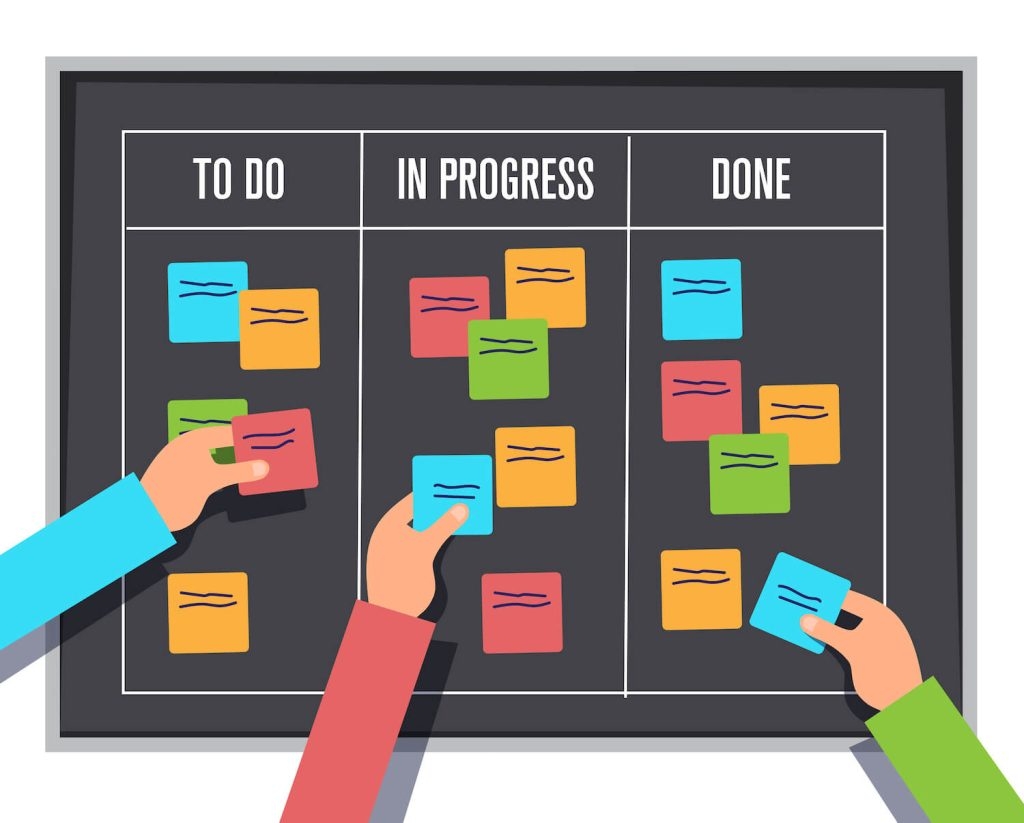
Kanban boards: Tasks move from To Do → In Progress → Done
-
Gantt charts: Visualize timelines, dependencies, and milestones
-
Dashboards: Summarize overall project progress
Why It Works
-
Simplifies monitoring
-
Provides instant insights
-
Helps identify overdue or stalled tasks
6. Define Task Status Clearly
Ambiguous task statuses reduce tracking effectiveness.
Strategy
-
Use standardized statuses such as:
-
Not Started
-
In Progress
-
Blocked
-
Completed
-
-
Include percentage completion for larger tasks
Why It Works
-
Reduces confusion
-
Improves progress reporting
-
Helps managers prioritize interventions
7. Track Metrics and Key Performance Indicators (KPIs)
Quantitative tracking helps teams measure progress objectively.
Examples
-
Number of tasks completed vs. total assigned
-
Percentage of milestones achieved
-
Average completion time per task
-
Number of blocked tasks
Why It Works
-
Provides measurable insights
-
Helps forecast project timelines
-
Supports performance reviews
8. Monitor Dependencies
Many team tasks depend on the completion of other tasks.
Strategy
-
Identify task dependencies early
-
Highlight dependent tasks in your tracking system
-
Adjust timelines when upstream tasks are delayed
Why It Works
-
Prevents bottlenecks
-
Ensures smooth workflow
-
Reduces delays
9. Communicate Regularly
Task tracking is not just about tools—it’s also about communication.
Strategy
-
Encourage team members to update progress proactively
-
Use comments to report blockers
-
Hold periodic team meetings to discuss progress
Why It Works
-
Keeps everyone aligned
-
Reduces misunderstandings
-
Promotes a culture of transparency
10. Implement Accountability Measures
Accountability is crucial to ensure tasks are completed on time.
Strategy
-
Assign ownership clearly
-
Monitor progress and follow up on overdue tasks
-
Recognize completion and achievements
Why It Works
-
Encourages timely task completion
-
Motivates team members
-
Reduces delays and errors
11. Use Agile or Iterative Approaches
Agile methods are particularly effective for dynamic teams and projects.
Strategy
-
Divide work into sprints or iterations
-
Review progress at the end of each sprint
-
Adjust priorities based on current status
Benefits
-
Improves adaptability
-
Enhances transparency
-
Facilitates continuous improvement
12. Address Blockers Promptly
Unresolved issues can stall progress across multiple tasks.
Strategy
-
Identify blocked tasks during check-ins
-
Reassign resources or provide guidance
-
Track resolution in your task system
Why It Works
-
Keeps projects on schedule
-
Maintains team momentum
-
Reduces frustration
13. Maintain Documentation
Documenting task progress provides a historical record for accountability and improvement.
Strategy
-
Record completed tasks and updates
-
Keep notes on challenges and solutions
-
Maintain logs for recurring processes
Why It Works
-
Supports reporting and reviews
-
Improves process consistency
-
Aids future planning
14. Review Progress Regularly
Tracking is not effective if progress is not reviewed systematically.
Strategies
-
Weekly project review meetings
-
Dashboard monitoring
-
Retrospective analysis at project milestones
Benefits
-
Identifies trends and risks
-
Provides actionable insights
-
Enhances future planning
15. Foster a Culture of Transparency
Team members must feel comfortable reporting status honestly.
Strategy
-
Encourage open discussion of challenges
-
Avoid punitive responses to delays
-
Promote collaborative problem-solving
Why It Works
-
Improves reliability of progress reports
-
Builds trust within the team
-
Facilitates proactive issue resolution
16. Adapt Tools and Methods to Your Team
No single system works for every team.
Strategy
-
Assess team size, project complexity, and communication style
-
Choose tools and tracking methods that fit your context
-
Regularly review and adjust processes
Why It Works
-
Ensures adoption and effectiveness
-
Reduces frustration
-
Aligns tracking with real team needs
Practical Example
Scenario
A team is managing a product launch with multiple components: design, development, and marketing.
Tracking Approach
-
Break project into tasks and subtasks
-
Assign each task to an owner
-
Use a Kanban board to track task status
-
Conduct daily stand-ups for updates
-
Monitor dependencies and address blockers
-
Track completion metrics in a dashboard
Result
-
High visibility of all tasks
-
Prompt identification of delays
-
Smooth coordination and on-time launch
Common Mistakes to Avoid
-
Tracking tasks without clear ownership
-
Using inconsistent task statuses
-
Ignoring dependencies
-
Failing to update the system regularly
-
Overcomplicating the tracking process
Key Principles for Tracking Task Progress
-
Clarity: Define tasks and deliverables clearly
-
Transparency: Make progress visible to the team
-
Consistency: Track tasks regularly and systematically
-
Accountability: Assign ownership and follow up
-
Flexibility: Adapt methods based on team needs
-
Communication: Keep open lines for updates and issues
Final Thoughts
Tracking task progress in a team is both an art and a science. It requires a combination of structured systems, effective communication, and accountability mechanisms. By setting clear goals, assigning ownership, using the right tools, monitoring dependencies, and fostering transparency, managers can ensure tasks are completed efficiently and projects stay on track.
Effective tracking not only improves productivity but also enhances team collaboration, morale, and trust. Teams that track their work consistently are better equipped to meet deadlines, manage resources, and achieve strategic goals.
- Arts
- Business
- Computers
- Spellen
- Health
- Home
- Kids and Teens
- Money
- News
- Personal Development
- Recreation
- Regional
- Reference
- Science
- Shopping
- Society
- Sports
- Бизнес
- Деньги
- Дом
- Досуг
- Здоровье
- Игры
- Искусство
- Источники информации
- Компьютеры
- Личное развитие
- Наука
- Новости и СМИ
- Общество
- Покупки
- Спорт
- Страны и регионы
- World

 English
 Russian
 French
 Spanish
 Portuguese
 Deutsch
 Turkish
 Italiano
 Arabic
 Romaian
 Portuguese (Brazil)
 Greek
Greek