
What Math Is Required for Econometrics?
What Math Is Required for Econometrics?
Econometrics sits at the intersection of economics, mathematics, and statistics. It uses mathematical and statistical tools to analyze economic data, test hypotheses, and make forecasts. If you’re considering studying econometrics, one of the most common questions is: how much math do you actually need? The answer depends on your level of study, but there are several core areas of mathematics that form the foundation of econometrics.
This article breaks down the key mathematical skills required, explains why they matter, and gives you a realistic sense of what to expect.
1. Algebra: The Essential Starting Point
Algebra is the most fundamental mathematical skill for econometrics. At its core, econometrics is about building and manipulating equations that describe relationships between variables.
You should be comfortable with:
-
Solving linear equations
-
Working with systems of equations
-
Rearranging formulas
-
Understanding functions and variables
For example, a simple econometric model might look like:
[
Y = \beta_0 + \beta_1 X + \epsilon
]
Here, algebra helps you interpret how changes in (X) affect (Y), and how parameters ((\beta)) are estimated.
Why it matters: Algebra is the language of econometrics. Without it, you won’t be able to follow even basic models.
2. Calculus: Understanding Change and Optimization
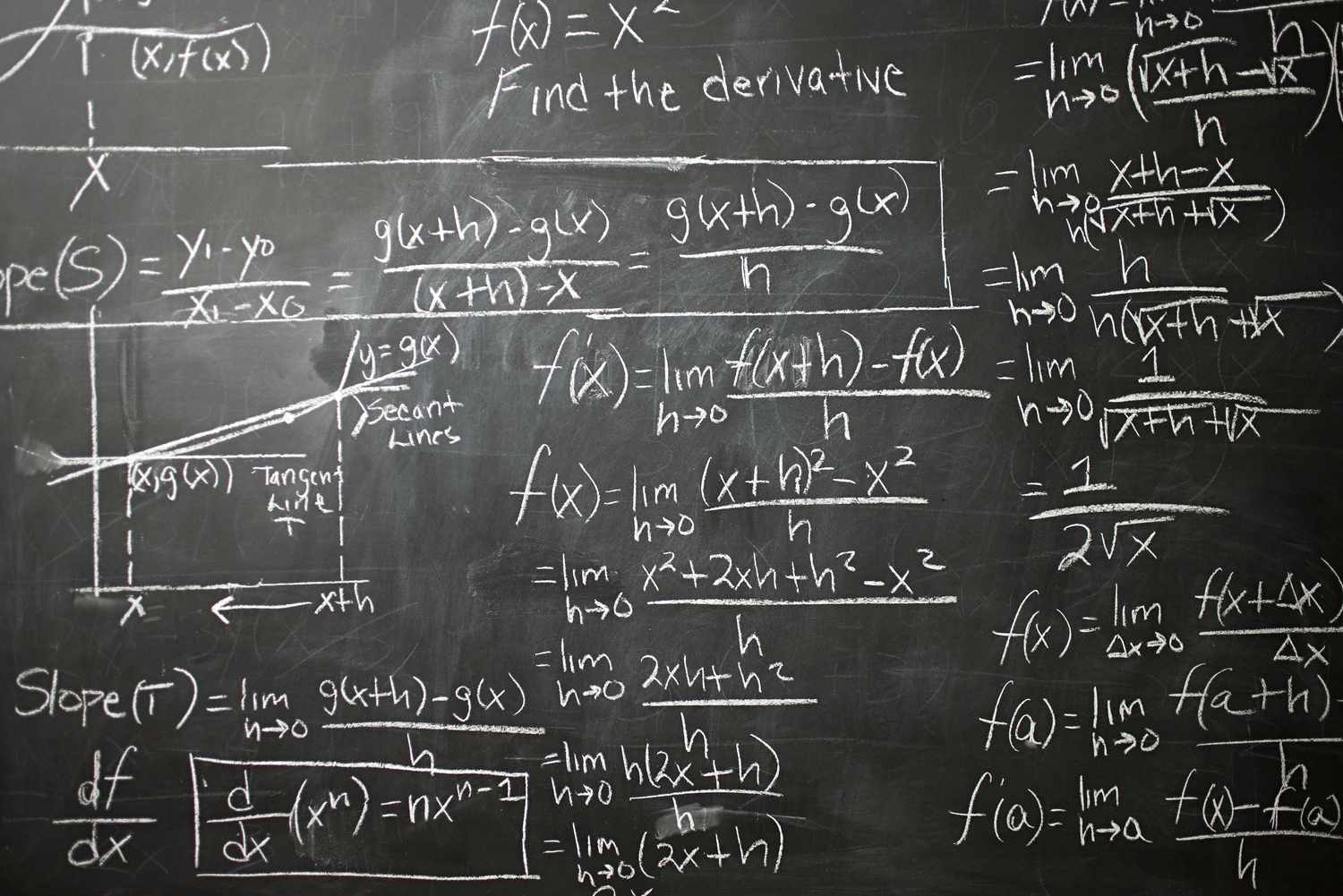
Calculus plays a crucial role, especially in more advanced econometrics. It helps you understand how variables change and how to optimize models.
Key topics include:
-
Derivatives (rates of change)
-
Partial derivatives (used in multivariable models)
-
Optimization (finding maximum or minimum values)
-
Basic integrals (less common, but still useful)
For instance, econometrics often involves minimizing the sum of squared errors in regression analysis. This requires taking derivatives and solving optimization problems.
Why it matters: Many estimation techniques—like Ordinary Least Squares (OLS)—are based on calculus concepts.
3. Statistics: The Core of Econometrics
If algebra is the language, statistics is the backbone of econometrics. In fact, econometrics can be thought of as applied statistics for economic data.
You’ll need to understand:
-
Descriptive statistics (mean, variance, standard deviation)
-
Probability distributions (normal, binomial, etc.)
-
Sampling and estimators
-
Hypothesis testing
-
Confidence intervals
-
Regression analysis
For example, when estimating a model, you’ll want to know:
-
Is the relationship statistically significant?
-
How reliable are the estimates?
-
What is the probability that results occurred by chance?
Why it matters: Econometrics is fundamentally about making inferences from data. Statistics provides the tools to do that rigorously.
4. Probability Theory: Dealing with Uncertainty
Closely related to statistics, probability theory helps you model uncertainty and randomness in economic data.
Important concepts include:
-
Random variables
-
Expected value
-
Variance and covariance
-
Conditional probability
-
Law of large numbers
-
Central limit theorem
Econometric models often include an error term ((\epsilon)) that captures randomness. Understanding probability helps you interpret this uncertainty correctly.
Why it matters: Without probability, you can’t properly understand model assumptions or interpret results.
5. Linear Algebra: Working with Multiple Variables
As you move beyond simple models, linear algebra becomes increasingly important. Econometrics frequently deals with multiple variables at once, and matrix notation simplifies these problems.
Key topics:
-
Vectors and matrices
-
Matrix multiplication
-
Inverses and determinants
-
Eigenvalues and eigenvectors (more advanced)
For example, a multiple regression model is often written in matrix form:
[
Y = X\beta + \epsilon
]
This compact representation makes it easier to compute estimates and understand the structure of models.
Why it matters: Linear algebra is essential for handling large datasets and complex models efficiently.
6. Real Analysis (Advanced Level)
At higher levels (especially graduate study), real analysis may be required. This is a more theoretical branch of mathematics that focuses on rigorous proofs and the foundations of calculus.
Topics may include:
-
Limits and continuity
-
Convergence
-
Mathematical proofs
Why it matters: Real analysis helps you understand why econometric methods work, not just how to apply them. It’s particularly important for research-oriented paths.
7. Numerical Methods and Computation
Modern econometrics relies heavily on computers. While this isn’t “math” in the traditional sense, it involves computational techniques grounded in mathematics.
Useful skills:
-
Understanding algorithms
-
Numerical optimization
-
Working with statistical software (e.g., R, Python, Stata)
You don’t need to be a programmer, but basic coding skills are increasingly valuable.
Why it matters: Real-world econometrics involves large datasets and complex calculations that must be handled computationally.
8. How Much Math Do You Really Need?
The level of math required depends on your goals:
Undergraduate Level
-
Algebra: essential
-
Basic calculus: required
-
Introductory statistics: essential
-
Some linear algebra: helpful
At this level, the focus is on application rather than theory.
Master’s Level
-
Strong calculus (including multivariable)
-
Solid statistics and probability
-
Linear algebra (important)
You’ll start to see more mathematical depth and formal reasoning.
PhD Level
-
Advanced calculus and real analysis
-
Advanced probability theory
-
Linear algebra (extensive use)
Here, econometrics becomes highly mathematical and theoretical.
9. Is the Math Difficult?
Many students find econometrics challenging not because of any single topic, but because it combines multiple areas of math at once.
For example, a single problem might require:
-
Algebra to manipulate equations
-
Calculus to optimize a function
-
Statistics to interpret results
However, the difficulty is manageable if you build your skills step by step.
10. Tips for Preparing
If you’re planning to study econometrics, here’s how to prepare:
-
Strengthen your algebra first
Everything builds on this foundation. -
Learn the intuition behind calculus
Focus on understanding concepts, not just memorizing formulas. -
Take a solid statistics course
This is arguably the most important preparation. -
Practice regularly
Econometrics is a skill—you learn it by doing. -
Use software early
Tools like R or Python can make abstract concepts more concrete.
Conclusion
Econometrics requires a mix of mathematical skills, ranging from basic algebra to advanced probability and linear algebra. While the subject can seem intimidating at first, the math is not insurmountable. Most of the difficulty comes from integrating different concepts rather than mastering any single area.
If you approach it gradually—building a strong foundation in algebra, gaining confidence in calculus, and developing a solid understanding of statistics—you’ll be well-equipped to handle econometrics. Whether your goal is practical data analysis or advanced academic research, the math you learn along the way will be both valuable and widely applicable.
- Arts
- Business
- Computers
- Jeux
- Health
- Domicile
- Kids and Teens
- Argent
- News
- Personal Development
- Recreation
- Regional
- Reference
- Science
- Shopping
- Society
- Sports
- Бизнес
- Деньги
- Дом
- Досуг
- Здоровье
- Игры
- Искусство
- Источники информации
- Компьютеры
- Личное развитие
- Наука
- Новости и СМИ
- Общество
- Покупки
- Спорт
- Страны и регионы
- World

 English
 Russian
 Spanish
 Portuguese
 Deutsch
 Turkish
 Dutch
Dutch
 Italiano
 Arabic
 Romaian
 Portuguese (Brazil)
 Greek
Greek
