
Is Offshoring Better Than Outsourcing?
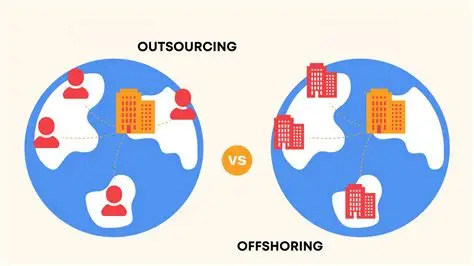
In global business strategy, the terms offshoring and outsourcing are often used interchangeably, but they represent different concepts. This confusion leads many to ask: Is offshoring better than outsourcing?
The answer is not straightforward. Neither strategy is universally “better”—each serves different purposes and offers unique advantages and disadvantages depending on a company’s goals, resources, and operational needs.
This article explores the differences between offshoring and outsourcing, compares their benefits and risks, and explains when each approach is most effective.
Definitions
Offshoring
Offshoring refers to relocating business operations to another country. These operations can still be owned and managed by the company.
Example:
A company opens its own development center in another country.
Outsourcing
Outsourcing involves hiring a third-party company to perform specific tasks or services, which may be located domestically or internationally.
Example:
A company hires an external firm to handle customer support.
Key Distinction
- Offshoring = Location-based strategy
- Outsourcing = Ownership/management strategy
They can overlap, but they are not the same.
1. Cost Efficiency
Offshoring
- Reduces costs by moving operations to lower-cost countries
- Requires investment in infrastructure
Outsourcing
- Reduces costs by leveraging external providers
- No need to build internal capabilities
Comparison
Outsourcing is often cheaper in the short term, while offshoring may provide long-term savings.
2. Control and Ownership
Offshoring
- Company retains full control
- Direct management of operations
Outsourcing
- Less control over processes
- Reliance on third-party providers
Comparison
Offshoring offers more control, outsourcing offers more convenience.
3. Flexibility
Offshoring
- Less flexible due to long-term investment
- Harder to scale quickly
Outsourcing
- Highly flexible
- Easy to scale up or down
Comparison
Outsourcing is more adaptable to changing needs.
4. Expertise and Talent Access
Offshoring
- Access to global talent, but requires hiring and training
Outsourcing
- Immediate access to specialized expertise
Comparison
Outsourcing is faster for accessing skills, offshoring builds internal capability.
5. Implementation Speed
Offshoring
- Slower setup (infrastructure, hiring, training)
Outsourcing
- Faster implementation
- Quick onboarding
Comparison
Outsourcing is better for rapid deployment.
6. Risk Management
Offshoring
- Risks include operational complexity and management challenges
Outsourcing
- Risks include dependency on vendors and quality control issues
Comparison
Both carry risks, but of different types.
7. Quality Control
Offshoring
- Easier to maintain quality due to direct oversight
Outsourcing
- Quality depends on vendor performance
Comparison
Offshoring provides stronger quality control.
8. Communication and Coordination
Offshoring
- Requires managing remote teams
Outsourcing
- Communication handled through contracts and service agreements
Comparison
Both require strong communication systems, but outsourcing simplifies coordination.
9. Long-Term vs Short-Term Strategy
Offshoring
- Long-term investment
- Builds internal capabilities
Outsourcing
- Short-term or project-based solution
Comparison
Offshoring is strategic, outsourcing is tactical.
10. Cost Transparency
Offshoring
- Costs may include hidden expenses (management, training)
Outsourcing
- Clear pricing through contracts
Comparison
Outsourcing offers more predictable costs.
11. Innovation and Knowledge Retention
Offshoring
- Knowledge stays within the company
Outsourcing
- Knowledge may remain with the vendor
Comparison
Offshoring supports long-term innovation.
12. Scalability
Offshoring
- Scalable but requires planning and investment
Outsourcing
- Easily scalable through vendor resources
Comparison
Outsourcing offers faster scalability.
13. Legal and Compliance Complexity
Offshoring
- Must comply with foreign laws directly
Outsourcing
- Vendor often handles compliance
Comparison
Outsourcing reduces legal complexity.
14. Dependency Risks
Offshoring
- Less dependent on external parties
Outsourcing
- High dependency on vendors
Comparison
Offshoring reduces reliance on third parties.
15. When Offshoring Is Better
Offshoring is preferable when:
- Long-term cost savings are important
- Control and quality are priorities
- Intellectual property protection is critical
- The company wants to build internal expertise
16. When Outsourcing Is Better
Outsourcing is preferable when:
- Quick solutions are needed
- Specialized skills are required
- Flexibility is important
- The company wants to reduce operational complexity
Can Offshoring and Outsourcing Be Combined?
Yes—this is common.
Offshore Outsourcing
A company hires a third-party provider in another country.
Hybrid Model
- Offshoring for core operations
- Outsourcing for non-core tasks
Impact
Combines benefits of both strategies.
Advantages and Disadvantages Summary
Offshoring Advantages
- Greater control
- Long-term cost savings
- Knowledge retention
Offshoring Disadvantages
- High setup cost
- Complex management
Outsourcing Advantages
- Flexibility
- Lower upfront cost
- Access to expertise
Outsourcing Disadvantages
- Less control
- Vendor dependency
Future Trends
Hybrid Strategies
Combining offshoring and outsourcing.
Automation
Reducing reliance on both models.
Strategic Outsourcing
Focusing on high-value partnerships.
Global Talent Integration
Blending internal and external teams.
Conclusion
Offshoring is not inherently better than outsourcing, and outsourcing is not inherently better than offshoring. Each strategy serves different business needs and comes with its own set of benefits and challenges.
The best choice depends on factors such as cost, control, flexibility, and long-term goals. In many cases, companies achieve the best results by combining both approaches, leveraging the strengths of each to build a resilient and efficient global operation.
- Arts
- Business
- Computers
- Παιχνίδια
- Health
- Κεντρική Σελίδα
- Kids and Teens
- Money
- News
- Personal Development
- Recreation
- Regional
- Reference
- Science
- Shopping
- Society
- Sports
- Бизнес
- Деньги
- Дом
- Досуг
- Здоровье
- Игры
- Искусство
- Источники информации
- Компьютеры
- Личное развитие
- Наука
- Новости и СМИ
- Общество
- Покупки
- Спорт
- Страны и регионы
- World

 English
 Russian
 French
 Spanish
 Portuguese
 Deutsch
 Turkish
 Dutch
Dutch
 Italiano
 Arabic
 Romaian
 Portuguese (Brazil)
