
When Should a Company Avoid Offshoring?
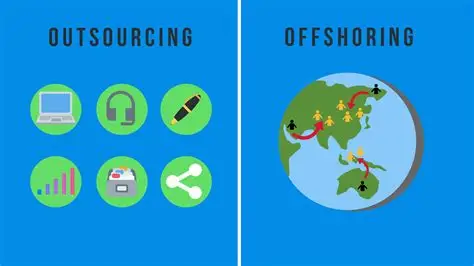
Offshoring has become a widely used strategy for reducing costs and accessing global talent. However, it is not always the best choice for every company or situation. While offshoring can provide significant benefits, it also introduces risks and challenges that may outweigh its advantages in certain cases.
Understanding when to avoid offshoring is just as important as knowing when to use it. Poorly planned offshoring decisions can lead to quality issues, operational inefficiencies, security risks, and long-term financial losses.
This article explores the key situations in which companies should avoid offshoring and consider alternative strategies such as onshoring, nearshoring, or outsourcing.
The Importance of Strategic Decision-Making
Offshoring should be based on careful analysis, not just cost savings. Companies must evaluate:
- Business goals
- Operational complexity
- Risk tolerance
- Customer expectations
Avoiding offshoring in the wrong situations can protect long-term success.
1. When Quality Is Critical
High-Precision Work
Industries that require strict quality control may struggle with offshoring.
Examples
- Healthcare
- Aerospace
- Advanced manufacturing
Why Avoid Offshoring
Distance and reduced oversight can lead to quality inconsistencies.
2. When Intellectual Property Is Highly Sensitive
Risk of IP Theft
Sharing proprietary information across borders increases exposure.
Examples
- Technology companies
- Research and development projects
Why Avoid Offshoring
Protecting sensitive data may be more important than cost savings.
3. When Real-Time Collaboration Is Essential
Need for Immediate Communication
Some projects require constant interaction and rapid decision-making.
Challenges
- Time zone differences
- Communication delays
Why Avoid Offshoring
Slower collaboration can reduce efficiency and innovation.
4. When Customer Experience Is a Priority
Direct Customer Interaction
Customer-facing roles require strong communication and cultural alignment.
Risks
- Language barriers
- Cultural misunderstandings
Why Avoid Offshoring
Poor customer experience can damage brand reputation.
5. When Legal and Compliance Requirements Are Complex
Strict Regulations
Industries with heavy regulation may face compliance challenges offshore.
Examples
- Finance
- Healthcare
- Government services
Why Avoid Offshoring
Legal risks and penalties can outweigh cost benefits.
6. When Security Risks Are High
Data Sensitivity
Handling confidential or personal data increases risk.
Threats
- Cyberattacks
- Data breaches
Why Avoid Offshoring
Security concerns may require tighter control.
7. When Hidden Costs Outweigh Savings
Unexpected Expenses
- Training
- Travel
- Management
- Communication tools
Why Avoid Offshoring
Actual costs may exceed initial expectations.
8. When Strong Internal Expertise Is Needed
Knowledge Retention
Some tasks require deep organizational knowledge.
Risks
- Loss of internal expertise
- Dependency on external teams
Why Avoid Offshoring
Maintaining knowledge internally supports long-term growth.
9. When Operations Are Highly Complex
Complex Workflows
Projects with many dependencies are harder to manage remotely.
Risks
- Coordination challenges
- Increased errors
Why Avoid Offshoring
Complexity increases the likelihood of failure.
10. When Speed Is Critical
Fast Turnaround Requirements
Some industries require rapid delivery and response.
Challenges
- Time zone delays
- Coordination issues
Why Avoid Offshoring
Local operations may deliver faster results.
11. When Cultural Alignment Is Essential
Cultural Sensitivity
Certain roles require deep understanding of local culture.
Examples
- Marketing
- Branding
- Customer service
Why Avoid Offshoring
Misalignment can lead to ineffective outcomes.
12. When Infrastructure Is Inadequate
Offshore Limitations
Some locations may lack:
- Reliable internet
- Advanced technology
- Skilled workforce
Why Avoid Offshoring
Poor infrastructure reduces efficiency and quality.
13. When Political or Economic Risk Is High
External Factors
- Political instability
- Economic uncertainty
- Regulatory changes
Why Avoid Offshoring
Unstable environments increase business risk.
14. When Company Size Is Small
Limited Resources
Small businesses may struggle to manage offshore operations.
Challenges
- Lack of expertise
- Limited management capacity
Why Avoid Offshoring
Complexity may outweigh benefits for smaller firms.
15. When Brand Reputation Is at Stake
Public Perception
Offshoring can sometimes be viewed negatively.
Risks
- Criticism for job losses
- Concerns about labor practices
Why Avoid Offshoring
Reputation damage can impact long-term success.
16. When Flexibility Is Required
Changing Needs
Businesses that require frequent adjustments may struggle with offshoring.
Challenges
- Long setup times
- Rigid structures
Why Avoid Offshoring
More flexible solutions may be preferable.
Alternatives to Offshoring
When offshoring is not suitable, companies can consider:
Onshoring
Keeping operations within the home country.
Nearshoring
Moving operations to nearby countries.
Outsourcing
Hiring external providers without relocating operations.
Hybrid Models
Combining multiple strategies.
Key Insight
Choosing the right strategy depends on business needs.
Balancing Risks and Benefits
Companies should evaluate:
- Cost vs quality
- Efficiency vs control
- Short-term vs long-term goals
Future Considerations
Automation
Reducing the need for offshoring.
Regionalization
Shifting toward closer locations.
Risk Awareness
More cautious decision-making.
Conclusion
Offshoring is not a one-size-fits-all solution. While it offers clear advantages, there are many situations where it may not be the best choice. Companies should avoid offshoring when quality, security, speed, or control are critical, or when risks outweigh potential benefits.
By carefully evaluating their needs and considering alternative strategies, organizations can make smarter decisions that support long-term success in a complex global environment.
- Arts
- Business
- Computers
- Giochi
- Health
- Home
- Kids and Teens
- Money
- News
- Personal Development
- Recreation
- Regional
- Reference
- Science
- Shopping
- Society
- Sports
- Бизнес
- Деньги
- Дом
- Досуг
- Здоровье
- Игры
- Искусство
- Источники информации
- Компьютеры
- Личное развитие
- Наука
- Новости и СМИ
- Общество
- Покупки
- Спорт
- Страны и регионы
- World

 English
 Russian
 French
 Spanish
 Portuguese
 Deutsch
 Turkish
 Dutch
Dutch
 Arabic
 Romaian
 Portuguese (Brazil)
 Greek
Greek
