
What Is Monetary Policy?
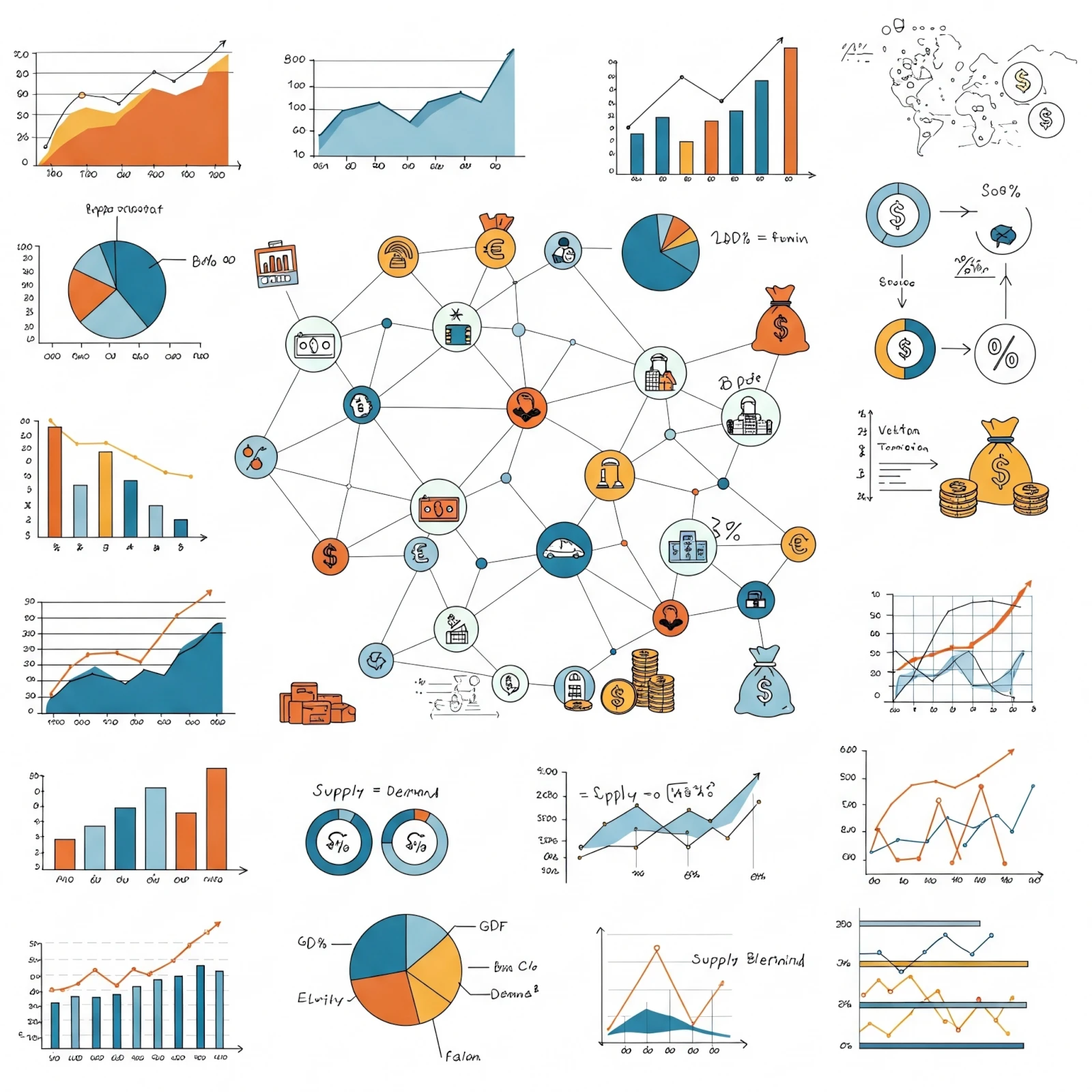
What Is Monetary Policy?
Monetary policy refers to the actions taken by a country’s central bank to manage the supply of money and the cost of borrowing (interest rates) in an economy. Its primary purpose is to promote stable economic growth, control inflation, and maintain low unemployment. By influencing how much money circulates and how expensive it is to borrow, monetary policy plays a central role in shaping overall economic conditions.
The Purpose of Monetary Policy
At its core, monetary policy aims to achieve macroeconomic stability. Most central banks focus on three key objectives:
-
Price Stability (Controlling Inflation)
Inflation occurs when the general level of prices rises over time, reducing purchasing power. Moderate inflation is normal in growing economies, but high inflation can destabilize markets and erode savings. Central banks try to keep inflation within a target range. -
Full Employment
While not always a direct mandate, many central banks consider employment levels when setting policy. A healthy economy typically has low unemployment, meaning most people who want to work can find jobs. -
Economic Growth
Sustainable growth ensures rising living standards. Monetary policy supports this by creating favorable financial conditions for investment and consumption.
How Monetary Policy Works
Monetary policy works through influencing the behavior of banks, businesses, and consumers. When a central bank changes interest rates or money supply, it affects:
-
Borrowing costs (loans, mortgages, business credit)
-
Spending and investment decisions
-
Exchange rates (value of the national currency)
-
Asset prices (stocks, bonds, real estate)
For example, when interest rates are low, borrowing becomes cheaper. Businesses may invest more, and consumers may spend more, stimulating economic activity. When rates are high, borrowing becomes expensive, slowing down spending and investment.
Types of Monetary Policy
There are two main types of monetary policy, depending on the economic situation:
1. Expansionary Monetary Policy
This is used when the economy is slowing down or in recession. The goal is to stimulate growth.
Key actions include:
-
Lowering interest rates
-
Increasing the money supply
-
Encouraging lending and investment
Effects:
-
Increased consumer spending
-
Higher business investment
-
Reduced unemployment
However, if overused, expansionary policy can lead to high inflation.
2. Contractionary Monetary Policy
This is used when the economy is growing too quickly and inflation is rising.
Key actions include:
-
Raising interest rates
-
Reducing the money supply
-
Discouraging excessive borrowing
Effects:
-
Slower economic growth
-
Reduced inflation
-
Stabilized prices
The challenge is to slow inflation without causing a recession.
Tools of Monetary Policy
Central banks use several tools to implement monetary policy effectively:
1. Interest Rates
The most commonly used tool is the policy interest rate (often called the “base rate” or “benchmark rate”).
-
Lower rates → encourage borrowing and spending
-
Higher rates → discourage borrowing and reduce inflation
Changes in this rate influence all other interest rates in the economy.
2. Open Market Operations
This involves buying or selling government securities (like bonds) in financial markets.
-
Buying securities: injects money into the economy
-
Selling securities: removes money from the economy
This tool directly affects liquidity in the banking system.
3. Reserve Requirements
Central banks can require commercial banks to hold a certain percentage of deposits as reserves.
-
Lower reserve requirements → banks can lend more
-
Higher reserve requirements → banks lend less
Although less frequently used today, it remains an important policy lever.
4. Quantitative Easing (QE)
In times of severe economic downturns, central banks may use unconventional tools like quantitative easing.
QE involves large-scale purchases of financial assets to increase money supply and encourage lending when traditional interest rate cuts are insufficient.
5. Forward Guidance
This is a communication tool where central banks signal their future policy intentions.
By shaping expectations about future interest rates, they influence current economic decisions.
Transmission Mechanism
Monetary policy affects the economy through a process known as the transmission mechanism. This refers to how policy decisions translate into real economic outcomes.
For example:
-
Central bank lowers interest rates
-
Commercial banks reduce lending rates
-
Businesses invest more; consumers borrow more
-
Demand for goods and services rises
-
Production increases and unemployment falls
However, this process takes time—often months or even years—making policy decisions complex and forward-looking.
Challenges of Monetary Policy
Despite its importance, monetary policy is not without limitations:
1. Time Lags
There is often a delay between policy implementation and its effects on the economy. This makes it difficult to respond precisely to changing conditions.
2. Uncertainty
Economic behavior is influenced by many factors, including global events, political changes, and consumer confidence. This makes outcomes unpredictable.
3. Liquidity Traps
In extreme situations, such as during deep recessions, interest rates may already be near zero. In such cases, traditional policy tools become less effective.
4. Inflation vs. Growth Trade-off
Efforts to control inflation may slow economic growth, while stimulating growth may increase inflation. Balancing these objectives is a constant challenge.
Monetary Policy vs. Fiscal Policy
Monetary policy is often compared with fiscal policy, but they differ in key ways:
-
Monetary policy is controlled by the central bank and focuses on money supply and interest rates.
-
Fiscal policy is managed by the government and involves taxation and public spending.
While both aim to stabilize the economy, they operate through different mechanisms. In practice, coordination between the two is often necessary for effective economic management.
Importance in a Global Economy
In today’s interconnected world, monetary policy decisions have global implications. Changes in interest rates in one major economy can affect:
-
Capital flows between countries
-
Exchange rates
-
International trade
For example, if a major country raises interest rates, investors may move funds there for higher returns, affecting other economies’ currencies and financial stability.
Conclusion
Monetary policy is a powerful tool used by central banks to guide economic activity. By managing interest rates and the money supply, it influences borrowing, spending, and investment decisions across the economy. Whether stimulating growth during a downturn or controlling inflation during expansion, monetary policy plays a crucial role in maintaining economic stability.
However, it is not a perfect system. Policymakers must navigate uncertainty, time delays, and trade-offs between competing objectives. When used effectively—often alongside fiscal policy—monetary policy helps create a stable environment where businesses can invest, consumers can spend, and economies can grow sustainably.
- Arts
- Business
- Computers
- Giochi
- Health
- Home
- Kids and Teens
- Money
- News
- Personal Development
- Recreation
- Regional
- Reference
- Science
- Shopping
- Society
- Sports
- Бизнес
- Деньги
- Дом
- Досуг
- Здоровье
- Игры
- Искусство
- Источники информации
- Компьютеры
- Личное развитие
- Наука
- Новости и СМИ
- Общество
- Покупки
- Спорт
- Страны и регионы
- World

 English
 Russian
 French
 Spanish
 Portuguese
 Deutsch
 Turkish
 Dutch
Dutch
 Arabic
 Romaian
 Portuguese (Brazil)
 Greek
Greek
