
How does minimalism affect clothing choices?
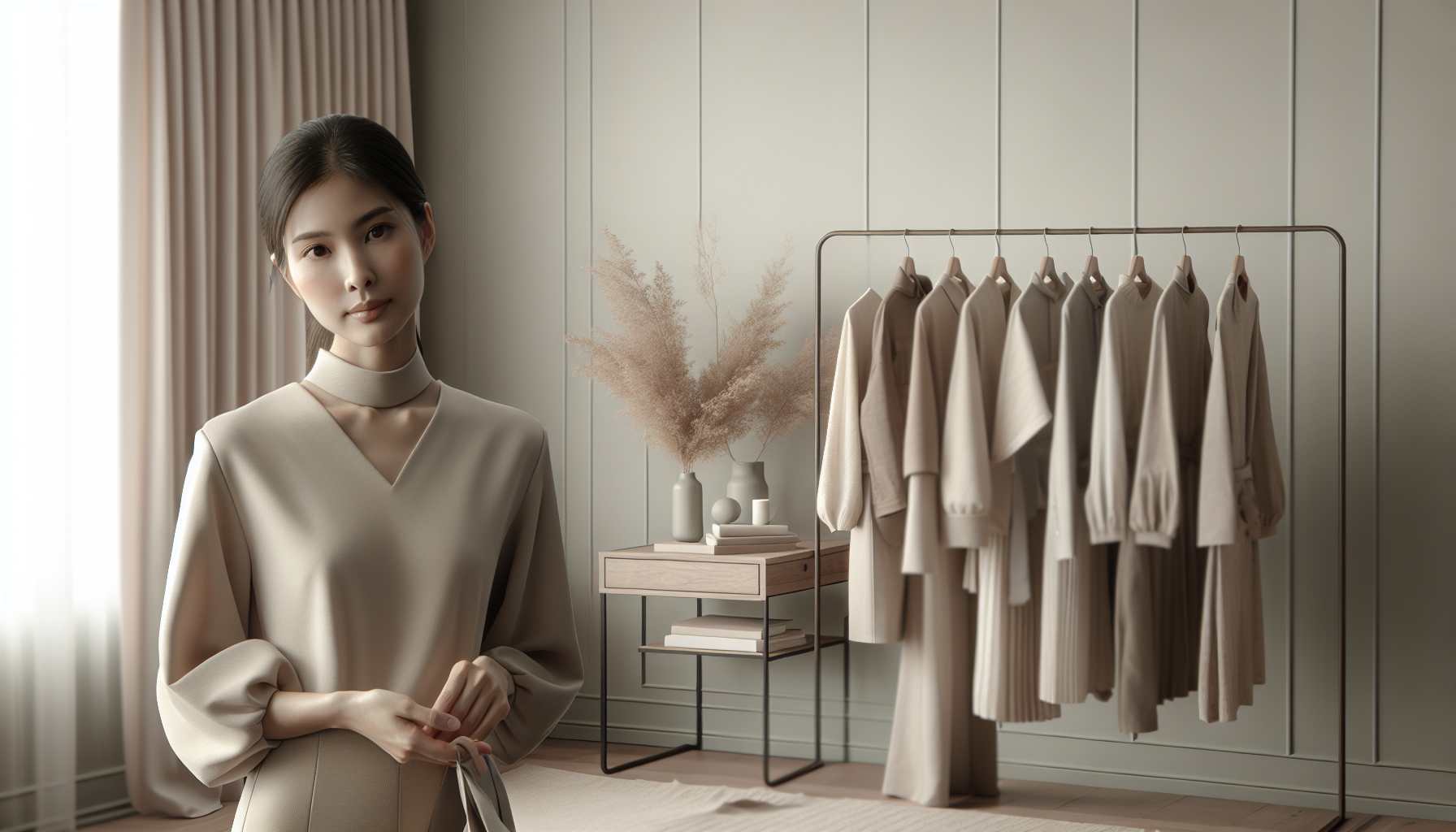
How Does Minimalism Affect Clothing Choices?
Minimalism, when applied to clothing, is not simply about owning fewer items. It is a systematic shift in how individuals think about, select, use, and maintain their wardrobe. Instead of clothing being driven by impulse, trend cycles, or accumulation, minimalist clothing choices are guided by intentionality, functionality, and coherence.
This shift has both practical and psychological dimensions. It changes not only what people wear, but how they make decisions, how they perceive value in clothing, and how they relate to consumption in general.
To understand how minimalism affects clothing choices, we need to examine its impact across several layers: decision-making, aesthetics, behavior, consumption habits, identity, and long-term wardrobe structure.
1. From Accumulation to Intentional Selection
In conventional clothing behavior, purchases are often reactive:
-
Buying based on trends
-
Impulse purchases
-
Emotional shopping
-
Replacing dissatisfaction with new items
Minimalism replaces this with intentional selection.
Instead of asking:
-
“Do I like this?”
Minimalism encourages:
-
“Do I need this?”
-
“Does this serve a clear purpose?”
-
“Does this integrate with what I already own?”
This fundamentally changes clothing behavior from accumulation-based to function-based decision-making.
As a result, clothing choices become more deliberate and less frequent, but significantly more meaningful.
2. Reduction of Decision Fatigue in Clothing
One of the most immediate effects of minimalism on clothing is the reduction of decision fatigue.
A typical non-minimalist wardrobe may contain dozens or even hundreds of items, leading to:
-
Overchoice (too many options)
-
Time spent deciding outfits
-
Mental clutter in the morning routine
Minimalism reduces this cognitive burden by limiting options.
When fewer, more compatible items are available:
-
Outfit selection becomes faster
-
Decisions require less cognitive effort
-
Morning routines become more efficient
This reduction in decision fatigue is not trivial—it frees mental energy for more important tasks throughout the day.
3. Shift Toward Versatility and Interchangeability
Minimalism significantly changes how clothing is evaluated. Instead of focusing on individual “statement pieces,” emphasis shifts to versatility.
Clothing choices are guided by questions like:
-
Can this item be worn in multiple contexts?
-
Does it match with several other pieces?
-
Can it be layered or adapted across seasons?
This leads to wardrobes where items are designed to work together rather than exist independently.
The result is:
-
Fewer redundant items
-
More outfit combinations per item
-
Greater overall efficiency in wardrobe usage
In this system, value is not measured by uniqueness alone, but by adaptability.
4. Emotional Detachment from Clothing
Minimalism changes the emotional relationship with clothing.
In non-minimalist consumption patterns, clothing can carry:
-
Emotional gratification
-
Identity signaling
-
Status association
-
Impulse-driven satisfaction
Minimalism reduces reliance on clothing for emotional fulfillment. Instead, clothing is reframed as:
-
Functional
-
Supportive of daily life
-
Secondary to experience and purpose
This does not mean clothing becomes emotionally irrelevant, but rather that emotional attachment becomes more selective and less compulsive.
As a result:
-
Fewer sentimental purchases occur
-
Letting go of clothing becomes easier
-
Emotional dependence on shopping decreases
5. Increased Awareness of Quality Over Quantity
Minimalism shifts attention from quantity of clothing to quality of clothing.
Instead of owning many low- or medium-quality items, individuals begin prioritizing:
-
Durable fabrics
-
Better construction
-
Timeless design
-
Comfort and fit
This changes how clothing decisions are made:
-
Less focus on price alone
-
More attention to longevity
-
Increased willingness to invest in fewer, better items
In practical terms, this often leads to fewer purchases overall, but higher satisfaction with each item owned.
6. Decline of Trend-Based Consumption
Fast fashion and trend cycles encourage frequent wardrobe changes. Minimalism disrupts this pattern by reducing responsiveness to trends.
In a minimalist clothing mindset:
-
Trends are not primary decision drivers
-
Long-term usability matters more than seasonal popularity
-
Timelessness is prioritized over novelty
This leads to a more stable wardrobe over time. Instead of frequent turnover, clothing choices become more consistent and predictable.
The psychological effect is significant:
-
Reduced pressure to constantly update appearance
-
Lower comparison with social trends
-
Greater stability in personal style
7. Development of a Personal Style Identity
Minimalism encourages individuals to define a coherent personal style rather than constantly experimenting with unrelated fashion choices.
When wardrobe size decreases:
-
Each item becomes more significant
-
Inconsistencies become more noticeable
-
Style coherence becomes more important
As a result, individuals often gravitate toward:
-
Specific color palettes
-
Consistent silhouettes
-
Repeated outfit structures
This leads to a stronger and more recognizable personal identity through clothing.
Over time, clothing becomes less about experimentation and more about refinement.
8. Simplification of Shopping Behavior
Minimalism fundamentally changes how people shop for clothing.
Instead of frequent, spontaneous purchases, shopping becomes:
-
Planned
-
Purpose-driven
-
Infrequent
Key changes include:
-
Creating lists before purchasing
-
Buying only when there is a clear gap in the wardrobe
-
Avoiding impulse buying environments
-
Considering long-term utility before purchase
This reduces unnecessary consumption and leads to more intentional wardrobe growth.
Shopping becomes a maintenance activity rather than a habitual behavior.
9. Improved Coordination and Outfit Efficiency
A minimalist wardrobe is designed around compatibility.
This means:
-
Most tops match most bottoms
-
Colors are coordinated intentionally
-
Items are selected to reduce mismatches
As a result:
-
Outfits can be assembled quickly
-
Fewer decisions are needed to look “put together”
-
Mistakes in coordination are minimized
This improves not only efficiency but also confidence in clothing choices, since combinations are more predictable and reliable.
10. Reduced Storage and Maintenance Burden
Clothing choices are not only about selection but also maintenance.
More clothing typically leads to:
-
More laundry complexity
-
More storage requirements
-
More organizational overhead
-
More time spent managing items
Minimalism reduces this burden significantly.
With fewer items:
-
Laundry cycles become simpler
-
Storage space is optimized
-
Clothing rotation is easier to manage
This indirect effect reinforces the simplicity of daily clothing decisions.
11. Environmental and Ethical Considerations
Minimalism often leads to more conscious clothing choices that have broader implications beyond the individual.
These include:
-
Reduced consumption of fast fashion
-
Lower environmental impact
-
Longer garment lifecycles
-
Less textile waste
Clothing choices become less about quantity and more about sustainability.
This shift often changes how individuals perceive the act of purchasing clothing—from a casual behavior to a more responsible decision.
12. Psychological Impact of Fewer Choices
From a cognitive perspective, reducing clothing options has measurable psychological effects.
Fewer choices lead to:
-
Lower cognitive load
-
Reduced decision fatigue
-
Faster decision-making
-
Less anxiety around appearance
Paradoxically, fewer options often increase satisfaction because decisions feel clearer and more confident.
Instead of overthinking outfits, individuals can rely on a simplified system that consistently works.
13. Resistance to Overconsumption Cycles
Consumer culture often encourages a cycle of:
-
Purchase
-
Temporary satisfaction
-
Dissatisfaction or novelty loss
-
Repeat purchase
Minimalism disrupts this cycle by reducing the frequency and emotional drivers of consumption.
Clothing choices become:
-
Less emotionally reactive
-
Less influenced by external marketing
-
More internally guided
This leads to a more stable and less compulsive relationship with clothing.
14. The Role of Constraints in Creativity
Interestingly, minimalism introduces constraints that can actually enhance creativity in clothing choices.
With fewer items available:
-
Individuals learn to combine pieces in new ways
-
Outfits become more intentional
-
Creativity shifts from acquisition to recombination
This constraint-based creativity often results in:
-
More consistent style identity
-
More efficient use of wardrobe items
-
Greater appreciation for existing clothing
Instead of relying on new purchases for novelty, creativity emerges from recombination.
15. Long-Term Behavioral Change in Clothing Habits
Over time, minimalism leads to durable changes in clothing behavior:
-
Reduced shopping frequency
-
Increased satisfaction with existing wardrobe
-
Stronger alignment between clothing and lifestyle
-
Decreased emotional reliance on fashion consumption
Clothing becomes a stable system rather than a constantly changing one.
This stability reduces cognitive effort and increases overall satisfaction with daily clothing decisions.
Conclusion
Minimalism profoundly reshapes clothing choices by transforming them from reactive, consumption-driven behaviors into intentional, structured, and efficient decisions.
It affects clothing choices by:
-
Reducing decision fatigue
-
Emphasizing versatility and quality
-
Limiting impulse purchases
-
Strengthening personal style identity
-
Simplifying maintenance and organization
Ultimately, minimalism does not restrict clothing choices in a limiting sense. Instead, it removes unnecessary noise, allowing individuals to focus on what truly works for their lifestyle, identity, and values.
The result is not fewer choices in a restrictive sense, but clearer, more meaningful, and more consistent choices overall.
- Arts
- Business
- Computers
- Jogos
- Health
- Início
- Kids and Teens
- Money
- News
- Personal Development
- Recreation
- Regional
- Reference
- Science
- Shopping
- Society
- Sports
- Бизнес
- Деньги
- Дом
- Досуг
- Здоровье
- Игры
- Искусство
- Источники информации
- Компьютеры
- Личное развитие
- Наука
- Новости и СМИ
- Общество
- Покупки
- Спорт
- Страны и регионы
- World

 English
 Russian
 French
 Spanish
 Portuguese
 Deutsch
 Turkish
 Dutch
Dutch
 Italiano
 Arabic
 Romaian
 Greek
Greek