
How does multitasking affect focus?
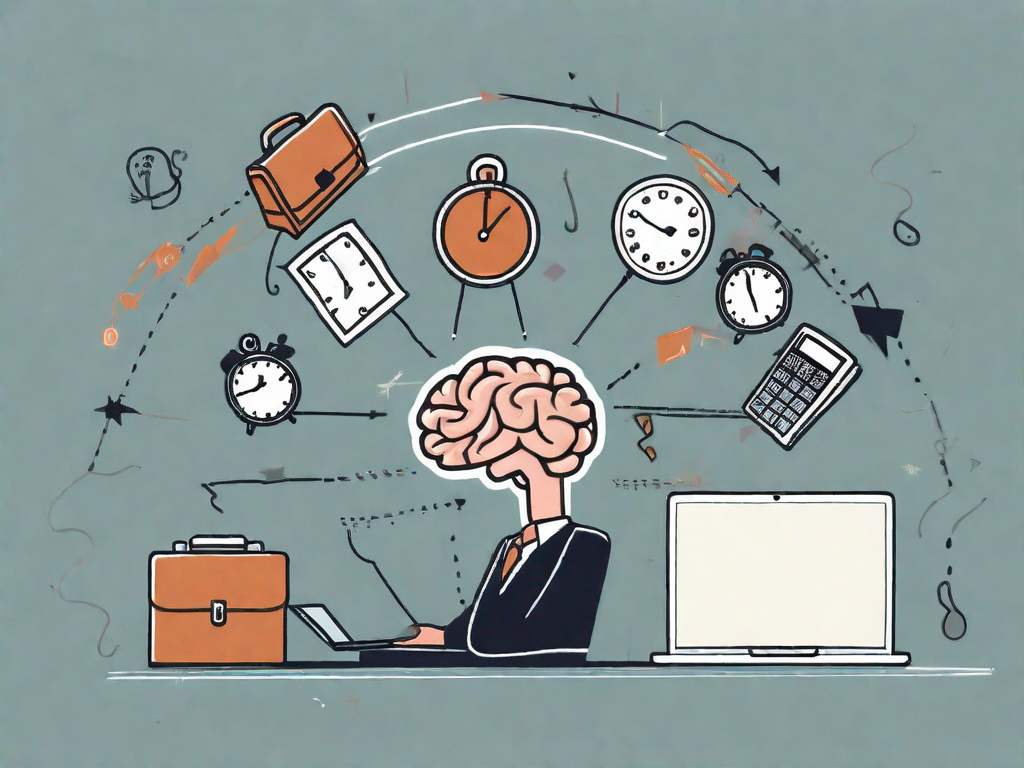
How Does Multitasking Affect Focus?
Multitasking is often perceived as a desirable skill in modern work and study environments. Being able to “do multiple things at once” sounds efficient and productive. However, from a cognitive perspective, multitasking is not true parallel processing. It is primarily a process of rapid task switching, and this has significant consequences for focus, performance, and mental efficiency.
Understanding how multitasking affects focus requires examining how the brain allocates attention, how task switching works neurologically, and what happens to cognitive performance when attention is fragmented.
1. What Multitasking Actually Is (and Is Not)
The term “multitasking” suggests simultaneous execution of multiple tasks. In reality, the human brain cannot fully concentrate on two cognitively demanding tasks at the same time.
Instead, what happens is:
The brain rapidly switches attention between tasks.
This is known as task switching, and it comes with a cost.
For example:
-
Writing an email while responding to messages
-
Studying while checking social media
-
Working on a report while attending a meeting
In each case, attention is not divided evenly. It is constantly shifting, which creates interruptions in cognitive processing.
2. The Cognitive Cost of Switching Attention
Every time the brain switches from one task to another, it must:
-
Stop processing the current task
-
Disengage from its context
-
Load a new set of rules, information, or goals
-
Re-engage attention on the new task
This process is not instantaneous. It requires mental resources.
This leads to:
-
Slower overall performance
-
Reduced accuracy
-
Increased mental fatigue
-
Loss of task continuity
Even brief switches create cumulative inefficiency.
3. How Multitasking Reduces Focus Quality
Focus is the ability to sustain attention on a single task over time. Multitasking directly disrupts this by fragmenting attention into short bursts.
Instead of:
-
Continuous focus on one task
You get:
-
Interrupted focus across multiple tasks
This reduces:
1. Depth of processing
The brain cannot fully engage with complex information when attention is divided.
2. Working memory stability
Important information must be repeatedly reloaded after each switch.
3. Cognitive flow
Deep concentration states become harder to enter and maintain.
The result is a “shallow focus” state rather than deep engagement.
4. Task Switching and the “Attention Residue” Effect
One of the most important concepts in cognitive psychology related to multitasking is attention residue.
When you switch from Task A to Task B:
-
Part of your attention remains stuck on Task A
This leftover mental focus interferes with Task B.
For example:
-
After checking messages while studying, part of your mind continues thinking about the conversation
-
After switching from writing to browsing the web, your brain still processes writing-related context
This reduces full engagement with the current task.
Over time, attention residue accumulates and significantly reduces productivity.
5. Multitasking and Working Memory Overload
Working memory is the brain’s short-term storage system for active information.
It has limited capacity.
Multitasking overloads this system by:
-
Requiring simultaneous tracking of multiple tasks
-
Constantly replacing information
-
Preventing full consolidation of any single task
When working memory is overloaded:
-
Errors increase
-
Processing slows down
-
Focus becomes unstable
This is why multitasking often feels mentally exhausting even when tasks are simple.
6. The Illusion of Productivity
One of the most misleading effects of multitasking is the feeling of productivity.
People often believe they are getting more done because they are:
-
Constantly busy
-
Frequently switching tasks
-
Handling multiple inputs
However, research and cognitive analysis consistently show:
Multitasking reduces actual productivity while increasing perceived activity.
This creates an illusion where:
-
You feel busy
-
But complete less meaningful work
The brain equates activity with progress, even when efficiency is reduced.
7. Emotional and Stress Effects of Multitasking
Multitasking does not only affect cognition—it also impacts emotional state.
Common effects include:
-
Increased stress levels
-
Feeling mentally scattered
-
Reduced sense of control
-
Higher frustration during tasks
This happens because the brain is constantly forced to:
-
Reorient attention
-
Manage competing demands
-
Recover from interruptions
Over time, this creates cognitive fatigue and emotional strain.
8. Multitasking and Deep Work Disruption
Deep work refers to extended periods of uninterrupted concentration on cognitively demanding tasks.
Multitasking directly prevents deep work by:
-
Breaking attention into fragments
-
Interrupting mental immersion
-
Preventing sustained cognitive engagement
Without sustained focus:
-
Complex problem-solving becomes harder
-
Learning becomes less efficient
-
Creativity is reduced
Deep work requires uninterrupted cognitive continuity, which multitasking undermines.
9. Productivity vs Busyness
It is important to distinguish between being productive and being busy.
| Busy (Multitasking) | Productive (Focused Work) |
|---|---|
| Many simultaneous tasks | One task at a time |
| Frequent switching | Sustained attention |
| High mental fatigue | Controlled energy use |
| Low task completion quality | High-quality output |
Multitasking increases activity but often reduces meaningful progress.
10. Why the Brain Is Not Designed for Multitasking
Neuroscience shows that attention is governed by networks that prioritize one dominant focus at a time.
Key limitations include:
-
Limited attentional bandwidth
-
Sequential processing preference
-
Resource competition between tasks
The brain evolved to focus deeply on one problem at a time, not to handle multiple cognitive tasks simultaneously.
This is why multitasking feels mentally draining—it goes against natural cognitive architecture.
11. Multitasking in Digital Environments
Modern technology amplifies multitasking behavior through:
-
Constant notifications
-
Multiple open tabs
-
Messaging platforms
-
Rapid information switching
This creates an environment of continuous partial attention.
Consequences include:
-
Reduced sustained focus ability
-
Increased distraction sensitivity
-
Lower tolerance for deep concentration
Digital multitasking is particularly harmful because it trains the brain to expect constant stimulation shifts.
12. Long-Term Effects on Attention Span
Repeated multitasking can lead to long-term changes in attention habits.
These include:
-
Shortened attention span
-
Increased difficulty with sustained tasks
-
Higher susceptibility to distraction
-
Reduced patience for slow cognitive work
Over time, the brain adapts to frequent switching, making deep focus more difficult.
This does not mean attention is permanently damaged, but it does require retraining.
13. When Multitasking Feels Necessary
In some environments, multitasking feels unavoidable:
-
Fast-paced workplaces
-
Customer service roles
-
Emergency situations
-
High communication demands
In these cases, multitasking is often about managing external demands rather than cognitive optimization.
However, even in such environments, strategic batching of tasks can reduce switching costs:
-
Group similar tasks together
-
Set dedicated times for communication
-
Separate deep work from reactive work
This reduces cognitive fragmentation.
14. Replacing Multitasking With Single-Task Focus
The alternative to multitasking is single-tasking—focusing on one task at a time until completion or a defined checkpoint.
Benefits include:
-
Higher quality output
-
Faster completion of complex tasks
-
Reduced mental fatigue
-
Improved focus stability
-
Better memory retention
Single-tasking restores cognitive continuity, which is essential for deep work and learning.
15. Practical Ways to Reduce Multitasking
To improve focus, multitasking must be intentionally reduced.
Effective strategies include:
-
Turning off non-essential notifications
-
Using focus or do-not-disturb modes
-
Scheduling specific times for messages and emails
-
Working in time-blocked sessions
-
Keeping only one active task visible at a time
-
Closing unrelated applications and tabs
The goal is to reduce external triggers that cause task switching.
Conclusion
Multitasking does not improve focus—it fragments it. While it may feel like increased productivity, it actually reduces cognitive efficiency by forcing the brain to constantly switch attention between tasks. This leads to slower performance, higher mental fatigue, reduced accuracy, and weaker deep focus ability.
The core cognitive impacts of multitasking include:
-
Task switching costs
-
Attention residue
-
Working memory overload
-
Reduced deep work capacity
-
Increased mental fatigue
Ultimately, multitasking undermines the very foundation of focus. True productivity comes not from doing many things at once, but from sustaining attention on one meaningful task at a time.
- Arts
- Business
- Computers
- Jocuri
- Health
- Home
- Kids and Teens
- Money
- News
- Personal Development
- Recreation
- Regional
- Reference
- Science
- Shopping
- Society
- Sports
- Бизнес
- Деньги
- Дом
- Досуг
- Здоровье
- Игры
- Искусство
- Источники информации
- Компьютеры
- Личное развитие
- Наука
- Новости и СМИ
- Общество
- Покупки
- Спорт
- Страны и регионы
- World

 English
 Russian
 French
 Spanish
 Portuguese
 Deutsch
 Turkish
 Dutch
Dutch
 Italiano
 Arabic
 Portuguese (Brazil)
 Greek
Greek