
How does mindset impact concentration?
How Does Mindset Impact Concentration?
Concentration is often treated as a purely cognitive skill—something determined by willpower, environment, or time management techniques. However, one of the most influential and frequently underestimated factors is mindset. Mindset shapes how the brain interprets tasks, allocates attention, responds to difficulty, and sustains mental effort over time.
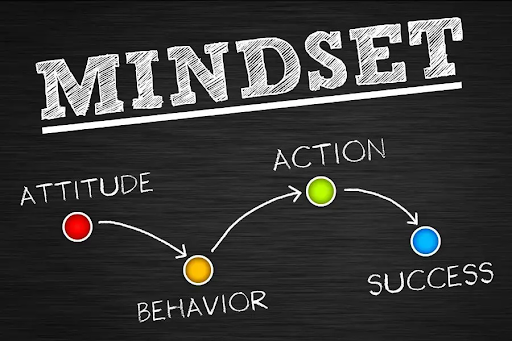
In cognitive and behavioral terms, mindset functions as a top-down regulatory system that influences attention, motivation, emotional response, and persistence. It determines whether a task feels engaging or overwhelming, meaningful or tedious, manageable or impossible.
To understand how mindset impacts concentration, we need to examine how beliefs, expectations, emotional framing, and cognitive interpretation interact with attentional systems in the brain.
1. What Mindset Means in Cognitive Terms
Mindset refers to the set of internal beliefs and attitudes that shape how a person perceives:
-
Their abilities
-
The nature of tasks
-
The meaning of effort
-
The likelihood of success or failure
It is not a single thought but a stable cognitive framework that influences perception and behavior.
In relation to concentration, mindset determines:
-
How easily attention is engaged
-
How long attention is sustained
-
How resistant attention is to distraction
-
How effort is interpreted mentally
In simple terms:
Mindset influences whether concentration feels natural or forced.
2. Attention as a Motivated Process
Concentration is not purely mechanical. It is closely tied to motivation.
The brain does not allocate attention randomly—it prioritizes information based on perceived importance and reward value.
Mindset influences this evaluation process:
-
If a task is seen as meaningful, attention is more easily sustained
-
If a task is seen as pointless or difficult, attention weakens
This means concentration is partially governed by interpretive framing.
For example:
-
“This is difficult and frustrating” → reduced focus
-
“This is challenging but valuable” → sustained focus
The task itself may not change, but mindset changes attentional commitment.
3. Fixed Mindset vs Growth Mindset and Concentration
One of the most well-known psychological frameworks related to mindset is the distinction between fixed mindset and growth mindset, introduced by psychologist Carol Dweck.
Fixed mindset:
-
Belief that ability is static
-
Difficulty is interpreted as limitation
-
Failure is seen as evidence of inadequacy
Growth mindset:
-
Belief that ability can be developed
-
Difficulty is seen as part of learning
-
Failure is seen as feedback
In terms of concentration:
Fixed mindset effects:
-
Avoidance of challenging tasks
-
Reduced attention during difficulty
-
Higher distraction when struggling
-
Early disengagement
Growth mindset effects:
-
Increased persistence
-
Greater tolerance for difficulty
-
Sustained attention during struggle
-
Higher cognitive engagement
Thus, mindset directly influences whether attention collapses or persists under cognitive load.
4. Emotional Interpretation of Tasks
Concentration is strongly influenced by emotional state, and mindset shapes emotional interpretation.
When a task is interpreted negatively:
-
Stress increases
-
Cognitive load feels heavier
-
Attention becomes unstable
-
Avoidance behavior increases
When a task is interpreted positively or neutrally:
-
Emotional resistance decreases
-
Focus becomes easier to maintain
-
Cognitive effort feels manageable
This is because emotion and attention are tightly linked systems. The brain avoids sustained attention on tasks that trigger negative emotional responses.
Mindset acts as a filter that determines emotional response to cognitive effort.
5. Perceived Difficulty and Attention Allocation
Mindset influences how difficult a task feels, independent of its actual complexity.
Two people can perform the same task:
-
One perceives it as manageable
-
The other perceives it as overwhelming
This perception affects:
-
Willingness to engage
-
Depth of focus
-
Persistence under difficulty
If a task is perceived as too difficult:
-
Attention fragments quickly
-
The brain seeks escape through distraction
-
Concentration becomes effortful and unstable
If a task is perceived as appropriately challenging:
-
Attention stabilizes
-
Cognitive engagement increases
-
Focus becomes more sustained
Thus, mindset modifies perceived cognitive load, which directly affects concentration quality.
6. Self-Talk and Internal Dialogue
Internal dialogue plays a major role in shaping concentration.
Examples of unhelpful self-talk:
-
“I can’t focus on this”
-
“This is too hard”
-
“I’ll never understand this”
These thoughts:
-
Increase cognitive resistance
-
Reduce attention stability
-
Encourage distraction-seeking behavior
Examples of constructive self-talk:
-
“I just need to focus for a few minutes”
-
“I can break this into smaller steps”
-
“Difficulty is expected”
Constructive internal dialogue:
-
Reduces emotional resistance
-
Improves persistence
-
Supports sustained attention
Mindset operates continuously through this internal narrative system.
7. Expectation Effects and Attention Performance
Expectations strongly influence cognitive performance through a psychological mechanism similar to placebo effects.
If someone expects:
-
To be distracted → they are more likely to lose focus
-
To struggle → they are more likely to disengage
-
To perform well → they sustain attention more effectively
Expectation shapes:
-
Confidence in task execution
-
Tolerance for difficulty
-
Recovery after distraction
In other words:
What you expect your attention to do influences what it actually does.
8. Stress Mindset and Cognitive Breakdown
Stress has a complex relationship with concentration. Moderate stress can enhance focus, but excessive or poorly interpreted stress disrupts it.
Mindset determines whether stress is interpreted as:
-
A challenge → improved focus
-
A threat → reduced focus
Threat-based interpretation leads to:
-
Cognitive overload
-
Attention fragmentation
-
Avoidance behavior
Challenge-based interpretation leads to:
-
Increased engagement
-
Sustained attention
-
Higher resilience under pressure
Thus, mindset regulates whether stress supports or undermines concentration.
9. Mindset and Task Initiation
Starting a task is often harder than continuing it. Mindset plays a major role in initiation.
Negative mindset patterns:
-
“I’m not ready yet”
-
“This will take too long”
-
“I should wait until I feel motivated”
These thoughts delay action and weaken concentration before it even begins.
Constructive mindset patterns:
-
“I will start imperfectly”
-
“Starting is more important than feeling ready”
-
“Focus improves after beginning”
This reduces initiation resistance, allowing concentration to develop naturally once engagement begins.
10. Attention Resilience and Mindset
Attention resilience refers to the ability to regain focus after distraction.
Mindset affects this by influencing:
-
Emotional reaction to distraction
-
Speed of refocusing
-
Self-judgment after interruption
Negative mindset:
-
“I lost focus again, I’m bad at this”
-
Leads to discouragement and further distraction
Neutral or positive mindset:
-
“I noticed distraction, now I return to task”
-
Encourages recovery without emotional penalty
Resilience is essential because distraction is inevitable. Mindset determines whether recovery is quick or prolonged.
11. Mindset and Cognitive Flow States
Flow states require:
-
Deep engagement
-
Low internal resistance
-
Balanced challenge
Mindset influences all three conditions.
If mindset is:
-
Anxious → flow is disrupted
-
Distracted → flow is unstable
-
Confident and engaged → flow is more likely
A stable mindset reduces internal noise, making sustained concentration easier.
12. Identity-Based Mindset and Focus Consistency
One of the strongest influences on long-term concentration is identity.
Identity-based mindset examples:
-
“I am someone who focuses deeply”
-
“I am a disciplined learner”
-
“I complete what I start”
This creates behavioral consistency because people tend to act in alignment with their self-concept.
Identity-based mindset:
-
Reduces reliance on willpower
-
Increases consistency of focus
-
Strengthens long-term attention habits
13. Cognitive Load and Mindset Interpretation
Cognitive load is the mental effort required to process information.
Mindset influences how this load is experienced:
-
Negative mindset amplifies perceived effort
-
Positive mindset normalizes effort
The task remains the same, but subjective difficulty changes.
This affects:
-
Duration of sustained focus
-
Willingness to persist
-
Perception of fatigue
Thus, mindset directly modulates cognitive experience.
Conclusion
Mindset has a profound and continuous impact on concentration because it shapes how the brain interprets effort, difficulty, emotion, and expectation. It functions as a cognitive framework that influences attention before and during task engagement.
Key mechanisms include:
-
Interpretation of task difficulty
-
Emotional response to effort
-
Self-talk and internal dialogue
-
Expectation effects
-
Stress interpretation
-
Identity-based behavior patterns
Ultimately, concentration is not just a skill of attention control—it is also a product of how the mind frames the act of focusing itself. A constructive mindset reduces resistance, stabilizes attention, and supports sustained cognitive engagement, while a negative mindset fragments attention and increases avoidance.
In this sense, improving concentration is not only about external tools or techniques, but also about restructuring internal beliefs about effort, ability, and focus itself.
- Arts
- Business
- Computers
- Spiele
- Health
- Startseite
- Kids and Teens
- Geld
- News
- Personal Development
- Recreation
- Regional
- Reference
- Science
- Shopping
- Society
- Sports
- Бизнес
- Деньги
- Дом
- Досуг
- Здоровье
- Игры
- Искусство
- Источники информации
- Компьютеры
- Личное развитие
- Наука
- Новости и СМИ
- Общество
- Покупки
- Спорт
- Страны и регионы
- World

 English
 Russian
 French
 Spanish
 Portuguese
 Turkish
 Dutch
Dutch
 Italiano
 Arabic
 Romaian
 Portuguese (Brazil)
 Greek
Greek