
How do notifications impact concentration?
How Do Notifications Impact Concentration?
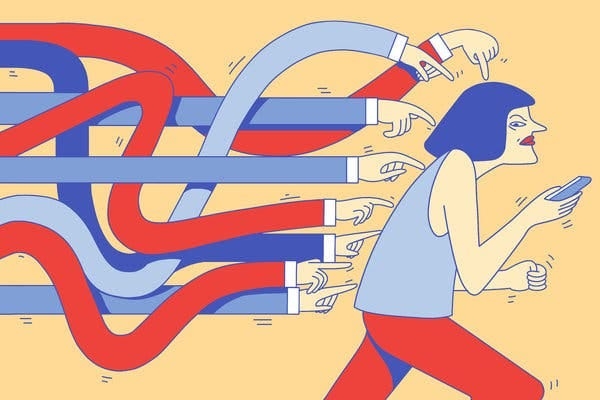
Notifications are one of the most persistent and underestimated disruptors of human attention in modern environments. Whether they come from messaging apps, email clients, social media platforms, or system alerts, notifications are designed to capture attention immediately. From a cognitive standpoint, they are not passive information updates—they are intentional interruptions engineered to override ongoing focus.
To understand how notifications impact concentration, we need to examine how the brain allocates attention, how interruption works at a cognitive level, and how repeated disruptions reshape attention patterns over time.
In essence:
Notifications do not just interrupt focus—they condition the brain to expect interruption.
1. Concentration as a Fragile Cognitive State
Concentration depends on maintaining a stable allocation of cognitive resources toward a single task. This involves:
-
Sustained attention (holding focus over time)
-
Selective attention (filtering irrelevant stimuli)
-
Working memory stability (holding task-relevant information active)
This system is inherently fragile because the brain constantly monitors the environment for relevant changes.
Notifications exploit this vulnerability by presenting themselves as potentially important signals.
2. The Attention Capture Mechanism
Notifications are designed to bypass voluntary control of attention.
They typically include:
-
Auditory signals (sounds, vibrations)
-
Visual cues (pop-ups, badges, banners)
-
Urgency indicators (red dots, notifications counters)
These features activate the brain’s orienting response, a reflexive system that shifts attention toward novel or potentially important stimuli.
This means:
Even when you are deeply focused, a notification triggers an automatic shift in attention.
3. Cognitive Interruption and Task Switching
When a notification appears, the brain performs a task switch:
-
Current task is suspended
-
Attention shifts to notification
-
New information is processed
-
Decision is made (respond or ignore)
-
Return to original task is attempted
This process is not instantaneous or cost-free.
Each switch introduces:
-
Cognitive delay
-
Memory disruption
-
Reduced task continuity
Even brief interruptions degrade overall concentration quality.
4. Attention Residue: The Hidden Cost of Notifications
One of the most important cognitive effects of notifications is attention residue.
When attention shifts away from a task, part of cognitive processing remains partially engaged with the previous task.
As a result:
-
The mind is not fully present in either task
-
Cognitive efficiency is reduced
-
Task resumption becomes slower
Even after ignoring a notification, mental resources remain partially allocated to it.
This reduces deep focus capacity significantly.
5. The Cost of Context Switching
Context switching refers to moving between different tasks or cognitive contexts.
Each notification forces a context switch:
-
Writing → messaging
-
Studying → checking alerts
-
Coding → responding to emails
Context switching has measurable cognitive costs:
-
Increased time to regain focus
-
Higher error rates
-
Reduced comprehension
-
Mental fatigue accumulation
The more frequent the switches, the lower the overall quality of attention.
6. Fragmentation of Attention Over Time
Frequent notifications lead to a state of attention fragmentation, where sustained focus becomes difficult to maintain for extended periods.
Instead of deep engagement, the brain develops:
-
Short bursts of focus
-
Constant background monitoring
-
Partial attention states
This fragmented pattern reduces the ability to enter deep work states, where concentration is fully immersive and uninterrupted.
7. The Anticipation Effect
Notifications impact concentration even when they are not actively arriving.
Once a system is known to produce frequent notifications, the brain begins to anticipate interruptions.
This leads to:
-
Background vigilance
-
Reduced immersion in tasks
-
Lower cognitive depth
-
Increased distraction sensitivity
Even silence becomes cognitively noisy because the brain is waiting for interruption.
8. Dopamine and Reward Conditioning
Notifications often carry social or informational rewards:
-
Messages from others
-
Likes or reactions
-
Updates or news
Each notification can trigger a dopamine response, reinforcing checking behavior.
Over time, this creates a feedback loop:
-
Notification appears
-
Brain anticipates reward
-
Attention shifts
-
Reward is received
-
Behavior is reinforced
This conditioning makes it harder to resist interruptions and maintain sustained focus.
9. Reduction of Deep Work Capacity
Deep work requires uninterrupted cognitive engagement over extended periods.
Notifications directly undermine this by:
-
Breaking continuity
-
Forcing frequent resets of attention
-
Reducing cognitive immersion
As interruptions accumulate:
-
Work becomes more shallow
-
Complex thinking becomes harder
-
Problem-solving depth decreases
Even if total working time remains the same, productivity quality declines.
10. Increased Cognitive Load
Notifications increase extraneous cognitive load, meaning mental effort spent on non-essential processing.
This includes:
-
Deciding whether to respond
-
Interpreting message relevance
-
Reorienting attention back to task
-
Reconstructing previous thought context
These micro-decisions accumulate, draining mental energy and reducing available cognitive capacity for meaningful work.
11. Emotional Disruption and Focus Breakdown
Notifications are not only cognitive interruptions—they are often emotional triggers.
They can cause:
-
Anxiety (missed messages, urgent emails)
-
Excitement (social interactions, updates)
-
Stress (work-related alerts)
Emotional reactions interfere with concentration by:
-
Increasing internal dialogue
-
Diverting attention inward
-
Reducing cognitive neutrality required for focus
Even small emotional shifts can destabilize sustained attention.
12. Habit Formation and Automatic Checking Behavior
Over time, repeated exposure to notifications builds automatic behavioral responses.
This leads to:
-
Reflexive phone checking
-
Task interruption without conscious decision
-
Reduced resistance to distraction
Eventually, attention becomes externally driven rather than internally controlled.
This is one of the most significant long-term effects of notification-heavy environments.
13. The Illusion of Multitasking
Notifications encourage multitasking behavior, but cognitive science shows that multitasking is largely an illusion.
What actually happens is:
-
Rapid task switching
-
Fragmented attention allocation
-
Reduced depth in each task
This leads to:
-
Lower productivity efficiency
-
Increased cognitive fatigue
-
Reduced accuracy and retention
Notifications reinforce this fragmented mode of cognition.
14. Recovery Delay After Interruptions
One of the most overlooked effects of notifications is the time required to return to full focus.
After an interruption:
-
The brain must reconstruct context
-
Working memory must be reloaded
-
Attention must be re-stabilized
This recovery process can take several minutes, depending on task complexity.
Frequent notifications repeatedly reset this recovery cycle, preventing deep concentration from fully forming.
15. Long-Term Effects on Attention Systems
Long-term exposure to frequent notifications can reshape attention patterns:
-
Reduced sustained attention span
-
Increased sensitivity to external stimuli
-
Lower tolerance for monotony
-
Dependence on external cues for engagement
Over time, the brain becomes less capable of maintaining uninterrupted focus without external reinforcement.
16. Can the Effects Be Reversed?
Yes, but it requires deliberate restructuring of attention habits.
Effective strategies include:
-
Turning off non-essential notifications
-
Using scheduled notification checks instead of real-time alerts
-
Creating distraction-free work environments
-
Practicing long, uninterrupted focus sessions
-
Rebuilding tolerance for sustained attention
Because attention is plastic, it can be retrained toward stability and depth.
Conclusion
Notifications significantly impact concentration by repeatedly interrupting attention, increasing cognitive load, and conditioning the brain toward fragmented focus patterns. They activate automatic attention capture systems, introduce cognitive residue, and reduce the brain’s ability to sustain deep work.
The key mechanisms include:
-
Automatic attention capture responses
-
Context switching costs
-
Attention residue effects
-
Dopamine-based reinforcement loops
-
Increased cognitive and emotional load
-
Long-term fragmentation of attention patterns
Ultimately, notifications do not just interrupt focus in the moment—they reshape how attention functions over time. However, with intentional control of digital environments and consistent focus training, their impact can be significantly reduced, allowing for deeper and more stable concentration.
- Arts
- Business
- Computers
- الألعاب
- Health
- الرئيسية
- Kids and Teens
- مال
- News
- Personal Development
- Recreation
- Regional
- Reference
- Science
- Shopping
- Society
- Sports
- Бизнес
- Деньги
- Дом
- Досуг
- Здоровье
- Игры
- Искусство
- Источники информации
- Компьютеры
- Личное развитие
- Наука
- Новости и СМИ
- Общество
- Покупки
- Спорт
- Страны и регионы
- World

 English
 Russian
 French
 Spanish
 Portuguese
 Deutsch
 Turkish
 Dutch
Dutch
 Italiano
 Romaian
 Portuguese (Brazil)
 Greek
Greek