
What is procrastination?
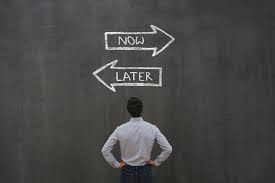
What Is Procrastination?
Procrastination is a complex behavioral and cognitive phenomenon characterized by the intentional delay of intended actions despite expecting negative consequences from the delay. In simple terms, it is the gap between what a person intends to do and what they actually do, when that gap is not due to lack of awareness or external constraint, but rather internal regulation failures.
Although it is commonly described as laziness or poor discipline, modern psychology treats procrastination as a self-regulation problem involving emotion, cognition, motivation, and time perception. It is less about time management and more about mood management—people procrastinate not because they do not know what to do, but because the task feels emotionally aversive in the present moment.
To fully understand procrastination, we need to examine its psychological mechanisms, cognitive drivers, emotional foundations, and behavioral consequences.
1. Defining Procrastination More Precisely
A more formal definition used in psychology is:
Procrastination is the voluntary delay of an intended course of action despite expecting to be worse off for the delay.
This definition highlights three essential components:
-
Voluntary delay: the person chooses to postpone action
-
Intended action: the task was already decided or planned
-
Negative expectation: the person knows delay is harmful
This distinguishes procrastination from:
-
Forgetting (unintentional delay)
-
External delay (forced postponement)
-
Strategic delay (rational postponement for benefit)
Procrastination is therefore a self-defeating delay behavior.
2. Procrastination as an Emotion Regulation Problem
One of the most important modern insights is that procrastination is driven more by emotional avoidance than poor time management.
When a task triggers negative emotions such as:
-
Anxiety
-
Boredom
-
Frustration
-
Self-doubt
-
Overwhelm
The brain tends to avoid the task to reduce immediate discomfort.
This creates a short-term relief loop:
-
Task feels unpleasant
-
Task is avoided
-
Emotional relief is experienced
-
Avoidance behavior is reinforced
Over time, the brain learns:
Avoiding the task reduces discomfort immediately, even if it creates long-term problems.
This is why procrastination persists even when consequences are known.
3. The Role of Temporal Discounting
Procrastination is strongly influenced by how the brain values time.
Humans naturally exhibit temporal discounting, meaning:
-
Immediate rewards feel more valuable than future rewards
-
Immediate discomfort feels more urgent than future consequences
This leads to a cognitive bias:
-
“I will do it later” feels easier than “I will do it now”
Even if the future cost is high, the present emotional state dominates decision-making.
This imbalance between present and future valuation is a core driver of procrastination.
4. Executive Function and Self-Control
Procrastination is closely linked to executive function, the set of cognitive processes responsible for self-regulation.
Key executive functions include:
-
Task initiation
-
Inhibitory control
-
Planning and prioritization
-
Working memory management
When executive control is weak or overloaded:
-
Starting tasks becomes difficult
-
Distractions become more appealing
-
Long-term goals lose motivational strength
This is why procrastination often increases under:
-
Stress
-
Fatigue
-
Cognitive overload
-
Poor sleep
In these states, the brain has reduced capacity to override immediate emotional impulses.
5. Task Aversiveness and Motivation
Not all tasks are equally likely to be procrastinated.
Tasks that are commonly delayed tend to be:
-
Unpleasant or boring
-
Complex or ambiguous
-
Emotionally threatening (e.g., evaluation, fear of failure)
-
High effort with delayed reward
The more aversive a task feels, the stronger the tendency to avoid it.
Importantly:
It is not objective difficulty that drives procrastination, but perceived emotional difficulty.
A simple task can be procrastinated if it feels unpleasant.
6. The Time-Inconsistency Problem
Procrastination is often explained through time-inconsistent preferences.
At a future point, a person may intend to act:
-
“Tomorrow I will start early”
But when that future moment arrives:
-
The motivation disappears
-
Immediate distractions become more appealing
-
The plan is postponed again
This creates a loop of repeated intention failure.
The problem is not lack of intention, but shifting motivational states over time.
7. The Present Bias Effect
The brain gives disproportionate weight to the present moment compared to the future.
This is known as present bias.
Effects include:
-
Immediate comfort is prioritized
-
Future benefits are undervalued
-
Future consequences feel abstract
This explains why:
-
Studying is postponed for entertainment
-
Important work is delayed for easier tasks
-
Long-term goals lose urgency
The present moment exerts the strongest psychological influence.
8. Procrastination and Anxiety
Anxiety is both a cause and consequence of procrastination.
As a cause:
-
Fear of failure leads to avoidance
-
Fear of imperfection delays task initiation
-
Uncertainty increases hesitation
As a consequence:
-
Delaying tasks increases stress
-
Deadlines become more threatening
-
Pressure builds over time
This creates a feedback loop:
Anxiety → avoidance → more anxiety
Over time, this loop strengthens procrastination patterns.
9. Cognitive Overload and Decision Paralysis
When tasks feel overwhelming, the brain may struggle to initiate action.
This is due to:
-
Too many steps to process
-
Lack of clear starting point
-
Excessive planning requirements
This leads to decision paralysis, where:
-
No action is taken
-
Energy is spent on thinking rather than doing
-
Avoidance becomes the default response
Breaking tasks into smaller steps reduces this cognitive barrier.
10. Dopamine and Reward Systems
Procrastination is also influenced by the brain’s reward system.
Dopamine reinforces behaviors that provide:
-
Immediate reward
-
Novelty
-
Entertainment
Many procrastination behaviors (social media, games, browsing) provide:
-
Fast feedback loops
-
High stimulation
-
Instant gratification
Compared to this, important tasks often:
-
Provide delayed rewards
-
Require sustained effort
-
Offer less immediate stimulation
This imbalance shifts behavior toward short-term reward activities.
11. Habit Formation in Procrastination
Procrastination is not just a decision—it often becomes a habitual behavioral pattern.
Over time:
-
Delaying tasks becomes automatic
-
Avoidance becomes default response
-
Starting work feels increasingly difficult
This is because habits reduce cognitive effort:
The brain prefers automatic avoidance over effortful initiation.
Breaking this cycle requires intentional reconditioning.
12. Procrastination and Identity
Procrastination can also become tied to self-perception:
-
“I am someone who works under pressure”
-
“I always start late but finish eventually”
These identity-based beliefs reinforce behavior patterns by:
-
Justifying delay
-
Reducing urgency to change
-
Normalizing avoidance
Identity plays a subtle but powerful role in maintaining procrastination.
13. Short-Term Relief vs Long-Term Cost
The defining feature of procrastination is the conflict between:
-
Immediate emotional relief (avoidance)
-
Long-term negative consequences (stress, reduced performance)
The brain tends to prioritize:
short-term emotional comfort over long-term rational benefit
This trade-off is central to understanding why procrastination persists even when it is irrational.
14. Procrastination vs Laziness
A common misconception is that procrastination equals laziness.
However:
-
Laziness implies lack of desire to act
-
Procrastination implies desire to act but failure to initiate
Many procrastinators:
-
Care deeply about outcomes
-
Experience guilt about delay
-
Feel stress about unfinished tasks
This shows that procrastination is not absence of motivation, but mismanagement of motivation and emotion.
15. Conclusion
Procrastination is a multifaceted psychological phenomenon rooted in emotion regulation, cognitive control, temporal bias, and reward processing. It is not simply a lack of discipline but a predictable outcome of how the human brain prioritizes immediate emotional states over delayed outcomes.
Key mechanisms include:
-
Emotional avoidance of discomfort
-
Temporal discounting and present bias
-
Weak or overloaded executive function
-
Dopamine-driven reward preference
-
Cognitive overload and decision paralysis
-
Habitual avoidance behavior
-
Anxiety reinforcement loops
Ultimately, procrastination is best understood as a self-regulation failure in the face of emotionally aversive tasks, where short-term relief consistently overrides long-term goals.
- Arts
- Business
- Computers
- Игры
- Health
- Главная
- Kids and Teens
- Деньги
- News
- Personal Development
- Recreation
- Regional
- Reference
- Science
- Shopping
- Society
- Sports
- Бизнес
- Деньги
- Дом
- Досуг
- Здоровье
- Игры
- Искусство
- Источники информации
- Компьютеры
- Личное развитие
- Наука
- Новости и СМИ
- Общество
- Покупки
- Спорт
- Страны и регионы
- World

 English
 French
 Spanish
 Portuguese
 Deutsch
 Turkish
 Dutch
Dutch
 Italiano
 Arabic
 Romaian
 Portuguese (Brazil)
 Greek
Greek